Introduction: Energy Efficiency as a Strategic Advantage

In our 25+ automated production lines at Newland Bamboo, we witness firsthand how energy efficiency directly transforms both environmental impact and operational costs. Tissue manufacturing is historically one of the world’s most energy-intensive industries. Yet, by shifting from traditional wood pulp to bamboo pulp, we have reduced consumption across multiple stages — from pulping to drying — while strengthening the resilience of our global supply chain.
For B2B buyers, this is not only a sustainability choice; it is a cost stability and compliance strategy in a world moving towards stricter environmental regulations and rising energy prices.
Bamboo vs. Wood Pulp: Energy Consumption Comparison
Paper production begins long before the first sheet is rolled. From sourcing raw materials to refining pulp, energy requirements vary drastically depending on fiber type.
| Stage | Wood Pulp (per ton) | Bamboo Pulp (per ton) | Energy Advantage |
|---|---|---|---|
| Raw Material Growth | 20–30 years, requires fertilizers & pesticides | 3–5 years, no replanting needed | Faster growth = reduced agricultural energy |
| Pulping & Cooking | ~1,500–1,800 kWh | ~1,000–1,200 kWh | ~30% less energy |
| Bleaching | Chlorine-based, energy-intensive | ECF/TCF, less heat required | Lower chemical & thermal energy |
| Drying & Finishing | ~1,000 kWh | ~700–800 kWh | More efficient due to shorter fibers |
Table: Energy consumption comparison based on industry benchmarks (e.g., FAO report on pulp & paper) and internal Newland Bamboo production estimates.
Why? Bamboo fibers are naturally shorter and more malleable, requiring less beating, refining, and bleaching compared to hardwood pulp. This is where the energy savings begin.
Factory-Level Energy Efficiency Technologies
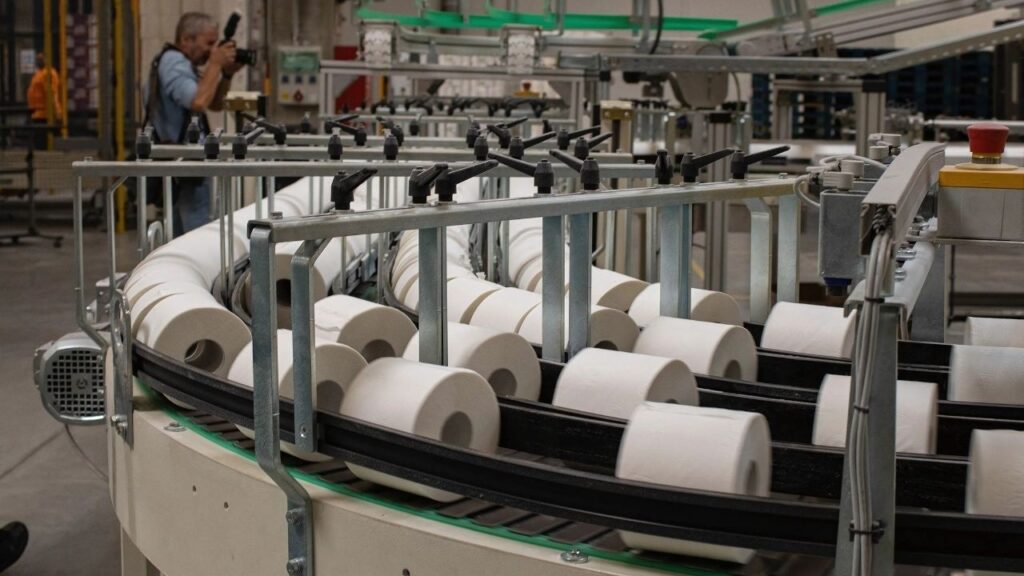
At Newland Bamboo, our energy savings are not just theoretical — they are embedded in our operations:
- Automated Production Lines Our automated tissue machines reduce idle time, optimize load distribution, and minimize electricity waste.
- Heat Recovery Systems Since upgrading our boilers, our on-site maintenance team reports a 15% reduction in steam consumption. Excess heat is recycled into preheating, lowering natural gas use.
- High-Efficiency Drying Advanced Yankee dryers combined with smart moisture controls cut drying energy by 10–12% per ton of tissue.
- Smart Energy Monitoring Our Energy Management System (EMS) tracks consumption in real time, enabling proactive maintenance and continuous optimization.
Carbon Footprint & Renewable Energy
Energy savings directly translate into a reduced carbon footprint.
- Bamboo as a renewable resource: Unlike trees, bamboo regrows naturally after harvesting, capturing CO₂ during rapid regrowth cycles.
- Solar & Biomass Integration: As part of our long-term energy independence roadmap, we are progressively integrating solar panels for auxiliary power and biomass boilers fueled by bamboo residues. Phase I of our solar installation is already operational, reducing grid reliance during peak daylight production hours.
- Equivalent Savings: For every 10,000 tons of bamboo tissue produced, our energy reductions prevent approximately 12,000 tons of CO₂ emissions — equivalent to planting 200,000 trees.
Extended Environmental Benefits: Water, Packaging & Logistics
Energy efficiency is not confined to pulp cooking. It extends into water, packaging, and logistics:
- Closed-Loop Water Systems: Heating and treating water is one of the most energy-intensive parts of papermaking. Our closed water cycle reduces both water and energy use.
- Efficient Packaging: By compressing rolls more tightly and using recyclable film, we reduce container space, lowering shipping-related emissions.
- Optimized Logistics: With 400+ containers shipped monthly, container load optimization ensures maximum cubic efficiency, cutting both costs and Scope 3 emissions for clients.
Why B2B Buyers Should Care About Energy Savings
Energy efficiency in manufacturing is not just a factory metric — it is a supply chain differentiator.
- ESG & Compliance Buyers must report Scope 3 emissions under ESG frameworks. Choosing bamboo suppliers with lower energy use makes compliance smoother.
- Carbon Border Adjustment Mechanism (CBAM) While tissue products are not yet included, CBAM is expanding. Partnering with energy-efficient suppliers is a future-proof strategy for EU buyers.
- Cost Stability Energy-efficient factories are less exposed to volatile fuel and electricity prices, ensuring more predictable long-term contracts.
- Retailer Acceptance Major retailers such as Costco, Walmart, REWE, and dm increasingly audit suppliers on sustainability. Energy savings help secure listings.
Newland Bamboo’s Competitive Advantage
When choosing suppliers, energy efficiency is not a promise — it is a measurable practice.
- 25+ automated lines = reduced per-ton energy
- 400+ containers monthly = proven capacity
- FSC & BPI certifications = third-party validation of sustainable sourcing
- Lifecycle Assessment (LCA) readiness = transparency in carbon and energy reporting
- OEM/ODM support = we design tissue solutions that align with your sustainability targets
We go beyond compliance — offering data transparency to help our clients pass ESG audits and retailer sustainability reviews.
Macro Trends & Financial Relevance
Energy savings are becoming an economic advantage:
- Green Financing: Banks offer preferential interest rates for companies investing in renewable energy and efficient technologies.
- Investor Confidence: Energy-efficient operations demonstrate resilience, lowering supply chain risks for buyers and partners.
- Future-Proof Supply Chains: As governments tighten climate policies, sourcing from energy-optimized factories ensures business continuity.
Conclusion: Energy Savings Define the Future of Tissue Manufacturing
Based on our decades of manufacturing experience, switching to bamboo tissue is more than an environmental decision — it is an operational upgrade. Energy efficiency means lower costs, reduced carbon, and stronger compliance for B2B buyers.
If your business is preparing for ESG audits, carbon taxes, or retailer sustainability reviews, choosing bamboo tissue from an energy-optimized, FSC-certified supplier is the logical step forward.
👉 Contact Newland Bamboo today to request free samples or a customized sustainability report for your next procurement cycle.
FAQ
-
Is bamboo toilet paper more energy-efficient to produce than wood pulp?
Yes. Bamboo pulp requires up to 30% less energy during pulping and drying compared to wood pulp.
-
How do bamboo factories reduce energy use?
Through automation, heat recovery, water recycling, and renewable energy integration, bamboo factories achieve significant energy savings. Learn more in our manufacturing capabilities.
-
Does bamboo toilet paper have a lower carbon footprint?
Yes. Beyond lower energy use, bamboo’s fast regrowth captures carbon, reducing overall emissions. See our LCA approach.
-
Why should retailers care about energy savings in tissue manufacturing?
Retailers face pressure to audit suppliers’ Scope 3 emissions. Partnering with energy-efficient manufacturers helps them meet ESG targets and pass compliance checks.
-
How does FSC certification relate to energy efficiency?
While FSC focuses on sustainable sourcing, its audits promote broader resource efficiency, which includes energy and water management — see our FSC certification guide.
Ready to Cut Energy Costs in Your Supply Chain?
At Newland Bamboo, every roll of bamboo tissue represents up to 30% less energy consumption compared to traditional pulp. Partnering with us means:
- ✅ FSC & BPI certified, ESG-compliant supplier
- ✅ 25+ automated lines, 400+ containers monthly
- ✅ Free samples delivered within 7 days
- ✅ Transparent data to support your sustainability audits
👉 Request Your Free Samples Today or Book a Consultation to see how we can help you lower costs and meet sustainability targets.