
Where Does Bamboo Grow? Across More Than One Type of Environment
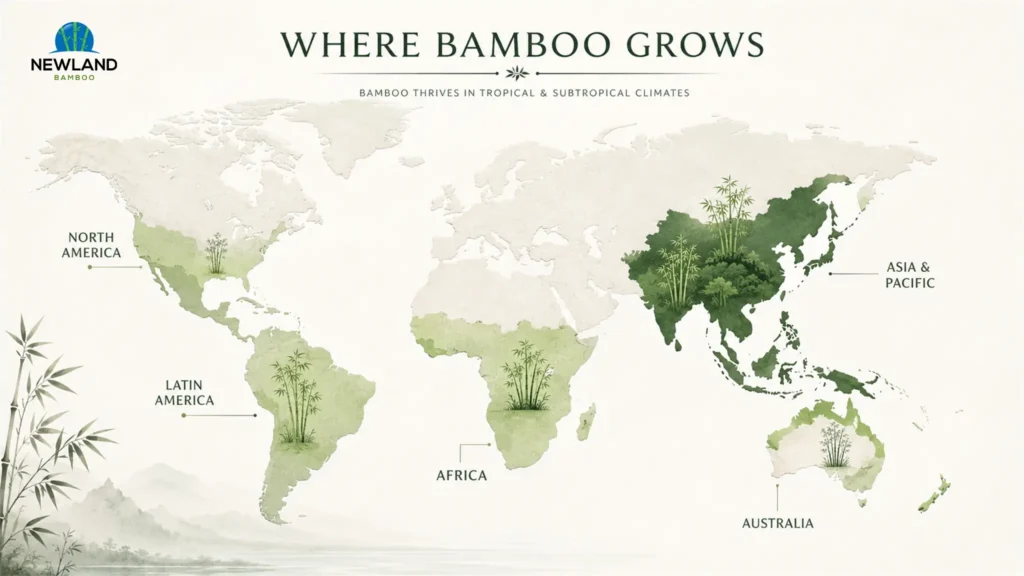
Bamboo grows naturally across much of Asia, Africa, the Americas, and Australia. It is not generally treated as native to Europe or Antarctica, although some bamboo species are cultivated in parts of Europe today.
Bamboo mainly grows in tropical, subtropical, and mild temperate regions.
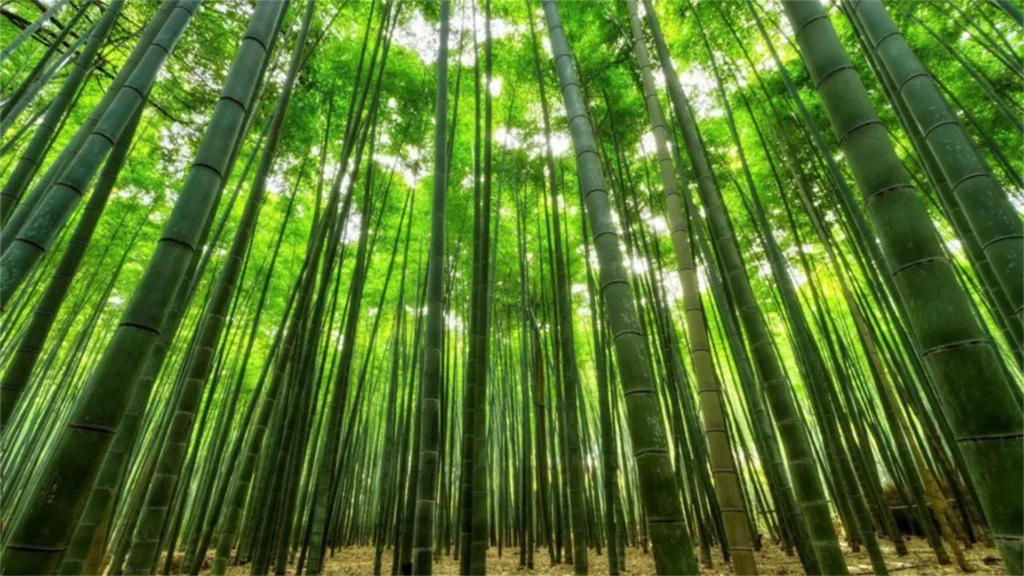
For anyone asking where does bamboo grow, the answer starts with climate zones, not a single country list.
The longer answer is more useful: bamboo does not belong to one single landscape. It can grow in humid lowlands, mountain areas, river valleys, forest edges, managed bamboo groves, and some cooler temperate regions. The FAO describes bamboo as widely distributed in tropical, subtropical, and mild temperate zones, with natural distribution across Asia, Africa, Central America, and South America.
Asia and the Pacific are the strongest bamboo regions, but bamboo also grows in parts of Africa, Latin America, and North America.
This is why “where does bamboo grow?” is not just a map question.
For a casual reader, the answer may be enough: bamboo grows mostly in warm and humid regions. For anyone thinking about bamboo as a raw material, the next question matters more: does that growing region support usable species, stable harvesting, processing access, and repeatable material supply?
A bamboo grove in southern China, a bamboo species in India, a native cane in North America, and a mountain bamboo stand may all be bamboo. They are not the same sourcing story.
If you also want the botanical side of the plant, our guide on why bamboo is a grass, not a tree explains how bamboo differs from woody trees.
Where Bamboo Grows Naturally Around the World
Bamboo’s global distribution is easier to understand by region than by country.
The point is not to memorize every country where bamboo appears. The point is to understand where bamboo is naturally common, where it is mainly cultivated, and which regions have stronger material-use systems behind the plant.
Where Bamboo Grows by Region
| 地区 | What to Know |
|---|---|
| Asia and the Pacific | The strongest bamboo region, with major natural resources and mature material industries. |
| The Americas | Bamboo grows in parts of North, Central, and South America, including native cane in the southeastern United States and Guadua in parts of Latin America. |
| Africa | Bamboo appears in tropical and highland ecosystems and is used in restoration, local construction, and community materials. |
| 澳大利亚 | Native bamboo occurs mainly in northern tropical regions. |
| 欧洲 | Bamboo is cultivated in parts of Europe, but Europe is not usually treated as a major native bamboo region. |
| Antarctica | Bamboo does not grow natively in Antarctica. |
Bamboo is most closely associated with Asia, and that association is fair. East Asia, Southeast Asia, South Asia, and the Pacific region contain some of the world’s most important bamboo resources.
China, India, Indonesia, Vietnam, Thailand, Myanmar, and other Asian countries often appear in bamboo discussions because bamboo is part of both the natural landscape and the material economy. In these regions, bamboo is not only a plant in the forest. It may be tied to construction, household goods, baskets, chopsticks, paper, packaging, textiles, furniture, and local manufacturing.
Still, bamboo is not an Asia-only plant.
It also grows in parts of Africa and Latin America. In some places, bamboo is connected with local building, restoration work, household use, and ecosystem value. In others, bamboo industries are still developing and do not have the same processing depth as the major Asian supply regions.
That distinction matters.
A place where bamboo grows naturally is not automatically a place that can supply bamboo pulp, paper, tissue, boards, or packaging at scale. Natural distribution tells you where bamboo can live. Industrial supply depends on species, harvesting practice, transport, processing, quality control, and export capability
Asia and the Pacific Are the Main Bamboo Regions
Asia and the Pacific matter most when people talk about bamboo as a material.
This is where bamboo is most visible in daily life and in manufacturing. You see bamboo used for buildings, scaffolding, furniture, baskets, utensils, chopsticks, paper, household goods, and newer plant-based product categories. In many areas, bamboo is both a traditional material and a modern industrial resource.
China is especially important in bamboo material discussions because of its large bamboo resources and long history of bamboo use. India also has extensive bamboo resources across different climate zones. Southeast Asian countries such as Indonesia, Vietnam, Thailand, and Myanmar are strongly associated with bamboo growth and bamboo-based products.
But a buyer should not read “Asia” as one simple sourcing answer.
A bamboo growing region can support a sustainability story. A finished bamboo tissue roll still needs product-level evidence, packaging review, and careful claim wording. For a broader explanation of these claim boundaries, see our article on 11 real bamboo benefits.
Bamboo Also Grows in Africa and Latin America
Africa and Latin America are often mentioned less, but bamboo is present in both regions.
In parts of Africa, bamboo is connected with land restoration, local construction, erosion control, fuel, household use, and community-level materials. In Latin America, bamboo appears in natural ecosystems and in construction or craft-related applications, especially in warm and humid environments.
These regions are important because they show bamboo’s wider ecological range. Bamboo is not a plant that only belongs to East Asia or tropical postcard scenery.
For this article, there is no need to turn Africa or Latin America into a long country list. The useful point is simpler: bamboo grows across multiple continents, but each region uses and manages it differently.
That is also why bamboo sourcing cannot be judged by geography alone. A growing region may have bamboo, but the product value depends on what species are available, how the resource is managed, and whether there is a practical route from culm to finished material.
Bamboo Can Grow in Some Mild Temperate and Mountain Regions
Bamboo is often pictured as a tropical plant, but some species grow outside classic tropical environments.
Certain bamboo species can tolerate cooler temperatures, higher elevations, or mountain conditions. That does not mean every bamboo can handle cold weather. It means bamboo is a large plant group with different species adapted to different environments.
This point is easy to misunderstand.
For gardening, people may ask whether bamboo can grow in a specific state, zone, or backyard. That is a different topic. This article is not a planting guide.
For raw material use, the better question is whether the region can support useful bamboo growth over time. Climate matters, but species selection, harvest age, land management, and processing access matter just as much.
What Climate Does Bamboo Need?
Many bamboo species prefer warm, moist conditions.
That is why bamboo is common in tropical and subtropical regions with enough rainfall, humidity, and a long growing season. Those conditions help bamboo produce strong culms and support fast seasonal growth.
But climate alone does not explain bamboo.
Some species handle cooler or mountain environments. Some need warmer and wetter conditions. Some grow in dense groves; others appear in mixed landscapes or along riverbanks and slopes. Soil, water, light, species type, and local management all shape the final bamboo stand.
For material supply, this is where the conversation becomes practical.
A bamboo stand can look healthy and still be a poor industrial source if the species is not suitable, the culms are not harvested at the right age, transport is difficult, or processing is not nearby. Paper and tissue buyers are not buying “warm climate.” They are buying repeatable material that can move through pulping, converting, packaging, and shipment.
If you want to separate climate from growth speed, see our guide on how fast bamboo can grow.
Common Bamboo Habitats
Bamboo does not always grow in the same visual setting.
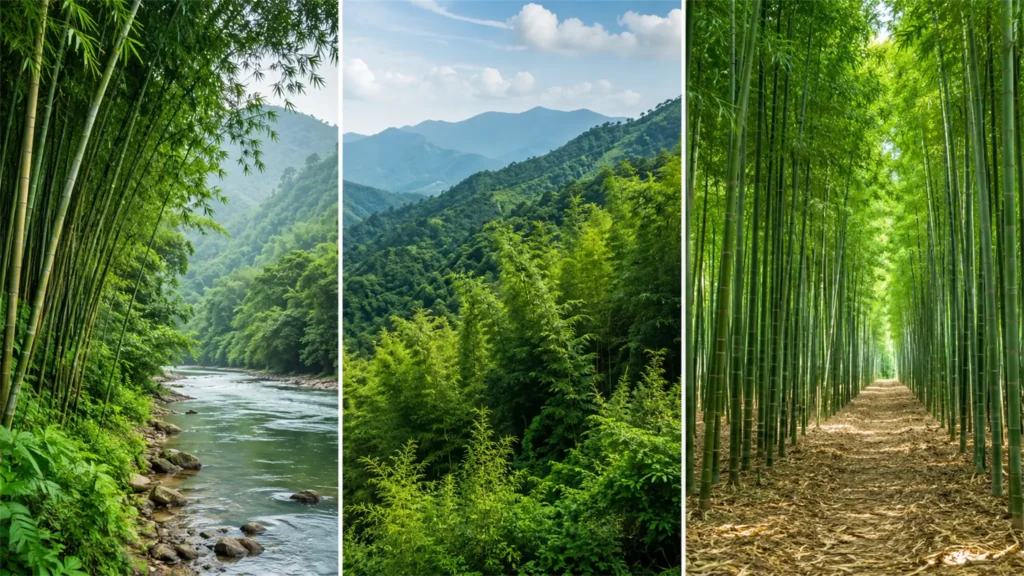
Some bamboo grows in dense groves. Some appears along forest edges, riverbanks, slopes, valleys, and mountain areas. In managed settings, bamboo may also grow in bamboo forests or plantations planned for material use, restoration work, or local production.
That is why “bamboo habitat” is a better phrase than “bamboo forest” for this topic. Bamboo can be part of different landscapes.
Forest Edges, Slopes, Riverbanks, and Groves
Many bamboo species grow well where there is moisture, light, and enough room for underground systems to spread.
Riverbanks, hillsides, forest margins, and valley areas can give bamboo the water and sunlight it needs. In some regions, bamboo forms dense groves. In others, it grows as part of a mixed forest or local landscape.
For readers, this explains why bamboo looks so different depending on location.
For material use, it explains something else: not every bamboo stand has the same value. A small natural grove, a protected habitat, and a managed bamboo resource should not be treated as the same thing.
Managed Bamboo Forests and Plantations
Industrial bamboo usually needs management.
A managed bamboo forest is different from a random wild stand. It can be planned around species, harvest age, culm quality, transport access, and repeat production. Those details matter when bamboo is used for pulp, paper, boards, packaging, or other manufactured products.
Many basic bamboo articles stop at “bamboo grows in many regions.”
That is true, but it is only the first layer. For paper and tissue production, the useful question is whether a bamboo resource can support consistent supply. A supplier needs more than bamboo in the landscape. It needs controlled raw material, processing capability, and stable quality from one order to the next.
Bamboo’s Ecological Role in Its Growing Regions
Bamboo is not only a raw material. In many growing regions, it also plays an ecological role.
Its roots and rhizomes can help hold soil. Its culms create biomass quickly. Its groves may support local use, landscape restoration, and habitat structure. Britannica explains bamboo culms as woody stems and describes how they grow from a rhizome, or underground stem.
These are plant-level and landscape-level benefits.
They should stay at that level.
A bamboo growing region can support a sustainability story. A finished bamboo tissue roll still needs product-level evidence, packaging review, and careful claim wording. For a broader explanation of these claim boundaries, see our article on 11 real bamboo benefits.
Soil Holding and Erosion Control
Bamboo root and rhizome systems can help grip soil in suitable growing areas.
This is one reason bamboo appears in discussions about slope protection, erosion control, and land restoration. INBAR describes bamboo rhizomes as useful for binding soil across sloping and degraded land, and discusses bamboo’s role in land restoration.
Bamboo is not a magic repair tool for every landscape. Soil type, rainfall, slope, species choice, and management still decide the result.
Even so, the underground structure is one reason bamboo is treated as more than a decorative plant. In the right environment, it can be part of land-use and restoration planning.
Biomass, Carbon, and Land Restoration
Bamboo can produce a large amount of plant material in suitable conditions.
That is why it often appears in conversations about biomass, renewable materials, and carbon-related land use. A fast-growing bamboo stand can create visible plant mass over a shorter cycle than many tree-based resources.
For brands, this is useful background. For claims, it needs discipline.
The carbon story belongs first to the living bamboo and the growing system. It should not be copied directly onto every finished bamboo product without checking the product structure, packaging, supply chain, and claim requirements.
This is the same rule as other bamboo claims: the plant story and the finished product story are connected, but they are not identical.
Biodiversity and Local Use
In many regions, bamboo is also part of local life.
It may be used for building, tools, baskets, craft products, household items, paper, or food-related uses. Bamboo stands can also provide habitat structure in local ecosystems.
This does not need to become a wildlife essay. The useful point is that bamboo is not just a crop outside the supply chain. In many growing regions, it sits inside local landscapes, livelihoods, and material culture.
That history is one reason bamboo is easy for consumers to recognize as a natural material.
Why Bamboo Growing Regions Matter for Bamboo Paper and Tissue
For bamboo paper and tissue, growing regions matter because raw material stories eventually become production questions.
A buyer may start with a simple question: where does bamboo grow?
The more practical question comes next: can that growing region support stable material supply, responsible sourcing discussion, processing quality, and repeatable product output?
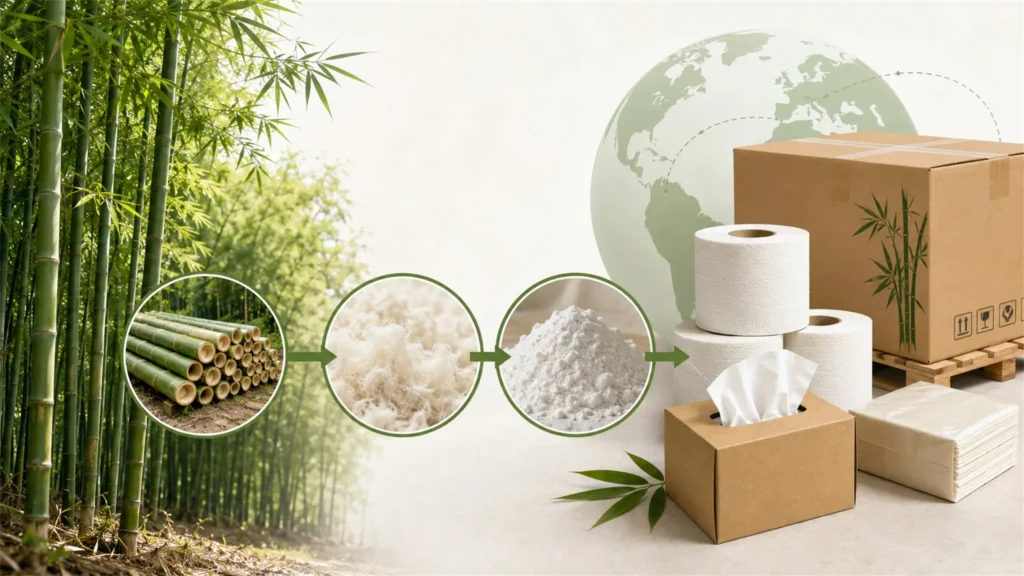
For bamboo pulp and tissue, the chain looks like this:
bamboo growing region → managed raw material → pulp processing → paper converting → roll size, sheet count, packaging, carton packing, and repeat production.
That is where 纽兰竹 connects the plant background to paper and tissue work. The growing region gives bamboo its starting point. Manufacturing decides whether that bamboo becomes a stable paper product.
For buyers comparing raw materials, 竹浆材料 is where the habitat story becomes a paper-making decision. From there, the discussion moves to product planning, such as 竹卫生纸产品 for retail, hospitality, ecommerce, and private label programs.
For B2B buyers, the plant story is useful. The shipment still depends on material quality, sample approval, packaging details, and whether the bulk order matches what was confirmed.
FAQ About Where Bamboo Grows
Where does bamboo grow naturally?
Bamboo grows naturally in many tropical, subtropical, and mild temperate regions. It is especially common across Asia and the Pacific, but bamboo also grows in parts of Africa, Latin America, and some cooler mountain or temperate environments.
Does bamboo grow only in Asia?
No. Asia is the most visible and commercially important bamboo region, but bamboo is not limited to Asia. Parts of Africa, Central and South America, and some mild temperate regions also have bamboo species or managed bamboo resources.
Does bamboo grow in the United States?
Some bamboo and cane species grow in parts of the United States, especially in warmer or wetter regions. This question often overlaps with gardening and native plant topics, so it should not be confused with industrial bamboo supply for paper, pulp, or tissue production.
What climate does bamboo grow best in?
Many bamboo species grow best in warm, moist conditions with enough rainfall and a suitable growing season. Some species tolerate cooler or mountain conditions, but climate alone is not enough for material supply. Species, land management, harvest age, and processing capacity also matter.
Why do bamboo growing regions matter for bamboo products?
Growing regions affect the raw material background behind bamboo products. For bamboo paper and tissue, buyers care less about bamboo as a map location and more about whether the region can support stable raw material, responsible sourcing discussion, processing quality, and repeatable production.