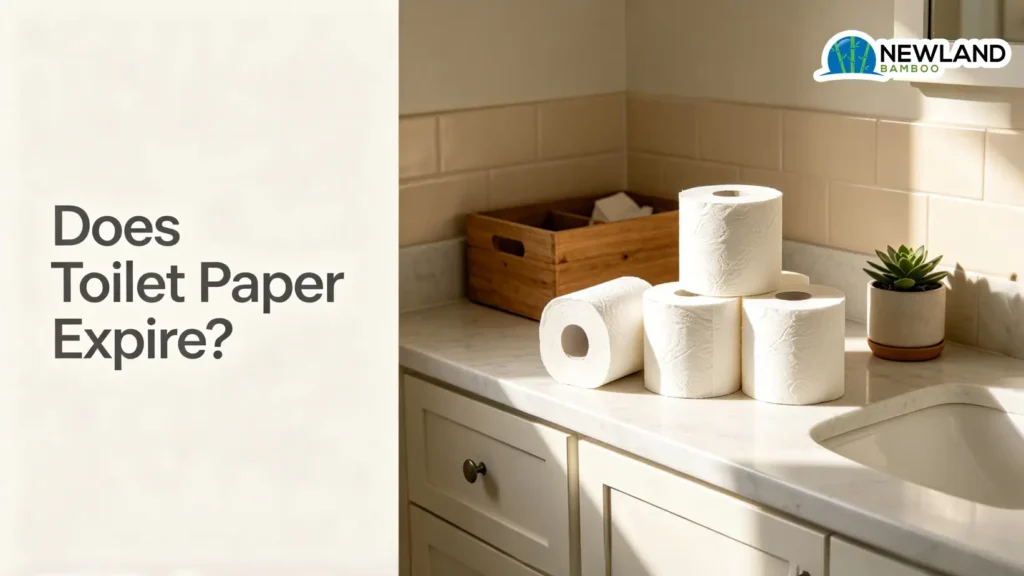
Quick Answer: Does Toilet Paper Expire?
No, toilet paper usually does not expire by a fixed date like food or medicine. If it is dry, clean, sealed, odor-free, and free from mold or pest damage, it may remain usable for many years.
If the pack is still sealed and has been stored in a dry indoor closet, even toilet paper bought years ago may still be acceptable to use. However, there is no standard “10-year” guarantee, because paper deterioration depends on both the paper composition and the storage environment.
Toilet paper can go bad much faster in poor storage conditions. A damp bathroom cabinet, basement, garage, or humid warehouse can make toilet paper musty, moldy, brittle, dusty, or contaminated. In a bathroom without good ventilation, an opened roll may absorb moisture from the air. After one humid season, it may feel less soft, develop a faint musty smell, or show tiny speckles.
So the practical answer is not “toilet paper expires after 3 years” or “toilet paper always lasts 10 years.” A better answer is this: toilet paper does not expire by a universal date, but it can become unusable quickly if moisture, mold, pests, dust, or chemical contamination reach the roll.
Before using old toilet paper, check the roll itself: dryness, smell, packaging, color, texture, dust, mold spots, and contamination risk.
Can Toilet Paper Go Bad?
Toilet paper can go bad when storage conditions affect the paper’s hygiene, smell, strength, or appearance.
“Expire” usually refers to a fixed date. “Go bad” is more about condition. Toilet paper does not spoil like food, but moisture, dust, pests, or contamination can make it unpleasant or unsuitable for personal use.
Common reasons toilet paper may go bad include:
- moisture or humidity
- mold or mildew
- musty odor
- dust buildup
- pest or rodent exposure
- chemical contamination
- yellowing or stains
- brittle or crumbling paper
- reduced softness or absorbency
Moisture is the biggest risk. Once toilet paper becomes damp, it can lose strength, absorb odors, and create conditions where mold or mildew may develop. Even if the roll later dries, it may not be a good idea to use it for personal hygiene.
Dust, pests, and chemical exposure also matter. Toilet paper stored in garages, basements, humid bathrooms, warehouses, or open shelves may collect dust or absorb odors if the packaging is not well protected.
How Long Does Toilet Paper Last in Storage?
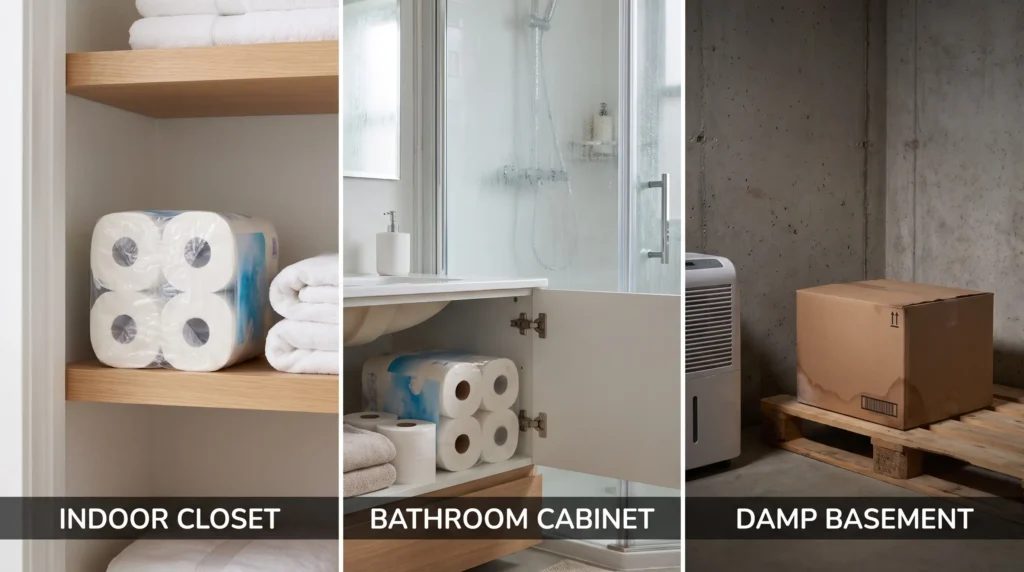
Toilet paper can last for many years in storage if it is kept dry, sealed, clean, and protected from moisture, sunlight, pests, and chemical odors. There is no single shelf life for every roll because storage conditions can shorten or extend its usable life.
The practical shelf life of toilet paper is not a fixed number. It is a reflection of the storage environment. Use this table to estimate your own situation:
| Storage Condition | How Long Can You Expect It to Last? |
|---|---|
| Dry, sealed, stored in an indoor closet | Likely fine for many years |
| Clean, dry warehouse with cartons off the floor | Suitable for normal rotation cycles |
| Opened pack in a bathroom cabinet | Check regularly; humidity from showers can shorten life |
| Damp basement, garage, or poorly ventilated space | May develop problems within a single humid season |
| Any water damage, mold, pest signs, or chemical exposure | Replace immediately, regardless of purchase date |
This section refers to storage life, not how many days one roll lasts during use. If toilet paper is dry, clean, odor-free, and intact, age alone is usually not the problem. If it is damp, moldy, musty, pest-damaged, or chemically contaminated, it should be replaced even if it was purchased recently.
Why Damp Toilet Paper May Stay Weak After Drying
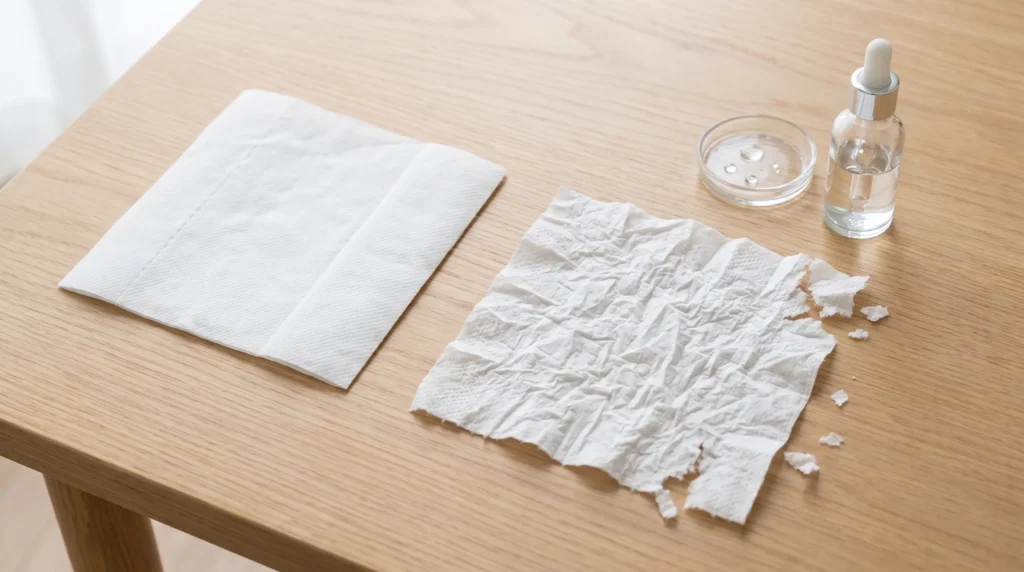
Damp toilet paper may stay weak after drying because moisture can disturb the paper’s fiber structure and reduce sheet strength.
Toilet paper is made from plant-based fibers. When paper absorbs moisture, the fiber network swells and weakens. After it dries again, the sheet may look dry on the surface, but it may not return to its original softness, strength, or cleanliness.
This is why water-damaged toilet paper can feel brittle, dusty, weak, rough, or easy to tear even after it dries. If the roll also has a musty smell, stains, mold spots, or packaging damage, it should be replaced rather than used for personal hygiene.
For a broader explanation of paper aging and deterioration, the Library of Congress notes that paper deterioration is affected by both paper composition and storage conditions, including moisture and light exposure. See the Library of Congress paper deterioration guide.
Does Toilet Paper Have an Expiration Date?
Most toilet paper does not have a standard expiration date like food, medicine, or cosmetics. However, some packages or cartons may show a production date, packing date, batch code, quality control code, or inventory rotation mark.
Those markings are often used for tracking and inventory control, not as a strict “use by” date.
For example, a date or code on toilet paper packaging may help identify:
- when the product was made
- when it was packed
- which batch it belongs to
- how distributors should rotate inventory
- which production lot should be checked if there is a quality issue
- which private label packaging version was used
If a package has a printed date, buyers should check what that date means before treating it as an expiration date. In many cases, the date helps identify the production or packing batch. It does not automatically mean the toilet paper becomes unsafe after that date.
For wholesale and private label toilet paper, batch information is still useful. It helps buyers trace production lots, review packaging, and manage inventory. But for actual use, the physical condition of the paper is still the most important factor.
How to Tell If Old Toilet Paper Is Still Acceptable to Use
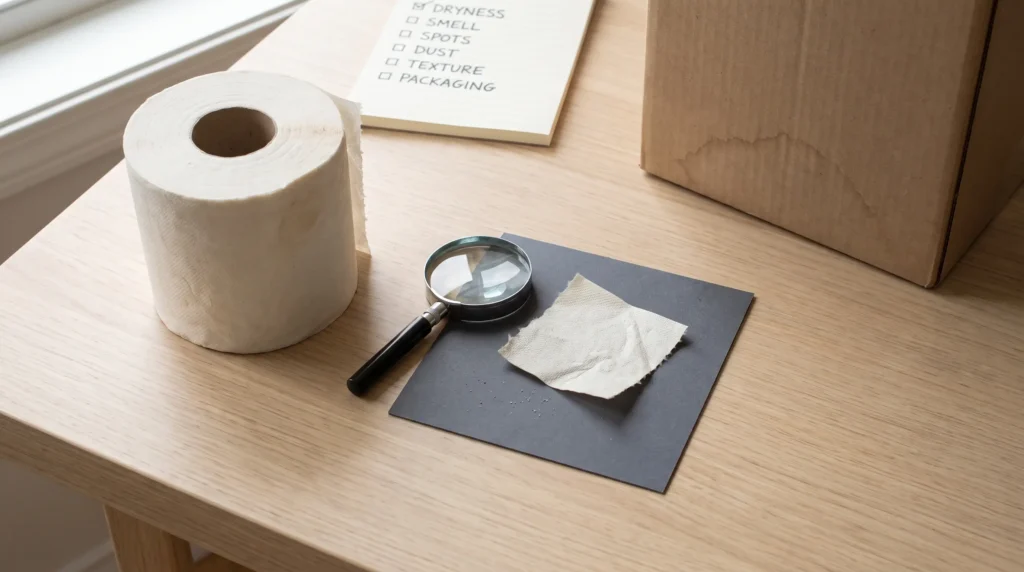
Old toilet paper may still be acceptable to use if it has been stored in a clean, dry, protected place. The quickest way to check is to inspect moisture, smell, appearance, packaging, texture, and contamination risk.
| Check | Usually Acceptable | Better to Replace |
|---|---|---|
| Moisture | Dry and clean | Damp, wet, or water-damaged |
| Smell | No unusual odor | Musty, moldy, or chemical smell |
| Appearance | Clean and normal | Mold spots, stains, or heavy yellowing |
| Packaging | Sealed or clean | Torn, dirty, soft, water-marked, or pest-damaged |
| Texture | Soft and intact | Brittle, dusty, rough, or crumbling |
| Contamination | Stored away from dirt and chemicals | Exposed to pests, rodents, chemicals, or dirty surfaces |
| Mold spots | No visible spots | Any black, green, gray, or fuzzy spots |
| Dust test | Little to no powder when handled | Fine powder falls off easily on a dark surface |
| Wet touch test | Holds together after light contact | Breaks down immediately or becomes mushy |
A little age-related yellowing does not always mean the paper is unusable. But if yellowing comes with odor, dampness, mold, dust, or texture breakdown, the roll should be replaced.
The safest practical rule is simple: if the paper looks clean, feels dry, and smells normal, it is usually acceptable. If there is any sign of moisture, mold, pests, chemical exposure, or contamination, do not use it for personal hygiene.
Why Old Toilet Paper Turns Yellow
Old toilet paper may turn slightly yellow over time because paper can react with air, light, heat, and humidity during storage.
Slight yellowing alone does not always mean the toilet paper is dirty or unsafe. In some cases, it is only an appearance change caused by paper aging, light exposure, or oxidation during long storage.
However, yellowing should be treated more seriously if it comes with a musty odor, dampness, mold spots, stains, dust, or brittle texture. In that case, the issue is no longer just color. It may point to poor storage, moisture exposure, or contamination.
For household users and wholesale buyers, the better approach is not to judge by color alone. Check smell, dryness, packaging condition, and texture together.
What Happens If You Use Damaged or Moldy Toilet Paper?
Using old toilet paper that is dry, clean, and odor-free is usually not a problem. The concern starts when the roll is damp, moldy, dusty, chemically contaminated, or pest-damaged.
Damaged toilet paper may feel rough, leave dust on the skin, smell unpleasant, or increase irritation risk for sensitive skin. For personal hygiene, especially on irritated or broken skin, it is better to avoid any toilet paper that has mold, musty odor, chemical smell, visible dirt, or pest exposure.
Mold is also a storage warning sign. CDC notes that mold can look like spots of different colors, may smell musty, and grows where moisture is present. For general health information, see the CDC mold health information.
Opened vs Unopened Toilet Paper: Does Storage Make a Difference?
Unopened toilet paper usually stores better than opened toilet paper because the original packaging helps protect it from moisture, dust, and handling contamination.
If the toilet paper is still sealed in its original plastic wrap, paper wrap, or carton, and it has been kept in a dry space, the risk of quality loss is lower. Opened rolls are more exposed to bathroom humidity, dust, odors, and surface contact.
Opened toilet paper should be kept away from:
- damp bathroom floors
- sinks, showers, and high-humidity areas
- garage or basement moisture
- cleaning chemicals
- insects or rodents
- open windows or direct sunlight
For long-term storage, unopened cartons or sealed packs are better than loose rolls. If rolls have already been opened, keep them in a clean cabinet, closed bin, or dry storage area.
How to Store Toilet Paper Properly
Toilet paper should be stored in a cool, dry, clean place where it is protected from moisture, dust, pests, and chemical odors.
Good household storage practices include:
- keep rolls in original packaging when possible
- store packs off the floor
- avoid damp basements, garages, or humid bathrooms
- keep toilet paper away from cleaning chemicals
- avoid direct sunlight and high heat
- use sealed bins for long-term household storage
For general guidance on moisture and mold prevention in indoor spaces, you can refer to the EPA mold and moisture guide.
Bathrooms are convenient, but they are not always the best place for long-term storage. Steam, splashes, and floor moisture can affect paper quality over time. For backup rolls, a dry closet, cabinet, or storage bin is usually better.
Do Different Types of Toilet Paper Age Differently?
Different types of toilet paper may age differently because fiber source, pulp quality, fragrance, lotion, ink, packaging, and storage conditions can all affect how the paper looks, smells, and feels over time.
| Toilet Paper Type | Storage Notes |
|---|---|
| Virgin pulp toilet paper | Usually stores well when kept dry, sealed, and away from sunlight or moisture. |
| Recycled toilet paper | May feel dustier or weaker after humidity exposure, especially if the paper is lower grade or made with shorter recycled fibers. |
| Bamboo toilet paper | Still needs dry, clean, sealed storage. Bamboo material does not remove the need for moisture control and packaging protection. |
| Scented toilet paper | Fragrance may change after long storage. Replace it if the smell becomes sour, chemical-like, or unpleasant. |
| Lotion-added toilet paper | Lotion or softening additives may change texture over time. Replace it if the paper feels sticky, oily, rough, or unusual. |
| Printed toilet paper | Check for odor, ink transfer, discoloration, or packaging damage before use, especially after long storage. |
Pure, unscented toilet paper is usually easier to evaluate after storage because there are fewer added fragrances, lotions, or decorative inks that may change smell or texture over time.
Does Bamboo Toilet Paper Expire?
Bamboo toilet paper does not have a special food-style expiration date either. Like wood-pulp, recycled, or other toilet paper types, bamboo toilet paper should be kept dry, clean, and protected from moisture or contamination.
The material alone does not make toilet paper immune to poor storage. Bamboo toilet paper can still be affected by dampness, mold, dust, pests, packaging damage, or chemical exposure.
For bamboo toilet paper buyers, the practical advantage is not that the product “never goes bad,” but that a clean, unscented, well-packed bamboo toilet paper product is easier to evaluate and store than heavily scented or lotion-added tissue.
For buyers, the practical check is the same: review the packaging condition, smell, texture, dryness, and cleanliness before use or resale. If bamboo toilet paper is dry, sealed, and stored properly, it may remain usable for a long time. If it is damp, moldy, contaminated, or damaged, it should be replaced.
Storage Checks for Wholesale and Private Label Toilet Paper
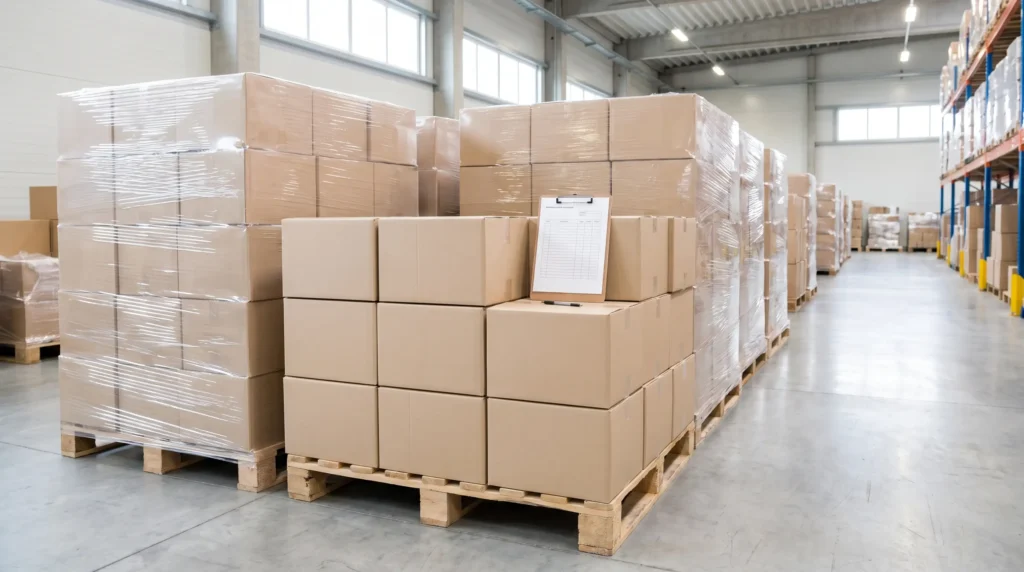
For wholesale and private label toilet paper, storage quality affects both product usability and downstream customer confidence. Buyers should review packaging and storage conditions before shipment, warehousing, or resale.
Important checks include:
- carton condition
- inner wrap or outer packaging condition
- moisture exposure
- warehouse humidity
- pallet storage
- container loading conditions
- batch code or packing information
- long-term inventory rotation
- visible odor, mold, stains, or pest damage
For imported or bulk toilet paper, buyers should also inspect cartons when they arrive. Soft cartons, water marks, broken seals, musty odor, compressed packaging, or collapsed corners can indicate moisture exposure during storage or transport.
These checks are especially important for bulk shipments, retail inventory, hotel supply, commercial restroom supply, and private label programs. A toilet paper roll may not have a strict expiration date, but poor storage can still affect appearance, softness, strength, hygiene, and packaging presentation.
For private label or wholesale bamboo toilet paper projects, Newland Bamboo can help buyers confirm packaging format, carton protection, and storage requirements before shipment.
Related Toilet Paper Guides
If you are reviewing product safety beyond storage conditions, you may also read our guide to non-toxic bamboo toilet paper.
If you are asking how long one roll lasts during use, that is a different topic from toilet paper expiration or storage quality. It depends on sheet count, daily usage, number of users, and ply. This usage topic should be covered in a separate guide.
FAQ
Can toilet paper expire?
Toilet paper usually does not expire like food or medicine, but it can become unsuitable to use if it is damp, moldy, contaminated, dusty, brittle, or poorly stored. The condition of the paper matters more than age alone.
Does toilet paper have an expiration date?
Most toilet paper does not have a strict expiration date. Some packages may show a production date, packing date, batch code, or inventory mark, but these are usually used for tracking and stock rotation rather than as a strict “use by” date.
What happens if you use expired toilet paper?
If the toilet paper is dry, clean, odor-free, and intact, old toilet paper is usually acceptable to use. If it smells musty, feels damp, shows mold, releases fine dust, or has been exposed to pests, dirt, chemicals, or dirty surfaces, it should not be used for personal hygiene.
How long does toilet paper last before it expires?
There is no single shelf life for all toilet paper. In clean, dry, sealed storage, toilet paper may remain usable for many years. In damp, humid, pest-damaged, or chemically contaminated storage, it should be replaced regardless of age.
I have a pack of toilet paper I bought 5 years ago. Should I throw it away?
Not necessarily. If the pack is still sealed, has been stored in a dry indoor closet, and the rolls feel dry, smell normal, and show no mold, dust, pest damage, or chemical odor, it is usually still acceptable to use. Age alone is not a reason to discard toilet paper.
Can I remove the moldy part and use the rest of the roll?
No. If a toilet paper roll has visible mold spots, it is better to replace the whole roll. Mold and moisture damage may spread inside the layers, even if only one area is visible.
Why does old toilet paper turn yellow?
Old toilet paper may turn yellow because paper can react with air, light, heat, and humidity during storage. Slight yellowing alone is not always a problem, but yellowing with odor, dampness, mold, dust, or brittle texture is a sign that the roll should be replaced.
Does bamboo toilet paper expire?
Bamboo toilet paper does not have a special food-style expiration date. Like wood-pulp or recycled toilet paper, it should be kept dry, clean, and protected from moisture, mold, pests, and contamination.
Does toilet tissue or toilet roll expire?
Toilet tissue and toilet roll are other names for toilet paper. They usually do not expire by a strict date, but they can go bad if stored in damp, dirty, dusty, or contaminated conditions.
What can I use instead of damaged toilet paper?
If toilet paper is damp, moldy, or contaminated, do not use it for personal hygiene. A bidet, clean water rinse, clean dry tissue, or clean cotton cloth used carefully may be safer temporary options. Do not flush wipes, cloth, cotton pads, or paper products unless they are clearly designed to be flushed.