Key Takeaways for the Time-Pressed Executive

- Mainstream Momentum: Bamboo tissue is transitioning from a niche product to a mainstream category, driven by converging regulatory pressure, consumer demand, and mature Asian supply chains.
- The Strategic Trade-Off: Procurement strategy revolves around a central “Impossible Triangle” balancing Cost, Compliance/Safety, and Growth/Brand Agility. Your first strategic choice is which corner to prioritize.
- The Governing Dynamic: The global market is orchestrated by a “Power Triangle”: Asia (Supply & Cost), Europe (Rules & Legitimacy), and North America (Demand & Brand Models). Your strategy is fundamentally about which pole(s) you engage and how.
- Beyond Price Risk: For bulk buyers, critical failure points are rarely price alone. The greater risks lie in compliance claims (greenwashing), capacity allocation at scale, and delivery certainty amid volatility.
- The Portfolio Approach: The most resilient strategy is not finding a single perfect supplier, but building a portfolio: a primary “keystone” partner for core volume, complemented by secondary agile suppliers for flexibility, innovation, and regional needs.

Executive Summary: Navigating the Procurement “Impossible Triangle”
The Core Dilemma
Leaders responsible for supply chain and sustainability face a pressing strategic dilemma: how to simultaneously meet the demands for cost control, regulatory and green claim safety, and market growth. Traditional wood pulp sourcing often forces a compromise. Bamboo pulp tissue presents a new solution space but requires a deliberate strategy to navigate its own complex trade-offs.
Four Strategic Pathways
Your organization’s position and goals dictate one of four primary sourcing strategies:
| Pathway | Primary Objective | Strategic Focus | Ideal For |
|---|---|---|---|
| Cost Efficiency | Minimize unit cost with baseline compliance. | Deep partnership with scaled Asian (Chinese) OEMs. | Price-sensitive retailers, large B2B contracts, hotel groups. |
| Compliance & Safety | Achieve unimpeachable sustainability credentials. | Adherence to European standards and certifications (FSC, EU Ecolabel). | Brands targeting EU, B-Corp aspirants, public sector. |
| Agile Branding | Rapidly launch and scale branded products. | Leveraging North American DTC ecosystems and brand storytelling. | Startups, digital-native brands, category innovators. |
| Balanced Resilience | Manage multi-regional complexity and risk. | “China+1” (e.g., Southeast Asia) supply web with regional customization. | Global multinationals, established brands expanding into new markets. |
The Underlying Rulebook: The Power Triangle
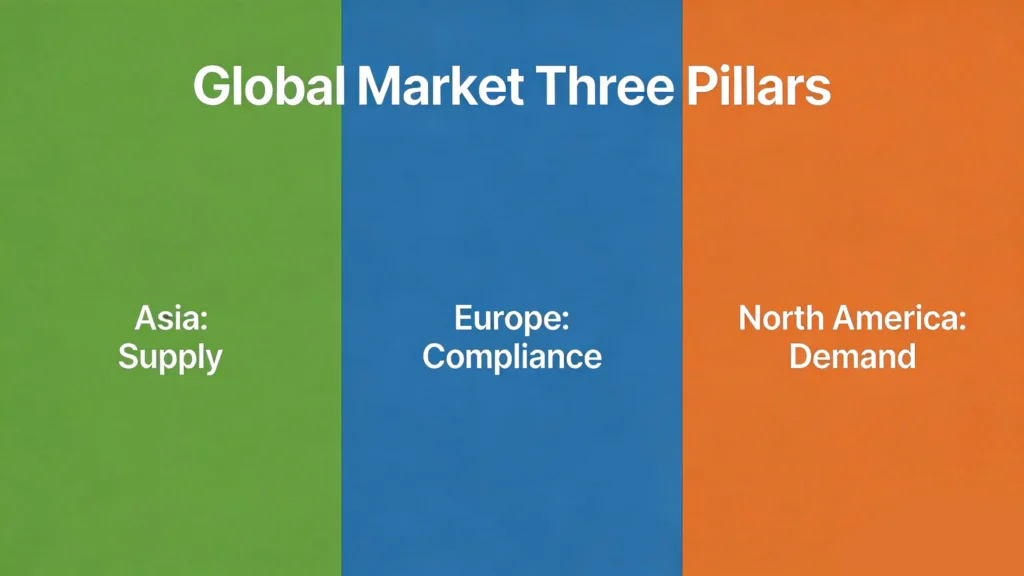
All pathways interact with a dominant global structure: the Power Triangle. Asia sets the reality of cost and production capacity, Europe defines the rules of compliance and legitimacy, and North America masters the art of demand generation and brand monetization. Success depends on strategically aligning with the relevant pole and understanding its rules of engagement.
A Guide for Readers: This report first establishes the market’s growth foundation and product value proposition (Chapters 1 & 2). It then decodes the Power Triangle (Chapter 3), the essential logic governing global trade. Use the matrix above to identify your likely pathway, and pay particular attention to the analysis of your corresponding power pole.
Procurement Risk Assessment Checklist
Before committing to volume, pressure-test your plan against these critical risk areas:

| Risk Dimension | Common Failure Points | Questions for Your Supplier |
|---|---|---|
| Cost Volatility | Pulp price swings erode margins; opaque re-pricing. | What is the pricing model for raw material fluctuations? Is there a clear review clause? |
| Compliance & Claims | Unsubstantiated “eco” claims; non-compliant labeling. | Can you provide full chain-of-custody certificates? Will you review and approve our market-specific packaging claims? |
| Quality Consistency | Batch-to-batch variation in softness, strength, or dusting. | What are your written QC tolerances? What is your process for pre-shipment samples and inspection? |
| Capacity & Lead Time | Inability to scale with your growth; missed deadlines. | Can you provide a formal capacity allocation for our forecast? What is your historical on-time-in-full (OTIF) performance? |
| Logistics Certainty | Port delays, container shortages, and damaged goods. | What are the standard and buffer shipping timelines? How is packaging designed to prevent damage? |
| Reputational Risk | Supplier ethical or environmental issues become your brand’s liability. | Do you grant audit rights? What is your policy on subcontracting? |
Market Fundamentals: A Landscape of Solid, Differentiated Growth
The Data: From Niche to Mainstream
Bamboo pulp tissue is now a substantiated, growth-driven category.
- Market Scale: The global market (focused on consumer tissue) is estimated at $12 billion (2024), moving beyond pilot phases.
- Growth Trajectory: It is expanding at a CAGR of 9.5% – 12.5%, significantly outpacing the overall tissue sector, indicating rapid adoption.
- Supply Base: China produces over 2.35 million tons annually, exporting globally and proving robust, scalable manufacturing.
Implication for Buyers: The key takeaway is penetration velocity. As adoption accelerates, securing reliable capacity from quality-conscious mills becomes a strategic activity, not just a procurement task. Your product specifications (ply, GSM, embossing) will increasingly determine channel fit and true landed cost.
The Drivers: Three Irreversible Forces
This growth is structural, not cyclical:
- Policy Push: Global “plastic bans” and initiatives like China’s “Replace Plastic with Bamboo” create regulatory-driven demand.
- Consumer Pull: Over 60% of global consumers express willingness to pay a premium (5-15%) for verified sustainable products, making it a brand equity investment.
- Industry Enablers: Mature Asian supply clusters (from forestry to finished goods) deliver the scale, consistency, and flexibility required for global FMCG distribution.
The Universal Baselines
Regardless of region, all players must acknowledge:
- FSC Certification is Table Stakes: It is the non-negotiable baseline for credible sustainability claims in developed markets.
- Carbon is a Future Cost Line Item: Mechanisms like the EU’s CBAM will translate embedded carbon into cost. Bamboo’s rapid growth and sequestration offer a inherent advantage.
- Performance is Paramount: Any “green” product must first meet or exceed functional expectations for strength, softness, and absorbency.
The Product Proposition: Beyond “Eco” to Tangible Value
Performance Advantages
| Attribute | Bamboo Pulp Advantage | Consumer/Brand Benefit |
|---|---|---|
| Fiber Length | Longer (avg. 2-3mm) vs. wood pulp (1-1.5mm). | Naturally higher wet strength and softness; reduces tearing. |
| Natural Properties | Contains “bamboo kun,” an inherent antimicrobial agent. | A credible hygiene and safety claim for sensitive applications. |
| Absorbency | Superior water and oil absorption. | Greater efficiency in use for cleaning and wiping. |
| Aesthetic Choice | Can be fully bleached (ECF/TCF) or left in natural unbleached hue. | Supports both a “pure white” or “natural eco” brand aesthetic. |
The Sustainability Narrative, Quantified
- Renewability: Bamboo matures in 3-5 years, versus decades for timber.
- Carbon Impact: As a fast-growing grass, it acts as a more effective carbon sink per hectare per year than many tree species.
- Land Efficiency: Higher biomass yield per acre reduces pressure on land resources.
The Business Case: Three Value Levers
| Lever | Explanation | Financial Impact |
|---|---|---|
| Total Cost of Ownership (TCO) | Higher strength may reduce sheets-per-use; may lower future carbon-related tariffs. | Can neutralize a higher unit price, improving long-term margins. |
| Brand Value & Premium | Enables credible green storytelling and meets retailer sustainability mandates. | Directly supports 5-15% price premiums and channel access. |
| Supply Chain Resilience | Diversifies fiber source away from timber; faster-growing crop improves supply predictability. | Mitigates long-term volatility and regulatory risk associated with forestry. |
The Power Triangle: The Strategic Geography of Global Trade
The market is not flat. It is governed by three regional epicenters, each controlling a critical pillar of competitive advantage.
The Asia Pole (Supply & Cost)
- Power Source: “Uncompromising Delivery Certainty.” The power is not just low cost, but the unparalleled ability to deliver vast volumes of specified quality on schedule.
- The Paradox: “Diseconomies of Scale.” Beyond a certain order volume, buyers face diminishing returns: reliance on few mega-mills, reduced bargaining power, and vulnerability to single-point disruptions.
- Strategic Playbook for Buyers:
- Source the “Invisible Champions”: Look beyond the largest names to specialized OEMs with proven records supplying Japanese or European brands—they often have superior process discipline.
- Contract for Volatility: Negotiate transparent cost-pass-through mechanisms tied to pulp indices, fostering a stable, long-term partnership over adversarial price haggling.
The Europe Pole (Rules & Legitimacy)
- Power Source: “The Authority to Define ‘Right.'” Power derives from setting the stringent environmental, safety, and labeling standards that become global benchmarks.
- The Paradox: “The Compliance Ceiling.” The intense focus on risk mitigation can stifle product innovation and create a high, rigid cost structure.
- Strategic Playbook for Buyers:
- Employ the “Compliance Lever”: Use hard-won EU certifications (e.g., EU Ecolabel) as a master key to unlock other premium markets (e.g., Middle East luxury hospitality, APAC corporate supply) that respect the standard.
- Audit the Auditor: Scrutinize the international reputation of the certifying body. A certificate from a lesser-known entity offers little protection in a compliance challenge.
The North America Pole (Demand & Brand)
- Power Source: “Demand Amplification & Monetization.” Power lies in the world’s most sophisticated brand-building and channel machinery that can create and capture consumer value.
- The Paradox: “Brand Hollowing.” The focus on marketing and distribution can mask a reliance on contract manufacturing, where the buyer pays a premium for customer acquisition costs, not product superiority.
- Strategic Playbook for Buyers:
- Conduct a “Value Chain Autopsy”: Deconstruct the retail price. Understand what portion covers FOB, logistics, brand marketing, and channel margins to assess true partnership value.
- Choose Your Role: Decide if you are a low-margin OEM supplier to a brand or if you will internalize the brand playbook to build your own DTC business using the same Asian supply base.
The Path Forward: This Power Triangle framework explains why global trade operates as it does. The critical next question is how to operate within—or across—specific regional markets. A detailed playbook for the seven key global regions, applying this Triangle logic, follows in the companion volume “Global Market Entry Playbooks.”
Ready to Optimize Your Procurement Strategy?
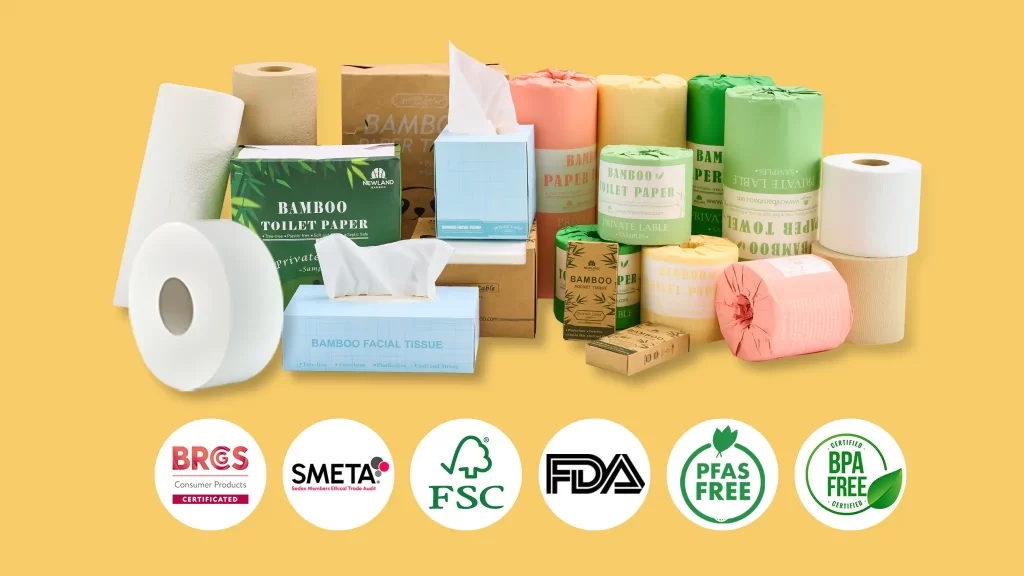
Navigating the “Impossible Triangle” of cost, compliance, and growth requires a strategic partner with experience in managing complexity and securing reliable, sustainable supply chains. At Newland Bamboo, we specialize in providing tailored solutions for organizations looking to source bamboo pulp tissue with a clear balance of performance, sustainability, and cost-effectiveness.
Why Choose Us:
- Experienced Supply Chain Management: We help you navigate the complexities of multi-regional sourcing, providing a resilient, agile supply network.
- Sustainability Commitment: Our products meet the highest global standards for environmental sustainability and certification, including FSC and EU Ecolabel.
- Flexible Partnership: Whether you need high-volume cost efficiency or agile, innovative product options, we’re ready to adapt to your business needs.
Take the Next Step: Reach out to our team for a comprehensive discussion on how we can support your sourcing strategy. We offer tailored consultations, product samples, and full compliance documentation to ensure a smooth procurement process.
[Contact Us Today] | [Request a Sample & Full Compliance Report]
From Framework to Implementation: A Strategic Blueprint
This report has provided the map and the rules of the game. Translating this insight into a competitive, resilient supply chain is the execution phase. This requires moving from a transactional purchasing mindset to a strategic partnership model.
The Implementation Mindset: Three Pillars
- Strategic Clarity & Internal Alignment
- Action: Use the “Impossible Triangle” and “Four Pathways” model to facilitate an internal workshop. Secure cross-functional agreement on the primary strategic objective (e.g., “Year 1 is about compliance-safe market entry in Europe”).
- Output: A clear Strategic Sourcing Brief signed off by Procurement, Sustainability, Marketing, and Finance.
- Dynamic Supplier Portfolio Design
- Action: Reject the quest for a single “best” supplier. Instead, design a portfolio: a primary “Keystone” partner for 60-70% of core volume, and 2-3 “Agile” partners for innovation, regional customization, and capacity buffering.
- Output: A Supplier Ecosystem Map, categorizing partners by their core competency (Cost, Compliance, or Agility) aligned with your strategic pillars.
- Rigorous Risk Mitigation & Value Validation
- Action: Use the Procurement Risk Assessment Checklist (see page 3) as a non-negotiable part of your RFP and contract negotiation. Invest in pre-production samples and independent lab tests against your key performance metrics.
- Output: Risk-weighted contracts with clear clauses on cost volatility, quality thresholds, and compliance warranties, plus a validation dossier for your marketing claims.
How Specialized Partners Operationalize This Blueprint
Firms that excel in this market act as integrators and de-risking agents. For example, Newland Bamboo operationalizes this blueprint by:
- Translating Strategy into Specification: Working with clients to convert a strategic goal (e.g., “Agile Branding in North America”) into a detailed, manufacturable product spec and compliance roadmap.
- Managing the Portfolio: Leveraging their network to identify and qualify both “Keystone” and “Agile” factory partners, managing the complexity of multi-supplier coordination on the client’s behalf.
- Guaranteeing the Gateways: Ensuring every shipment is backed by the correct documentation, audit trails, and packaging compliance required for the target market, turning logistical and regulatory complexity into a seamless process for the buyer.
Executive FAQ: Addressing Core Strategic Concerns
-
We are price-competitive but need a credible “green” story. How do we start without massive upfront certification costs?
Adopt a “Phased Compliance” strategy. Begin with a FSC-certified base product from a reputable OEM—this addresses the most critical raw material sustainability question. Layer on specific market certifications (like Ecolabel) and carbon footprint data as you scale and enter new regions, treating compliance as a variable cost of expansion rather than a fixed upfront cost.
-
The “Diseconomies of Scale” risk in Asia concerns us for our large-volume business. How is this managed?
The solution is a “Resilient Supply Mix,” not a single factory. Your primary partner should be a scale player. However, you must actively develop a secondary, agile supplier (often a specialist in innovation) that can take 20-30% of your volume. This mix provides leverage, mitigates allocation risk, and fosters innovation. Specialized partners can build and manage this ecosystem for you.
-
We need to serve both eco-conscious European retailers and price-sensitive local markets. Does this mean two separate supply chains?
Not necessarily. It means one flexible supply chain with two product and documentation streams. You can produce a core product on the same line. For Europe, you appy full certification, specific packaging, and a premium finish. For other markets, you simplify the packaging and documentation. The key is a factory with the flexibility and process control to handle this duality, which is a core sourcing criterion.
-
How do we verify a supplier’s sustainability data, like their carbon footprint claim?
Demand third-party verification. Accept only Life Cycle Assessment (LCA) reports from internationally recognized bodies. Supplement this with contractual audit rights—the right to have a qualified third party inspect their supply chain. True partners will be transparent; opacity is a major red flag.