
Apa perbedaan antara tisu toilet bambu dan tisu toilet tradisional dari pulp kayu?
Tisu toilet bambu terbuat dari rumput yang tumbuh cepat, sedangkan tisu toilet dari pulp kayu menggunakan pohon yang tumbuh lambat. Opsi bambu lebih terbarukan dan biodegradable, meskipun pulp tradisional masih banyak digunakan karena ketersediaan dan biayanya.
Sumber Bahan Baku
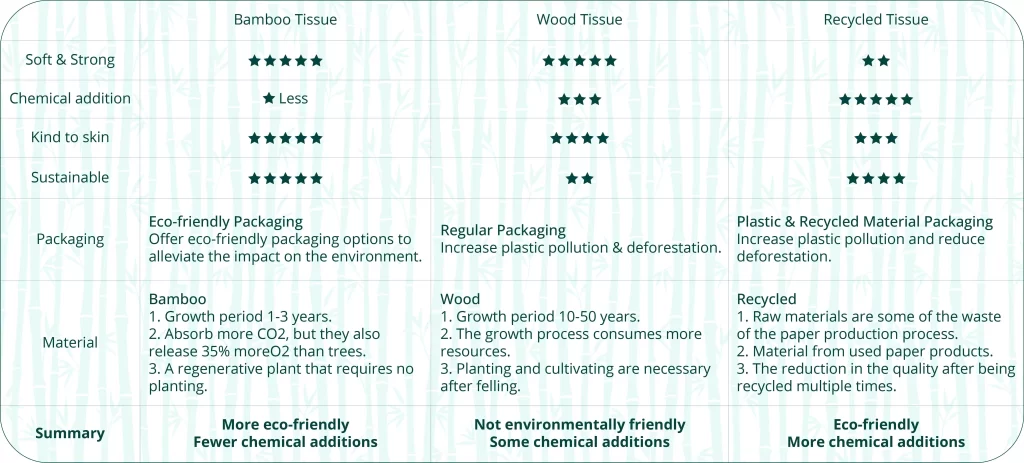
Bambu secara teknis adalah rumput, bukan pohon. Ia dapat tumbuh hingga 1 meter per hari dan beregenerasi secara alami tanpa penanaman ulang. Hal ini menjadikannya salah satu bahan baku paling terbarukan yang tersedia untuk produksi kertas.
Pulp kayu tradisional berasal dari pohon kayu keras atau kayu lunak, yang seringkali membutuhkan waktu 10 hingga 30 tahun untuk matang. Penebangan pohon-pohon ini berkontribusi pada deforestasi dan hilangnya keanekaragaman hayati, terutama jika melibatkan hutan tua.
Proses Manufaktur
Pulp bambu biasanya diproses menggunakan metode mekanis atau kimia dengan lebih sedikit bahan kimia keras. Karena bambu mengandung lebih sedikit lignin daripada kayu, ia membutuhkan lebih sedikit energi dan input kimia selama pulping dan pemutihan.
Bubur kayu, terutama pulp murni, mungkin memerlukan pemutihan intensif dan lebih banyak energi untuk memecah struktur lignin. Agen pemutih berbasis klorin masih digunakan di beberapa manufaktur tisu toilet konvensional, yang menimbulkan kekhawatiran lingkungan.
Dampak Lingkungan
Budidaya bambu tidak memerlukan pestisida, tumbuh di lahan terdegradasi, dan menggunakan air yang jauh lebih sedikit daripada pertanian pohon tradisional. Ia juga menyerap lebih banyak karbon dioksida dan menghasilkan lebih banyak oksigen daripada tutupan pohon yang setara.
Pulp kayu tradisional masih banyak digunakan karena infrastruktur historis dan efisiensi biayanya, tetapi jejak lingkungannya mencakup perusakan habitat, erosi tanah, dan penggunaan air yang lebih tinggi.
Penilaian Siklus Hidup (LCA) menunjukkan bambu memiliki dampak keseluruhan yang lebih rendah, meskipun emisi transportasi dari mengekspor produk bambu juga harus dipertimbangkan.
Perbandingan Kinerja
Tisu toilet bambu umumnya lebih lembut daripada kertas daur ulang dan sebanding dengan kertas pulp murni berkualitas tinggi. Ia secara alami hipoalergenik dan aman untuk kulit sensitif, seringkali tidak diputihkan dan bebas pewangi.
Tisu toilet dari pulp kayu tersedia secara luas dan dikenal karena konsistensinya dalam kelembutan dan kekuatan. Namun, tergantung pada mereknya, beberapa produk mungkin mengandung bahan kimia atau pewarna tambahan.
Dalam hal kemampuan larut dan keamanan septic tank, baik produk bambu maupun produk pulp kayu tradisional bekerja dengan baik jika tidak dilapisi dan bebas dari bahan tambahan.
FAQ
-
Apakah tisu toilet bambu lebih baik daripada tisu toilet pulp kayu?
Bambu lebih terbarukan dan ramah lingkungan, tetapi keduanya dapat berkinerja baik tergantung pada praktik manufaktur.
-
Apakah tisu toilet bambu aman untuk septic tank?
Ya, sebagian besar tisu toilet bambu larut dengan cepat dan aman untuk sistem septik.
-
Mengapa tisu toilet bambu lebih mahal?
Karena keterbatasan infrastruktur produksi dan biaya transportasi, produk bambu sering kali memiliki harga premium.
-
Apakah tisu toilet bambu dapat terurai secara hayati?
Ya, tisu toilet bambu sepenuhnya dapat terurai secara hayati dan dapat dikomposkan.
-
Apakah tisu toilet bambu mengandung bahan kimia?
Tisu bambu berkualitas tinggi sering dibuat tanpa pemutih klorin, pewarna, atau pewangi.
-
Terbuat dari apakah kertas toilet pulp kayu?
Biasanya terbuat dari campuran pohon kayu keras dan kayu lunak yang diproses menjadi pulp.
-
Apakah tisu toilet bambu lembut?
Ya, secara alami lembut dan cocok untuk kulit sensitif.
-
Apakah kertas toilet dari pulp kayu ramah lingkungan?
Pulp kayu murni memiliki dampak lingkungan yang lebih tinggi, terutama jika berasal dari hutan yang tidak berkelanjutan.