Quick Answer: Is Bamboo a Tree?
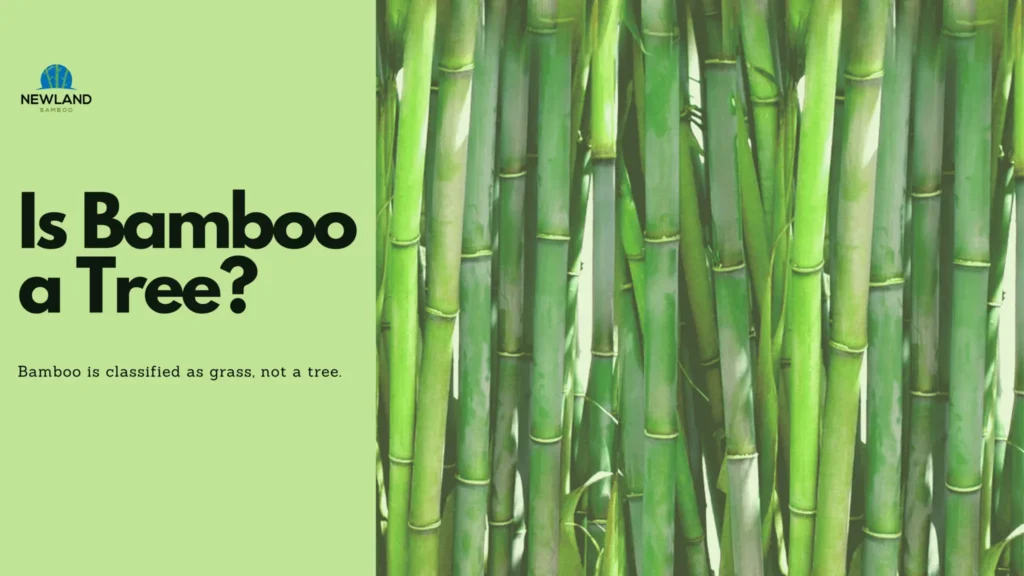
No. Bamboo is not a tree. Bamboo is a grass.
More specifically, bamboo belongs to the grass family Poaceae and the bamboo subfamily Bambusoideae. Some bamboo species grow tall, hard, and forest-like, which is why people often mistake bamboo for a tree. But in botanical terms, bamboo is classified as grass.
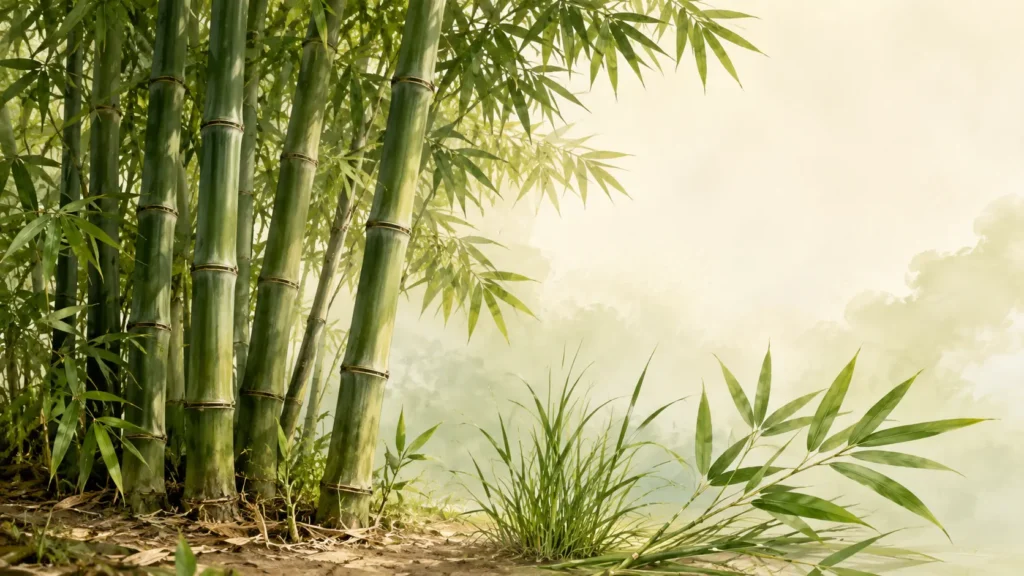
The part people often call a “bamboo trunk” is more accurately called a culm. Bamboo culms can be woody and strong, but they do not grow like tree trunks. They emerge from underground rhizomes, reach most of their height during the growing stage, and then harden as they mature.
| Common Question | Clear Answer |
|---|---|
| Is bamboo a tree? | No. Bamboo is not a tree. |
| Is bamboo a grass? | Yes. Bamboo is a type of grass. |
| Is bamboo a plant? | Yes. Bamboo is a plant, but not a tree. |
| Is bamboo wood? | Bamboo can be woody, but it is not tree wood. |
| Why does bamboo look like a tree? | It grows tall, forms hard culms, and can create forest-like stands. |
Why People Think Bamboo Is a Tree
The confusion makes sense. Bamboo does not look like the grass people see on lawns.
Many bamboo species grow much taller than ordinary grasses. Some form dense groves that look like forests. Mature culms can be hard, smooth, and woody, and bamboo is often used in products where people normally expect wood, such as furniture, flooring, utensils, construction materials, paper, and textiles.
So in everyday language, “bamboo tree” is a common phrase.
Botanically, though, appearance is not enough. A plant can look tree-like without being a tree. Bamboo is a good example: it can be tall and woody, but its structure, growth pattern, and classification place it in the grass family.
Why Bamboo Is Classified as Grass
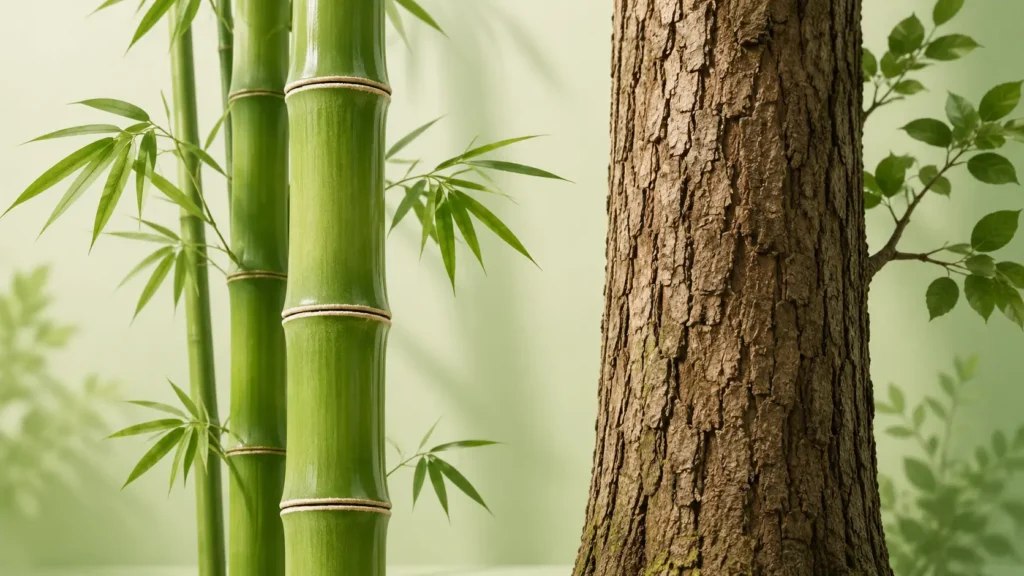
Bamboo belongs to the grass family, Poaceae. Kew also describes bamboos as woody plants in the grass family Poaceae, which is why bamboo can feel confusing: it is grass by classification, but many species look and behave very differently from ordinary lawn grass.
Several features explain why bamboo is classified as grass:
- Bamboo has culms rather than true tree trunks.
- Bamboo culms are divided by nodes and internodes.
- Many bamboo culms are hollow or segmented.
- New bamboo culms grow from underground rhizomes.
- Bamboo culms do not thicken year after year like many tree trunks.
- Bamboo belongs to Bambusoideae, the bamboo subfamily within Poaceae.
This is why bamboo is often described as a woody grass. That phrase is useful because it explains both sides of the plant: bamboo is botanically grass, but many species develop hard, woody-looking culms.
Bamboo Culms vs Tree Trunks
The most important difference between bamboo and trees is not height. It is how the main stem grows.
A tree trunk usually increases in diameter over many years. Many trees add layers of wood, form bark, and develop growth rings. Bamboo culms work differently. The Hong Kong Science Museum explains that bamboo culms do not have vascular cambium and do not show secondary growth through annual rings. In practical terms, a bamboo culm usually emerges from the ground close to its final diameter, grows upward quickly, and then hardens.
That is why a bamboo culm can look like a trunk but is not the same structure.
| Feature | Bamboo Culm | Tree Trunk |
|---|---|---|
| Botanical group | Grass family | Tree species vary |
| Main stem name | Culm | Trunk |
| Outer structure | Segmented by nodes | Often covered with bark |
| Diameter growth | Usually emerges near final diameter | Often thickens over many years |
| Growth rings | Not like typical tree rings | Many trees form annual rings |
| Renewal | New culms grow from rhizomes | Tree growth centers on trunk, branches, and roots |
This difference matters because it explains why bamboo can be both tall and grass-like at the same time. It is not “grass” in the ordinary lawn sense, but it is still grass in botanical classification.
Bamboo Rhizomes vs Tree Roots
Bamboo also renews itself differently from most trees.
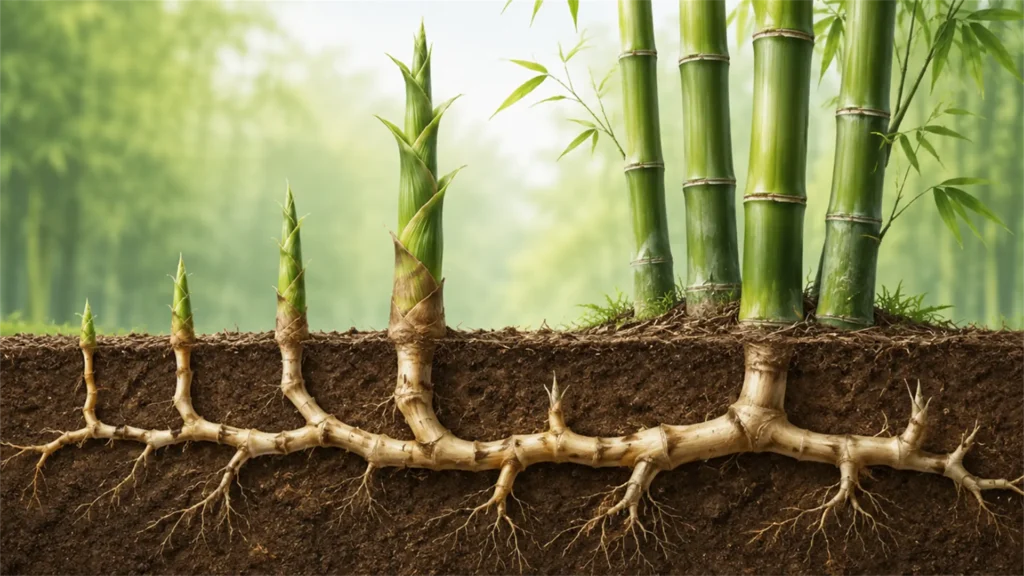
Bamboo grows from underground rhizomes. A rhizome is an underground stem that can send up new shoots. When a new bamboo shoot appears, it is connected to this underground system.
That rhizome network helps bamboo produce new culms again and again, depending on species, climate, stand maturity, and management. This is one reason bamboo is often discussed as a fast-renewing plant resource. For a deeper explanation of bamboo’s growth speed, see our guide on how fast bamboo grows.
Trees also have roots, of course, but they do not usually produce new culms from rhizomes in the same way bamboo does. A tree grows through its trunk, branches, and roots. Bamboo expands and renews through culms and underground rhizomes.
This does not mean every bamboo product is automatically sustainable. It simply explains why bamboo is structurally different from trees.
Is Bamboo Wood?
Bamboo is not wood in the strict botanical sense because it does not come from a tree trunk.
But bamboo can be woody. Mature bamboo culms are hard, fibrous, and strong enough to be used in many wood-like applications. That is why people often say “bamboo wood” when talking about flooring, furniture, boards, kitchenware, or construction materials.
The most accurate way to say it is:
Bamboo is a woody grass, not tree wood.
For paper and tissue products, the more relevant term is usually bamboo pulp material. Bamboo pulp is made from bamboo fiber and can be used to produce paper and tissue products, including bamboo toilet paper, facial tissue, paper towels, and other tissue formats.
Is Bamboo a Plant or a Tree?
Bamboo is a plant, but it is not a tree.
This question appears because people often use “plant” and “tree” loosely. A tree is a kind of plant, but not every tall plant is a tree. Bamboo is a plant in the grass family.
A simple way to explain it is:
Bamboo is a plant. Bamboo is a grass. Bamboo is not a tree.
That answer covers the botanical identity without forcing bamboo into a category based only on appearance.
Why Bamboo’s Identity Matters for Tree-Free Materials
Bamboo’s identity matters because bamboo-based products are often positioned as tree-free materials.
Since bamboo is a grass rather than a tree, bamboo pulp can be described as a non-wood plant fiber source. This is one reason bamboo appears in discussions about tree-free tissue, bamboo paper, and alternative fiber materials.
But this wording should be used carefully.
Tree-free does not automatically mean every bamboo product is more sustainable in every way. A responsible product claim still needs to consider bamboo sourcing, harvesting, pulping, bleaching, packaging, certification documents, and the rules of the destination market.
For bamboo tissue products, the botanical fact is only the starting point. “Bamboo is grass, not tree” helps explain the material category. It does not replace product testing, certification review, packaging decisions, or clear claim wording.
How Bamboo Connects to Bamboo Pulp and Tissue Products
Bamboo can be processed into bamboo pulp. Bamboo pulp can then be used for paper and tissue products such as bamboo toilet paper, facial tissue, paper towels, napkins, and other household or commercial tissue products.
For Newland Bamboo, bamboo’s identity as grass helps explain the material story behind bamboo tissue. It supports the idea of bamboo as a plant-based, tree-free fiber source.
For B2B buyers, though, the botanical answer is not enough to make a sourcing decision. Buyers still need to review:
- bamboo pulp source;
- ply and GSM;
- sheet size and roll size;
- bleaching method;
- packaging format;
- certification needs;
- sample quality;
- repeat supply capability.
In other words, bamboo’s botanical identity explains why the material is different from wood pulp. Product suitability still depends on specifications, samples, documents, packaging, and production consistency.
FAQ About Bamboo as a Grass
Is bamboo a tree?
No. Bamboo is not a tree. Botanically, bamboo belongs to the grass family Poaceae.
Is bamboo a grass?
Yes. Bamboo is a grass. Some bamboo species are tall and woody, but they are still classified as grasses.
Is bamboo a tree or grass?
Bamboo is grass, not a tree. It may look tree-like because it grows tall, forms hard culms, and can create dense groves.
Is bamboo a plant or a tree?
Bamboo is a plant, but it is not a tree. More specifically, bamboo is a grass.
Why is bamboo not a tree?
Bamboo is not a tree because it belongs to the grass family and grows through culms and underground rhizomes rather than a trunk that thickens over many years.
Is bamboo wood?
Bamboo can be woody and used like wood, but botanically it is not tree wood. A more accurate description is woody grass.
Is bamboo part of the grass family?
Yes. Bamboo belongs to Poaceae, the grass family, and Bambusoideae, the bamboo subfamily.
Does bamboo have a trunk?
No. Bamboo does not have a true tree trunk. Its main above-ground stems are called culms.
Does bamboo grow like a tree?
No. Bamboo culms emerge from rhizomes and usually reach their main height and diameter relatively quickly. They do not grow thicker year after year like many tree trunks.
Is lucky bamboo real bamboo?
No. Lucky bamboo is a common indoor plant, but it is not true bamboo. It should not be used to understand bamboo’s botanical identity.
Why is bamboo called tree-free?
Bamboo may be called tree-free because it is grass rather than tree wood. For bamboo tissue or bamboo paper products, tree-free positioning should still be supported by proper sourcing, processing, packaging, and claim review.