答えは「味」ではなく「生息環境」から始まる
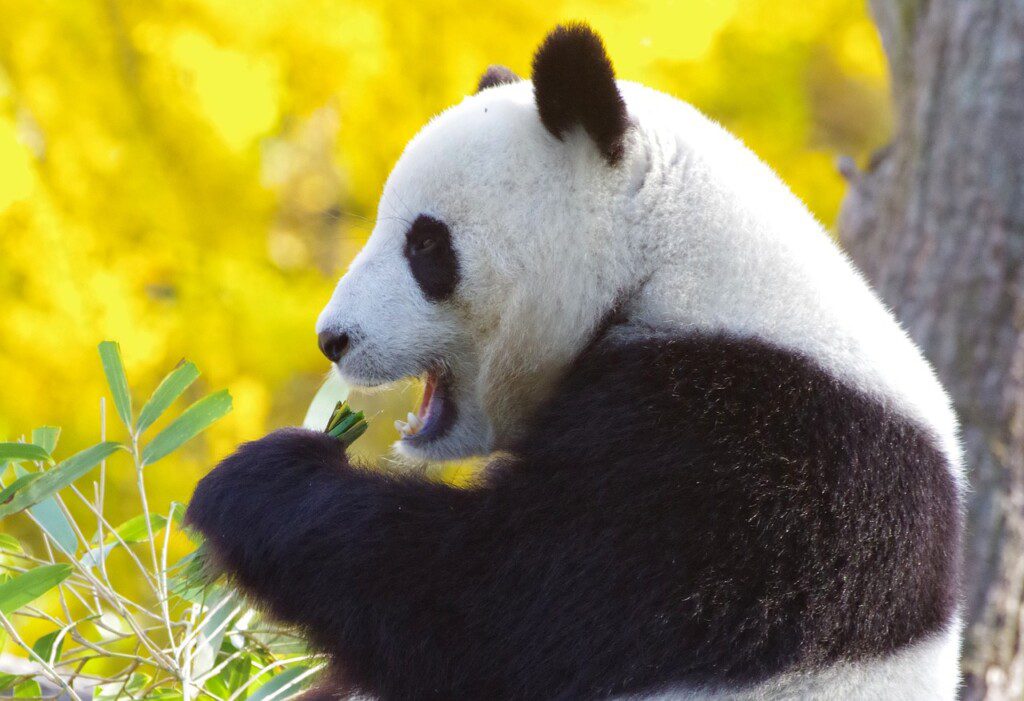
パンダが竹を食べる最も単純な理由は、そこに竹が大量にあるからです。.
ジャイアントパンダは、竹が密生し、安定した餌場を形成できる山岳林に生息しています。素早く追いかけたり、積極的に狩りをしたりして生き延びるわけではない動物にとって、これは重要なことです。竹は逃げません。獲物のように追跡する必要もありません。竹は引き抜いたり、掴んだり、皮をむいたり、噛んだりして、何時間もかけて食べることができます。.
だからといって、竹が肉のように栄養価が高いという意味ではありません。つまり、竹はパンダがそれを軸に生存戦略を築けるほど十分に手に入るということです。だからこそ、理解することが 竹が生えているところ これは、なぜパンダが竹が豊富な山岳地帯の生息地とこれほど密接に結びつくようになったのかを説明する一助となる。.
多くの単純な説明が見落としがちなのが、この点です。パンダが竹を選んでいるのは、それが理想的な餌だからではありません。竹は安定して入手でき、地元で採れ、しかも豊富にあるため、ゆっくりとした反復的な摂食リズムを支えるのに十分な量があるからこそ、パンダは竹に頼っているのです。.
竹の部位の違いも重要です。パンダは季節や入手状況に応じて、新芽、葉、茎などを食べます。新芽は入手できる時期には柔らかく、栄養価も高い傾向があります。葉や茎は硬めですが、パンダが必要とする1日あたりの大量の摂取量を維持するのに役立ちます。.
つまり、竹がパンダにとって有効なのは、パンダに満腹感と予測可能性をもたらすからだ。そして、パンダの体は、より難しい課題、すなわちそれを十分に消化する方法という課題を解決しなければならない。.
竹は頼りになるが、決して手軽な食べ物ではない
竹は、大きなクマにとっては食べにくい食べ物だ。.
繊維質です。噛むのに力が必要です。その多くは、完全に分解されることなく、パンダの消化管を通過してしまいます。牛やその他の特殊な草食動物とは異なり、ジャイアントパンダには、植物繊維を長時間発酵させるために進化した多室構造の胃がありません。.
だからこそ、パンダの方法は単に消化効率を高めることではない。それは、量、時間、選択、そしてエネルギーの節約にあるのだ。.
| パンダの挑戦 | パンダはどのように竹を消化しているのか |
|---|---|
| 竹は可燃エネルギーが低い | パンダは毎日大量の餌を食べます |
| 茎や葉は硬い | 強力な顎と大きな臼歯が、それらを砕くのに役立っている |
| 消化能力には限界がある | 給餌時間が長いことで、効率の低さを補う |
| 竹の品質は季節によって変わる | パンダは新芽、葉、または茎を選ぶ |
| エネルギーは節約しなければならない | パンダは餌を食べる合間に長い時間休む |
これにより、パンダの食生活は非効率的に見えるかもしれませんが、決して無計画というわけではありません。パンダはただ気まぐれに竹をつまんでいるわけではないのです。彼らの生活リズムは、竹を中心に組み立てられているのです。.
パンダは、一口ごとに得られるエネルギーがそれほど多くないため、一日の大半を食事に費やしています。パンダは食べ続け、選び続け、そしてエネルギーを節約し続けなければなりません。そうすることで、竹を効率的に摂取できるのです。.
パンダは、竹を食べるのが日課のクマです
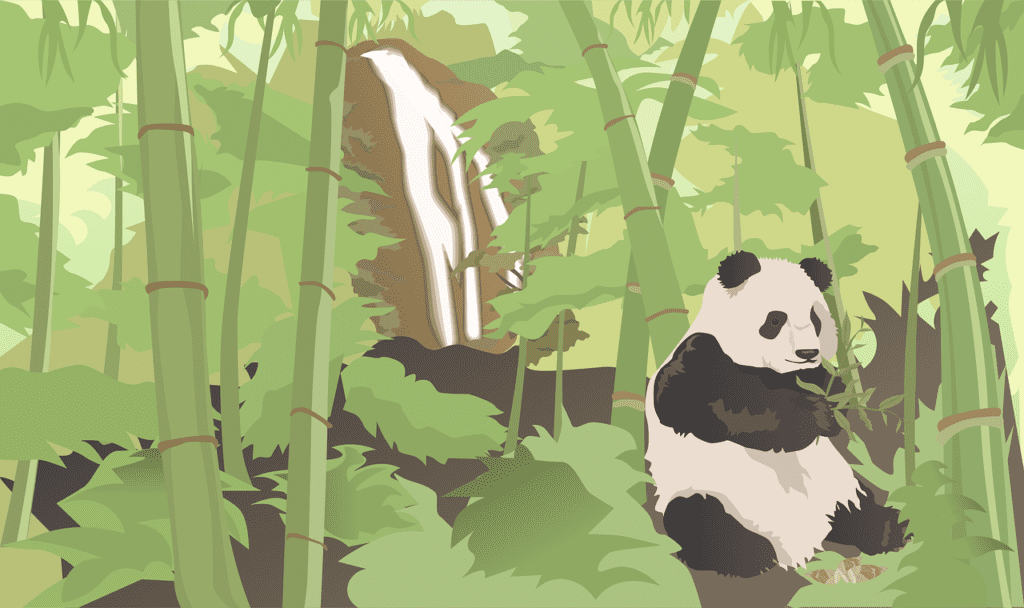
人々がパンダの食事について混乱してしまう理由の一つは、パンダが典型的な草食動物ではないからです。.
ジャイアントパンダはクマ科に属しています。また、多くの肉食哺乳類を含む食肉目にも属しています。その消化管は、多くの草食動物の消化器系に比べると比較的単純な構造をしています。.
これにより、パンダにまつわる有名な「矛盾」が生まれます。つまり、パンダは主に竹を食べているにもかかわらず、その体には肉食動物の祖先を思わせる特徴が数多く残っているのです。. シドニー大学による研究の概要 この特異な組み合わせについて、次のように明確に説明している。ジャイアントパンダは繊維質の多い竹を食べるが、その主要栄養素の組成やいくつかの消化特性は、依然として一般的な草食動物よりも肉食動物に近い。.
重要なのは、パンダがどういうわけか完璧な草食動物になったということではない。そうではないのだ。彼らの生存戦略は、それよりもさらに特異なものだ。彼らは、竹を分解するのに特に適した消化器系は持たなかったが、それでも竹を食べて生きられるような生活様式を発達させたのである。.
その強力な顎と大きな歯のおかげで、竹を砕くことができます。手首の骨が発達しており、親指のように機能して、餌を食べる際に竹の茎をしっかり掴むのに役立っています。活動量が少ない生活様式により、不必要なエネルギーの消費を抑えています。また、餌選びの仕方によって、その時点で最も有用な竹の部分に集中して摂取することができます。.
だからこそ、パンダを「失敗した肉食動物」や「単なる草食動物」と表現すべきではない。パンダは、クマの体つきを持ち、生活リズムの中心が竹にある、竹を専門に食べる動物なのである。.
パンダがなぜそんなにたくさんの竹を食べるのか
パンダがそんなにたくさんの竹を食べるのは、そうせざるを得ないからです。.
大型動物は、体を維持するために十分な利用可能なエネルギーを必要とします。竹はそのエネルギーを供給できますが、効率は良くありません。消化能力に限りがあるため、パンダは大量の竹を食べ、毎日何時間もかけて餌を探し、食事をすることでそれを補っています。.
スミソニアン国立動物園によると、ジャイアントパンダは「疑似親指」を使って竹をつかみ、1日に70~100ポンドの竹を食べることもあるという, 、消化効率の悪さを補うために、10~16時間もかけて餌を探し、食べている。そのため、パンダの行動はしばしばのろのろとしていて、単調に見えるのだ。竹を食べることは、さっと済ませられる食事ではない。それは1日の中心的な活動なのである。.
パンダは長時間じっと座り、竹を引き寄せ、葉をむしり取り、茎を噛み切り、じっと噛み続けることがあります。食事を終えると休息し、その後また食事をします。このサイクルは、餌が豊富にあるものの、エネルギー密度がそれほど高くない場合には理にかなっています。.
1日に大量の竹を摂取するという点も、適切な生息地がなぜそれほど重要なのかを説明しています。パンダには単に「多少の竹」があればよいというわけではありません。絶え間ない摂食を支えるためには、十分な量の竹が、十分に近く、十分な頻度で、そして季節ごとに十分な種類が揃っている必要があります。.
ですから、なぜパンダはそんなにたくさんの竹を食べるのかと尋ねられたとき、その答えは単に食欲だけではありません。それは、効率の低い食料源をうまく活用するための代償なのです。.
なぜ肉ではなく竹なのか?
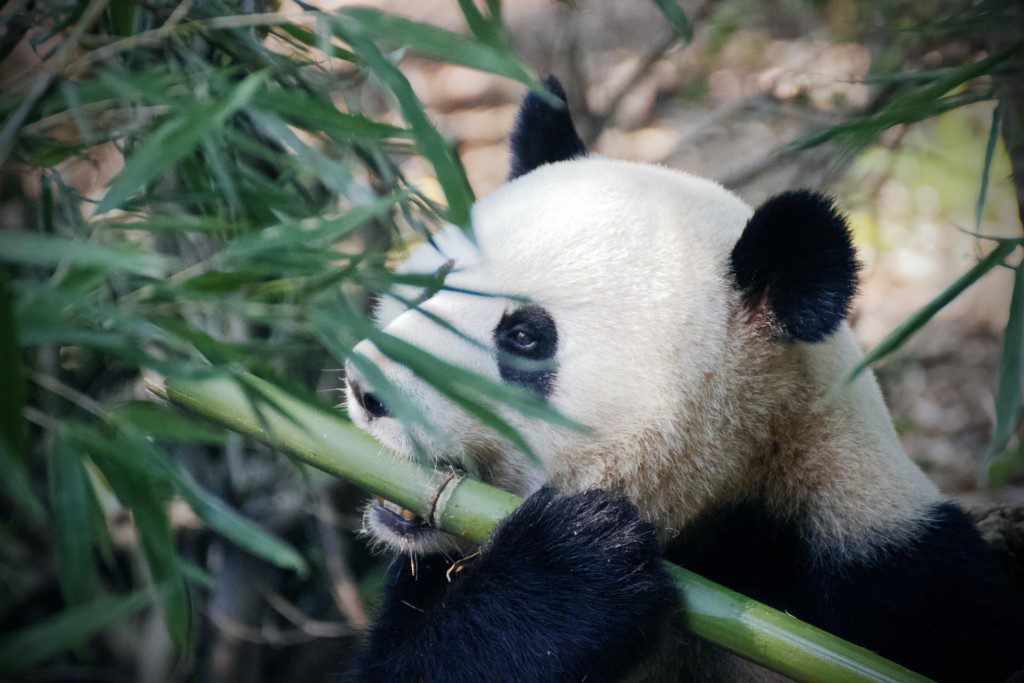
パンダはクマの一種ですから、なぜ単に肉を食べないのかと疑問に思うのは当然のことです。.
慎重に言えば、パンダは時折他の食べ物を食べることもあり、生物学的に動物性物質を摂取することが禁じられているわけではありません。しかし、肉は彼らの生存戦略の中心ではありません。中心となるのは竹です。.
狩猟には、移動、リスク、エネルギー、そして好機が必要です。一方、竹はこれらとはまったく異なる特徴を持っています。安定しており、地元で入手可能で、しかも大量に存在します。進化の過程において、パンダはこの資源にますます依存するようになっていきました。.
A パンダの食性の進化に関するPLOS ONEの研究 うま味受容体遺伝子T1R1を含む味覚関連遺伝子の変化について論じているほか、味覚だけではパンダの竹中心の食生活への移行を説明できないと注意を促している。.
その違いは重要です。パンダが竹を選んだのは、ある単純な変化によって肉が嫌いになったからではありません。複数の環境的圧力と適応が重なり、竹の方がより確実な食料源となった結果、パンダは竹を専門とするようになったのです。.
パンダは竹しか食べないの?
日常会話では、パンダは竹しか食べないと言われることがよくあります。これは簡単な説明としてはほぼ正しいですが、完全に正確というわけではありません。.
ジャイアントパンダは、ほぼ竹だけを食べています。ごくまれに、他の植物や小動物、卵、昆虫、あるいは腐肉を食べることもあります。これらは例外であり、彼らの主食ではありません。.
ですから、より適切な答えはこれです:
パンダは竹を好んで食べる動物ですが、どのような状況でも絶対に竹しか食べないというわけではありません。.
これにより、よくある誤解を避けることができます。パンダの食事は、市販の粉ミルクのように厳格なものではありません。それは生態学的なパターンなのです。竹が食事の大部分を占めるのは、パンダの体作りの基盤となる食物源だからであり、他の食物を物理的に摂取できないからではありません。.
パンダが教えてくれる、素材としての竹について
パンダは、竹について有益な教訓を教えてくれます。つまり、植物そのものはほんの始まりに過ぎないのです。.
パンダにとって竹は重要な存在です。なぜなら、パンダの食生活全体が竹を中心に成り立っているからです。その価値は、資源とそれを利用するシステムとの関係から生まれます。.
竹を素材として使用する際にも、同じ考え方が当てはまります。竹は、単に「天然素材」や「植物由来」という背景があるからといって、ティッシュ製品において有用になるわけではありません。それが有用となるのは、 竹パルプ原料 安定したパルプに加工され、適切な柔らかさと強度を備えた紙に成形され、適切に梱包され、買い手の市場に向けて安定的に供給される。.
B2Bのティッシュ購入担当者にとって、この区別は重要です。竹由来の製品であっても、パルプの種類、層数、GSM、シートサイズ、ロールサイズ、エンボス加工、包装形態、段ボール梱包、認証要件、サンプルの品質の一貫性など、実用的な確認事項は依然として必要です。これが、購入担当者が評価する際に 紙製品に竹由来のティッシュが使われる理由 植物に関する話にとどまらず、完成品の構造についても検討すべきである。.
パンダの話は、竹を身近なものにしてくれます。素材の加工の良し悪しによって、竹が信頼できる完成品になるかどうかが決まります。これには、次のような日常的な製品も含まれます。 竹製のトイレットペーパーの芯.
パンダと竹について、今でもよく聞かれる質問
ジャイアントパンダは肉食動物なのに、なぜ竹を食べるのでしょうか?
ジャイアントパンダは食肉目(Carnivora)に属しますが、その食性はほぼ完全に竹で構成されています。その消化器系は、一般的な草食動物よりも依然として肉食動物に近い構造をしているため、大量の竹を食べ、有用な部分を選び取り、エネルギーを節約することで生き延びています。.
パンダは竹をうまく消化できないのに、なぜ生き延びることができるのでしょうか?
パンダは竹を完全に消化する必要はありません。毎日十分な量の竹を食べつつ、その一部を十分に消化できればよいのです。その戦略は、長い摂食時間、強力な咀嚼能力、選択的な摂食、そして低エネルギーの生活様式に支えられています。.
パンダは肉を食べられるの?
パンダは時折動物性物質を摂取することもありますが、肉は彼らの通常の餌ではありません。彼らの日々の摂食行動、生息地の利用、そして身体的適応は、すべて竹を中心に成り立っています。.
レッサーパンダも竹を食べるのですか?
はい、レッサーパンダも竹、特に葉や新芽を食べます。しかし、レッサーパンダはジャイアントパンダとは別の動物です。その食性、体の構造、そして進化の経緯については、それぞれ個別に論じる必要があります。.
竹はパンダにとって本当に良い食べ物なのでしょうか?
竹は簡単でも完璧でもない食べ物ですが、豊富にあり、入手も確実であるため、パンダにとっては実用的な餌となっています。パンダは、大量の摂取、長い摂食時間、身体的な適応、そしてエネルギーの節約によって、竹を主食として生き延びています。.