
Decoding the Toilet Paper “Unit”: One Word, Multiple Layers of Meaning
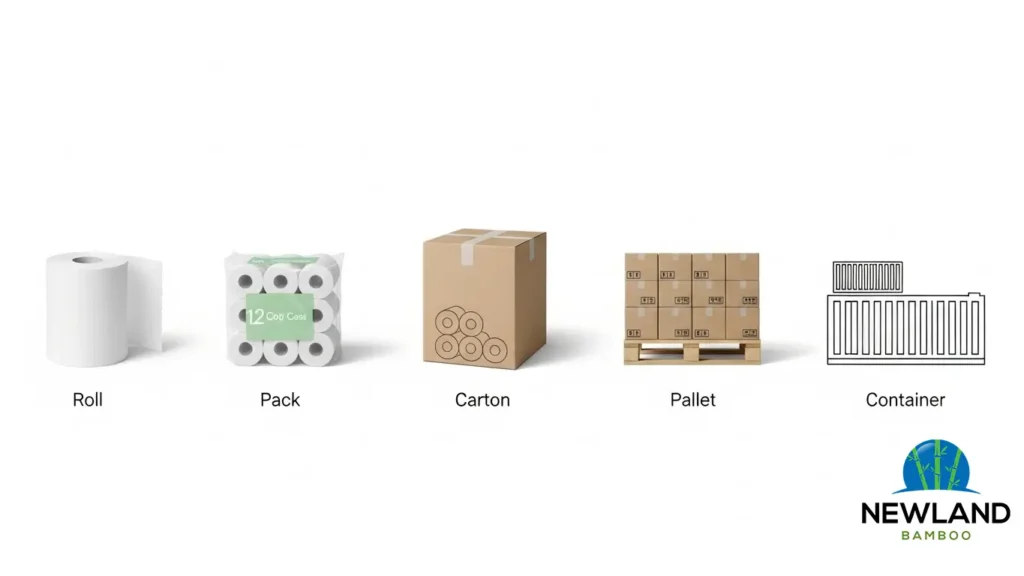
A “unit” can refer to any layer in this hierarchy:
Roll → Pack (or Case) → Carton → Pallet → Container
Each definition is correct. But each belongs to a different stage of the supply chain. When a buyer speaks in “packs,” a warehouse speaks in “cartons,” logistics teams speak in “pallets,” and importers speak in “containers,” the potential for misalignment becomes obvious.
Clarifying unit definitions early is one of the most effective ways to avoid pricing disputes, volume miscalculations, or incorrect shipping expectations.
Why “Unit” Changes Meaning Across the Supply Chain
Every participant in the supply chain uses a different “unit language” because each role optimizes for different outcomes:
Consumers → Packs
Warehouse Managers → Cases / Cartons
Logistics Teams → Pallets
International Buyers → Containers
Regional differences matter too:
North America: “Case” is the default B2B unit
Europe: Palletized units dominate
Japan: Smaller unit structures due to storage limits
Global contracts: Usually carton-based unless stated otherwise
Miscommunication happens when two parties assume they’re aligned—but are not.
Toilet Paper Units Explained: From a Single Roll to a Full Container
1. Roll (Basic Unit)
Defines ply, sheet count, GSM, diameter, and embossing.
Essential for product specs and QC.
2. Pack or Case (Retail Unit)
Common for hotels, retailers, and e-commerce brands.
Examples:
1 case = 12 rolls (hotel)
1 case = 48 rolls (retail)
3. Carton (Primary Wholesale Unit)
The most common B2B pricing unit.
Carton dimensions impact freight, warehousing, pallet patterns, and container loading.
4. Pallet (Logistics Unit)
A forklift-handled consolidation layer.
Critical for warehouses and large distributors.
5. Container (Global Trade Unit)
Used for import-level planning, CBM optimization, and landed cost control.
Toilet Paper Unit Conversion Table (Enhanced Version)
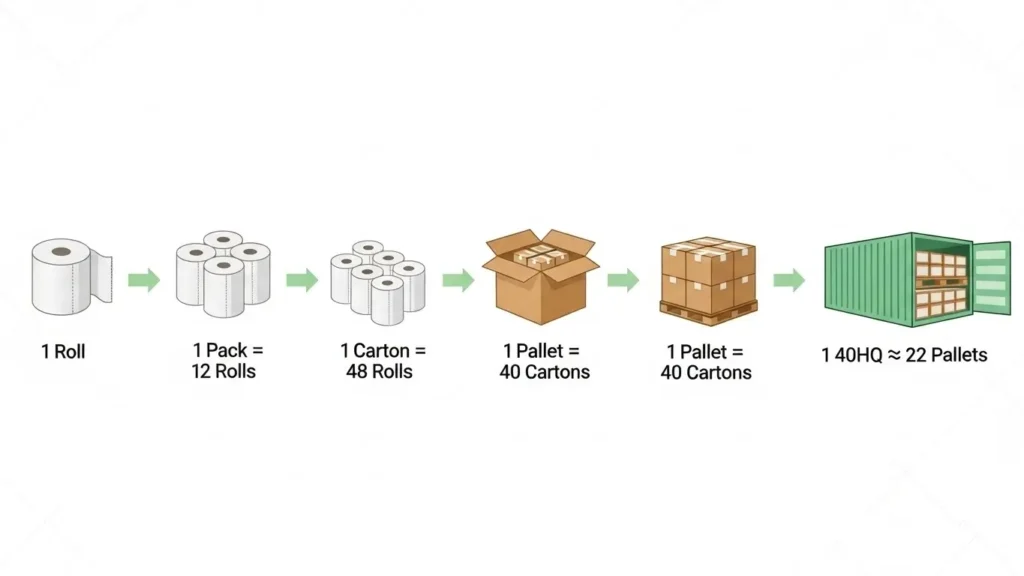
| Unit Level | Common Spec (Example) | Equivalent To | Typical Buyer / Use Case |
|---|---|---|---|
| 1 Roll | 2-ply, 200 sheets, ~110mm diameter | Core product unit | Consumers, QC teams |
| 1 Pack | 12 rolls | 12 rolls | Retail, hospitality |
| 1 Carton | 48 rolls | 4 packs / 48 rolls | Default B2B unit, used for quotes |
| 1 Pallet | 40 cartons | 1,920 rolls | Distributors, supermarkets |
| 1 Container (40HQ) | ~22 pallets | ~42,000 rolls | Importers, national distributors |
Pro Insight:
The most significant conversion is Carton → Pallet, because pallet patterns determine warehouse labor, freight cost, and container optimization.
Always ask:
“How many cartons fit on your standard pallet?”
How the Factory Helps You Calculate the ‘True Unit Cost’
Unit cost is not simply the price per roll.
True cost—sometimes called Landed Cost Per Useable Roll or Total Delivered Cost—depends on:
Roll diameter & length
Ply & GSM
Pack configuration
Carton engineering
Pallet pattern
Container loadability
A small change at any level cascades down the supply chain.
A Practical Case Example: Choosing the Right Unit
Example: A Hotel Chain & A Supermarket Buyer
Both require 10,000 rolls per month—but their optimal units differ:
Hotels → Prefer 12-roll cases
Supermarkets → Prefer pallet units for fast stocking
Roll → Case → Pallet → Container efficiency varies drastically.
Wrong unit choice leads to:
Unexpected freight cost increases
Inefficient warehouse handling
Underutilized containers
Higher total delivered cost
Cost Impact Snapshot: Why Choosing the Wrong Unit Costs More
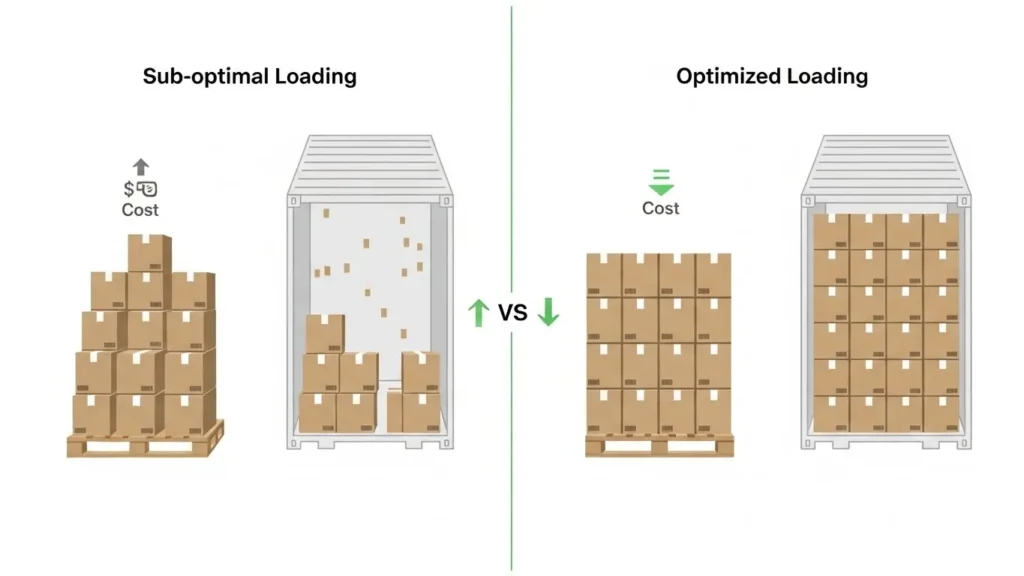
Scenario A: Sub-optimal (Loose Cases)
- Wasted CBM
• High manual handling
• Higher damage risk
Cost Penalty: +8% to +15% per roll
Scenario B: Optimized (Palletized Units)
- Better CBM utilization
• Faster warehouse operations
• Stronger container performance
Savings: 5% to 12% per roll
Why This Matters
A tiny adjustment—like reducing carton width by 10mm—can reshape pallet patterns, eliminate empty gaps, and unlock hundreds or even thousands of dollars in savings per container shipment.
FAQ About Toilet Paper Units
-
Are “unit” and “roll” the same?
No. In B2B contexts, “unit” almost always means carton or pallet.
-
How do I compare suppliers when their units differ?
Convert all pricing to:
• Cost per roll
• Cost per carton
• Cost per CBM
This normalizes the comparison. -
Does packaging customization affect unit definitions?
Yes. Changing roll length or pack configuration reshapes carton and pallet structures.
-
Should I focus on cost per roll or container optimization?
For large-volume buyers, pallet/container optimization delivers far greater total savings.
It’s like buying a sofa: choosing the cheapest frame (cost per roll) is pointless if the shipping cost destroys your margins. -
How do units influence MOQ?
Carton MOQs → flexible
Pallet MOQs → cost-efficient
Container MOQs → lowest landed cost -
Can OEM buyers customize their unit structure?
Yes. Large brands often customize units for logistics efficiency and brand positioning.
Partner With Newland Bamboo: Define the Perfect Unit for Your Market

Understanding unit definitions is critical—but optimizing them requires engineering logic and manufacturing experience.
Newland Bamboo supports:
Custom roll, pack, carton, and pallet engineering
Unit-cost modeling
Container loadability simulation
OEM packaging development
Fast sampling and export support
Request Your Free Unit Optimization Analysis
Provide your current specifications—or even a competitor’s sample—and our packaging engineering team will prepare a confidential report outlining potential savings through carton redesign, pallet pattern optimization, and CBM improvement.
Transform your sourcing from a price-per-roll guessing game into a Total Delivered Cost optimization project.