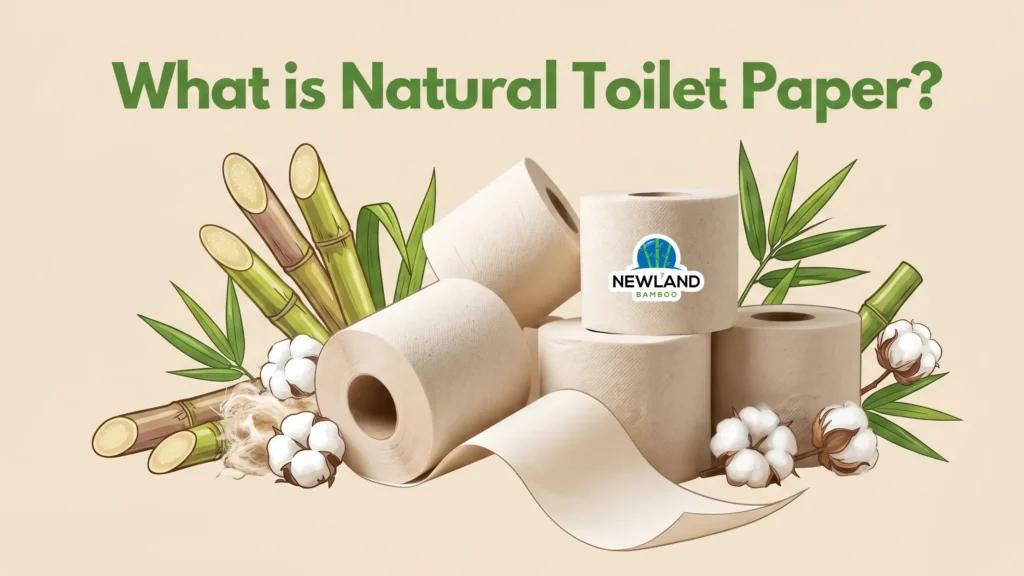
What Does Natural Toilet Paper Mean?
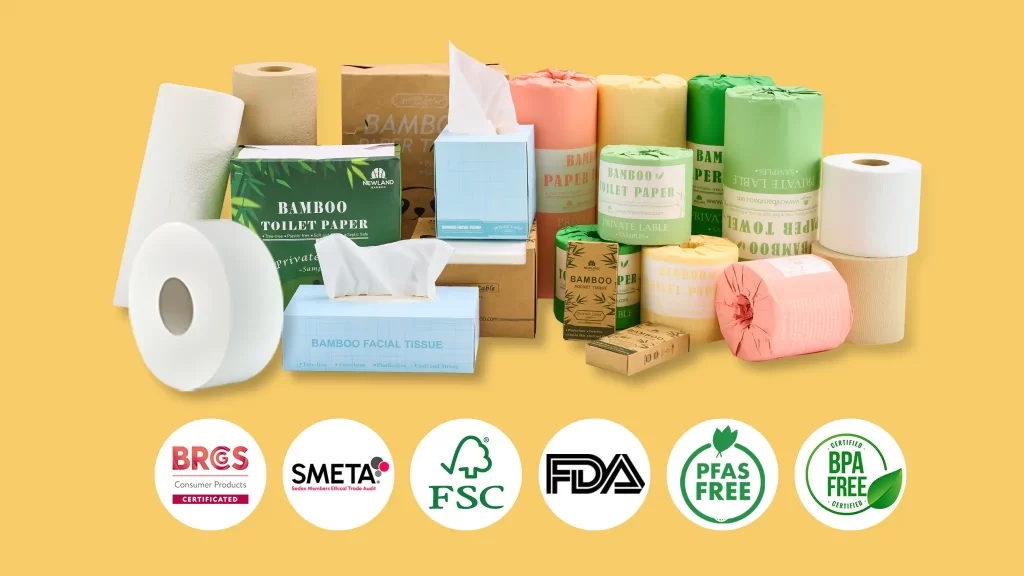
Natural toilet paper is commonly understood as toilet tissue made from simpler materials, with fewer unnecessary additives and more transparent processing. In most cases, the term refers to paper made from bamboo, recycled fiber, or other plant-based pulp, especially when it is free from fragrance, dyes, and overly harsh chemical treatment.
The challenge is that there is no single global standard that officially defines “natural toilet paper.” That is exactly why this topic can be confusing for buyers. One supplier may use “natural” to describe bamboo fiber, while another may use it for recycled paper or unbleached tissue.
For B2B buyers, private label brands, and distributors, the real question is not whether a pack simply says “natural.” The more useful question is this: what makes toilet paper feel more natural, cleaner, and more aligned with today’s low-impact product expectations?
What Does “Natural” Mean in Toilet Paper?

Unlike terms such as FSC-certified or post-consumer recycled content, “natural” is often used more loosely in the tissue market. It usually suggests a combination of four product signals:
- a more renewable or lower-impact fiber source
- fewer unnecessary additives
- more transparent bleaching or processing
- packaging that feels more consistent with a cleaner product story
That means natural toilet paper is not just one material. It is better understood as a category shaped by several product decisions.
A toilet paper product is more likely to be seen as natural when it has:
- a clearly stated fiber source
- no fragrance or decorative dyes
- limited or transparent bleaching
- simple, recyclable, or plastic-reduced packaging
This is why the category often includes both bamboo toilet paper and recycled toilet paper, even though buyers may choose them for different reasons.
The Three Main Types Discussed in This Category
When buyers talk about natural toilet paper, they are usually comparing three main material types: bamboo, recycled paper, and virgin wood pulp tissue.
| Material | Best For | Key Advantage | Key Consideration |
|---|---|---|---|
| Bamboo | Brands seeking tree-free, renewable positioning with premium softness | Fast-growing fiber source with strong product appeal and sustainability storytelling | Sourcing transparency and product consistency still matter |
| Recycled | Buyers prioritizing waste reduction and circular economy messaging | Reuses existing fiber and supports a lower-waste positioning | Softness, appearance, and processing quality can vary |
| Virgin Wood Pulp | Buyers who value mainstream familiarity and broad supply availability | Widely available and often easy to standardize | Faces more scrutiny on sustainability and sourcing claims |
This comparison matters because many buyers use the word “natural” differently depending on what they value most. Some care most about tree-free fiber. Others care most about recycled content. Others want a product that looks and feels clean while still fitting mainstream market expectations.
1. Bamboo Toilet Paper
Bamboo toilet paper is one of the most discussed options in the natural tissue category because bamboo is tree-free, fast-renewing, and widely associated with sustainability. It also gives brands a modern and differentiated product story, which is important in both retail and private label positioning.
From a product perspective, bamboo can offer a strong balance between softness, strength, and renewable sourcing. That is one reason why so many eco-focused tissue brands use it as the foundation for premium product lines.
Still, it is important to stay balanced. Bamboo should not be presented as the only natural option in the market. It is simply one of the strongest choices for buyers who value renewable fiber, tree-free messaging, and a more sustainability-led product identity.
2. Recycled Toilet Paper
Recycled toilet paper is also a major part of the natural toilet paper conversation. Its biggest advantage is simple: it reuses existing fiber and supports a circular-use message that many buyers and consumers understand immediately.
For brands focused on waste reduction, recycled tissue can be a very compelling option. It aligns well with packaging reduction strategies and with sustainability messaging built around reuse rather than new raw material sourcing.
At the same time, product performance can vary. Softness, appearance, fiber consistency, and processing transparency are not always the same from one supplier to another. That does not make recycled tissue less valid. It only means buyers usually need to evaluate the details more carefully.
3. Virgin Wood Pulp Toilet Paper
Virgin wood pulp remains the mainstream baseline in the tissue market. It is familiar, widely available, and often easier to standardize across mass-market formats.
However, when buyers are specifically searching for “natural toilet paper,” virgin wood pulp products usually face more questions. Buyers may want to know where the fiber comes from, how the paper is processed, and whether the overall product story supports lower-impact positioning.
Some virgin wood pulp products may still fit within a cleaner-label or more responsible product category, especially when sourcing and processing are well documented. But in the natural toilet paper conversation, they often require more explanation than bamboo or recycled products.
So Which One Is the Most Natural?
There is no single answer for every buyer, because “most natural” depends on what standard you are using.
If the priority is recycled content and waste reduction, recycled toilet paper may feel like the most natural choice.
If the priority is tree-free sourcing, renewability, and premium softness, bamboo often stands out.
If the priority is mainstream familiarity, stable supply, and conventional market fit, virgin wood pulp may still remain part of the conversation, even if it feels less distinctive in a sustainability-led category.
A more accurate conclusion is this:
Bamboo is not the only natural toilet paper option, but it is often one of the strongest choices for brands and buyers that want a balance between product performance and a clear sustainability story.
That kind of conclusion is more credible than claiming any one material is automatically “the best” in every situation.
What Makes Toilet Paper Feel More Natural?
Instead of focusing on one material alone, buyers should look at four practical signals.
1. Material Source
The first thing to check is what the paper is actually made from. If a supplier clearly states 100% bamboo, 100% recycled fiber, or another defined plant-based source, that is already a strong sign of transparency.
Clear sourcing language builds trust. Vague wording weakens it.
2. Bleaching Method
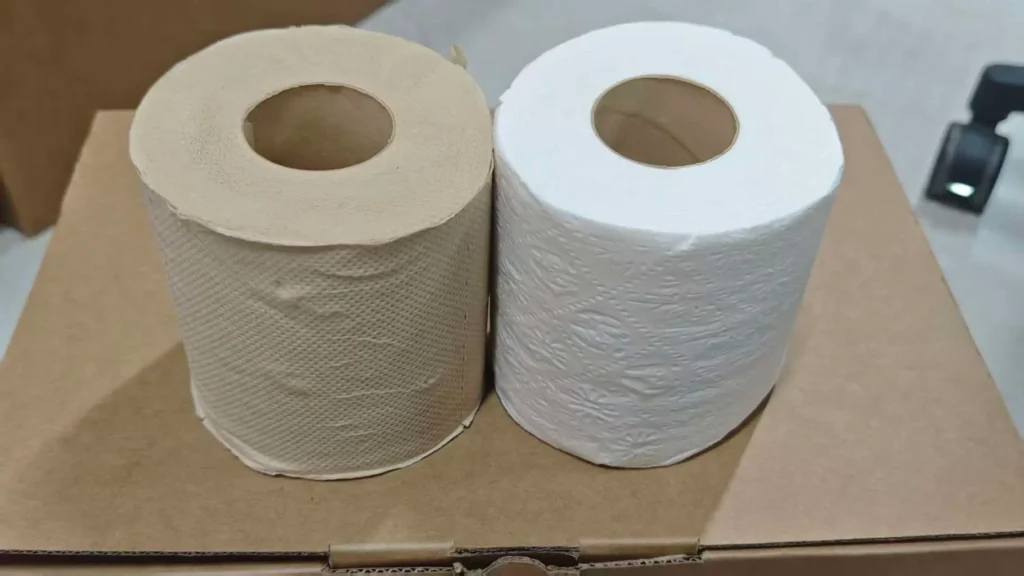
Bleaching is another important factor. Many buyers associate unbleached tissue with a more natural product because it looks less processed and stays closer to the original fiber appearance.
Others still prefer white tissue because it better fits local consumer expectations or shelf presentation. In that case, the important question is not simply whether the paper is white, but how that whiteness was achieved and whether the supplier explains the process clearly. For a detailed technical comparison, see our guide to ECF vs TCF bleaching.
A product can still fit within a more natural positioning when its processing language is transparent and not exaggerated.
3. Added Ingredients
Natural toilet paper generally feels more credible when it avoids ingredients that add marketing appeal but little product value. Fragrance, dyes, and overly decorative product choices can make tissue feel less simple and less trustworthy.
For that reason, many buyers prefer products that are:
- fragrance-free
- dye-free
- minimally treated
- clearly described in terms of what is and is not added
This matters even more when the product is meant for eco-conscious consumers, family use, hospitality programs, or premium private label positioning.
4. Packaging Style
Packaging plays a bigger role than many suppliers realize. A tissue product may have a renewable fiber source, but if it is wrapped in heavy plastic without explanation, the overall “natural” claim feels less convincing.
That is why more buyers now review packaging as part of the product story, including:
- paper wrapping
- recyclable outer packaging
- reduced plastic use
- bulk carton formats for commercial supply
Packaging does not define the whole product, but it strongly affects how coherent the final message feels.
Is Unbleached Toilet Paper More Natural?
In many cases, yes — at least from a buyer perception perspective.
Unbleached toilet paper often looks closer to the original fiber, which makes it feel less processed. That visual signal matters, especially in markets where buyers connect natural products with simplicity and reduced treatment.
However, it would be too simplistic to say that only unbleached toilet paper can be natural. Some markets still expect white tissue, and some brands need a cleaner appearance for shelf presentation. In these cases, transparent processing language matters more than a blanket claim.
So the better conclusion is this:
Unbleached toilet paper often feels more natural, but responsibly processed white tissue can also fit the category when the product details are clear and credible.
How Should Buyers Evaluate a “Natural” Toilet Paper Claim?
For B2B buyers, the topic becomes much easier when broken into a checklist. Instead of asking whether a supplier sounds natural, ask whether they can clearly answer these questions:
- What fiber is used?
- Is it bamboo, recycled fiber, or virgin wood pulp?
- Is it unbleached, ECF, or otherwise clearly processed?
- Is it fragrance-free and dye-free?
- What kind of packaging is used?
- Are the product claims specific, or just generic marketing wording?
These questions are simple, but they are useful because they separate credible products from vague positioning.
A strong natural toilet paper product does not need dramatic language. It needs clear answers.
Why Bamboo Still Matters in This Conversation
Even though this topic should be explained neutrally, bamboo still deserves special attention because it checks several boxes at the same time.
It supports:
- tree-free product positioning
- a fast-renewing raw material story
- premium tissue branding
- strong fit for eco-focused product lines
- good compatibility with plastic-reduced packaging strategies
That does not mean every bamboo product is automatically superior. It means bamboo gives brands a particularly strong foundation when they want a natural tissue line that feels both commercially viable and sustainability-oriented.
For many wholesale buyers, that combination matters more than abstract environmental claims alone.
Final Thoughts
Natural toilet paper is not one single product type. It is a broader category shaped by fiber choice, processing decisions, ingredient simplicity, and packaging.
That is why the smartest way to define it is not through one slogan, but through a set of practical signals that buyers can actually evaluate.
In today’s market, the three main material types most often discussed are bamboo, recycled paper, and virgin wood pulp. Among them, bamboo has become one of the most visible options because it combines renewable sourcing with strong product appeal. But the best choice still depends on what the buyer values most.
If you want to build a more credible, cleaner, and better-positioned tissue line, the most effective starting point is simple: focus on transparent materials, realistic claims, and packaging that matches the story.
If you’re evaluating bamboo as a natural toilet paper option for your next product line, the next step is understanding how specifications such as ply, GSM, embossing, and packaging influence your market positioning.
FAQ
-
Is bamboo toilet paper natural?
Yes. Bamboo toilet paper is commonly considered a natural toilet paper option because it is plant-based, tree-free, and often associated with a more renewable fiber source. However, it is not the only option in the category.
-
Is recycled toilet paper natural?
It can be. Recycled toilet paper is often included in the natural category because it supports waste reduction and reuse. Buyers still need to evaluate processing quality and product transparency.
-
Is virgin wood pulp toilet paper natural?
It can be marketed that way in some cases, but it usually faces more questions around sourcing, bleaching, and sustainability positioning than bamboo or recycled tissue.
-
Is unbleached toilet paper always better?
Not always. Unbleached tissue often feels more natural, but white tissue can also fit a cleaner product profile when the processing approach is clearly explained and unnecessary additives are avoided.
-
What should buyers look for in natural toilet paper?
Buyers should check fiber source, bleaching method, fragrance and dye use, packaging, and how clearly the supplier explains product claims.
-
Is natural toilet paper only for eco brands?
No. It can also be relevant for retailers, hospitality suppliers, private label buyers, and distributors that want a cleaner product story or a more modern tissue line.
Looking for a Bamboo Toilet Paper Manufacturing Partner?
If you’re evaluating bamboo as a natural toilet paper option for your next product line, the next step is understanding how product specifications, packaging style, and market positioning work together.
Newland Bamboo works with wholesale buyers, private label brands, and OEM projects looking to develop 100% bamboo toilet paper for export-focused markets. We help buyers evaluate the right combination of ply, sheet count, embossing, roll format, and packaging based on their target market and product positioning.
We support buyers looking for:
- 2-ply to 4-ply bamboo toilet paper
- custom sheet count and roll size options
- embossed and branded private label formats
- plastic-reduced or paper-based packaging options
- factory supply for export-focused tissue projects