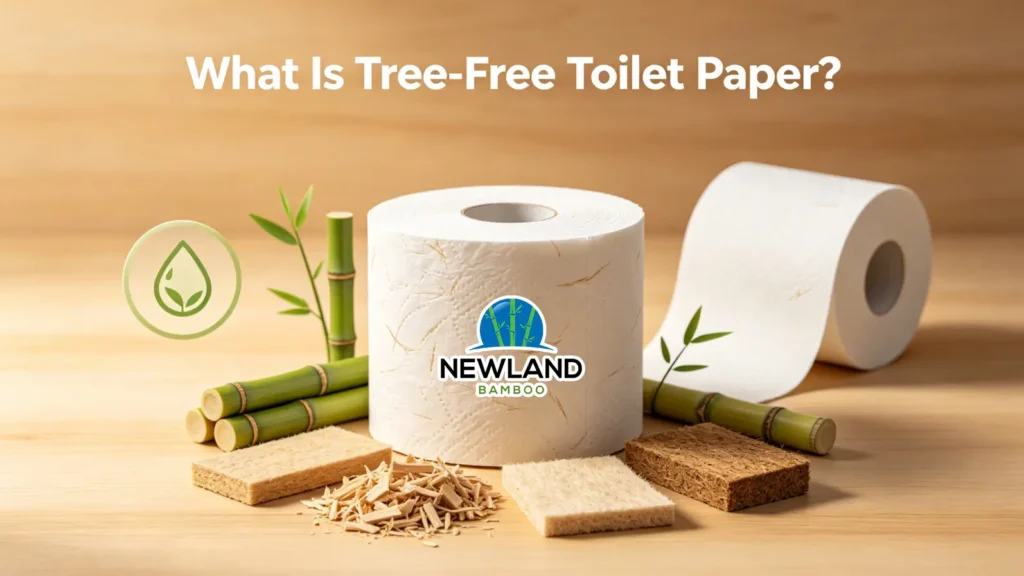
Tree-Free Toilet Paper Defined
ree-free toilet paper is exactly what it sounds like: toilet tissue made entirely without wood pulp from trees. Instead, it relies on alternative fibers — most commonly bamboo, sugarcane bagasse, recycled paper, or other plant-based materials.
For brands, retailers, and wholesale buyers, “tree-free” is more than just a material claim. It’s a clear, instantly understood product positioning that signals a commitment to reducing deforestation. Unlike broader terms like “eco-friendly” or “natural,” “tree-free” leaves little room for interpretation: no forests were harvested to make this product.
What Does “Tree-Free” Mean in Toilet Paper?
While there’s no single legal definition for “tree-free,” the industry generally accepts it as tissue made from non-wood fiber sources. The key distinction is the raw material input — instead of virgin wood pulp from softwood or hardwood trees, tree-free toilet paper uses fibers from:
- Fast-growing grasses: Bamboo is the most prominent example, capable of reaching maturity in 3–5 years without pesticides or chemical fertilizers.
- Agricultural byproducts: Sugarcane bagasse — the fibrous residue left after sugar extraction — turns what would otherwise be waste into usable tissue.
- Post-consumer recycled paper: Some recycled toilet paper can also be considered “tree-free” in the sense that it avoids new tree fiber, though it’s typically categorized separately.
Tree-free toilet paper doesn’t automatically mean “better” in every dimension — but it does mean the product’s environmental footprint starts from a different baseline.
The Main Types of Tree-Free Toilet Paper
When buyers talk about tree-free toilet paper, they’re usually comparing three main material paths: bamboo, sugarcane bagasse, and recycled fiber.
| Material | Best For | Key Advantage | Key Consideration |
|---|---|---|---|
| Bamboo | Premium eco-brands, DTC, hospitality | Naturally soft and strong; fast-growing grass; strong sustainability narrative | Slightly higher cost; sourcing transparency matters |
| Sugarcane Bagasse | Cost-conscious eco-lines, bulk wholesale | Agricultural waste upcycling; lower production cost; naturally creamy color | Slightly more textured than bamboo; availability tied to sugar industry |
| Recycled Fiber | Buyers focused on circular economy messaging | Reuses existing paper; reduces landfill and virgin resource demand | Softness and appearance can vary; may require more processing |
Bamboo Toilet Paper
Bamboo toilet paper is the most visible player in the tree-free category. Bamboo is a grass, not a tree — and it grows remarkably fast, reaching harvestable maturity in 3–5 years. When cut, it regenerates from the same root system without replanting, making it one of the most renewable fiber sources available.
From a product performance standpoint, bamboo’s long fibers produce a tissue that balances softness and strength exceptionally well. This makes it a strong fit for premium positioning — brands can charge a higher price point while delivering a product that feels comparable to (or better than) conventional wood-pulp tissue. For buyers evaluating bamboo toilet paper options, the combination of tree-free sourcing and premium product feel is a powerful differentiator.
Sugarcane Bagasse Toilet Paper
Sugarcane toilet paper is made from bagasse, the fibrous byproduct of sugar production. Instead of letting this material go to waste, it can be repurposed into tissue — a compelling circular-economy story.
Bagasse-based tissue tends to have a naturally creamy-white color, requiring less bleaching than some alternatives. It’s generally softer than recycled paper, though slightly more textured than premium bamboo. Cost-wise, bagasse often comes in lower than bamboo, making it an attractive option for brands seeking affordable tree-free credentials.
Recycled Toilet Paper (and Where It Fits)
Recycled toilet paper sits at an interesting intersection. It avoids new tree fiber, so some buyers consider it part of the broader “tree-free” conversation. However, the term “tree-free” is more commonly reserved for products made from non-wood plant fibers.
Recycled tissue’s strength lies in waste reduction — it reuses paper that would otherwise end up in landfills. The trade-off is that performance and softness can vary depending on the quality of the recycled feedstock and the processing methods used.
Why “Tree-Free” Matters: The Deforestation Connection
Traditional toilet paper production consumes millions of trees annually. Conventional tissue relies almost entirely on virgin wood pulp, much of it sourced from Canada’s boreal forest — one of the world’s largest carbon stores and a critical ecosystem for Indigenous communities and wildlife.
The numbers are stark: the average American uses an estimated 141 rolls of toilet paper every year. When you multiply that across hundreds of millions of consumers, the fiber demand is immense — and much of it comes from century-old forests cut down for a single-use product flushed within seconds.
Tree-free alternatives offer a direct way to disconnect tissue consumption from deforestation. Bamboo and bagasse don’t require logging mature forests. They grow quickly, regenerate without replanting, and can be cultivated on marginal land without competing with food crops.
What Makes a Tree-Free Toilet Paper Credible?
For B2B buyers, the question isn’t just whether a supplier says “tree-free.” It’s whether they can verify it.
1. Fiber Transparency
The most basic check: does the supplier clearly state the fiber composition? “100% bamboo” or “100% bagasse” leaves no ambiguity. Vague claims like “plant-based” or “sustainable fibers” without specifics are red flags.
2. Certification Support
Credible tree-free products are often backed by third-party certifications:
- FSC Certification: Verifies responsible forest management and chain of custody — relevant even for non-wood fibers because it ensures the supply chain is audited. All Newland Bamboo tissue is made from FSC-certified bamboo pulp.
- BPI Compostable / OK Biobased: For bagasse-based products, these certifications confirm renewable carbon content and compostability.
- ISO 14001: Environmental management systems that demonstrate manufacturing discipline.
3. Performance Without Compromise
One reason tree-free tissue struggled to gain traction years ago was quality — early alternatives were often rough, thin, or inconsistent. That’s no longer true. Premium bamboo toilet paper can match or exceed conventional tissue in softness, strength, and absorbency.
For brands, this is critical: consumers won’t sacrifice product experience for sustainability claims. Tree-free only works commercially when the product performs.
4. Packaging Consistency
A tree-free toilet paper wrapped in virgin plastic creates a mixed message. Many tree-free brands now pair their fiber story with plastic-free packaging — recycled paper wraps, compostable materials, or bulk formats that minimize waste.
Bamboo vs Sugarcane vs Recycled: Which Tree-Free Option Fits Your Brand?
There’s no universal “best” tree-free material — it depends on what your market values most.
| If your priority is… | Consider… |
|---|---|
| Premium softness and high-end branding | 100% bamboo toilet paper |
| Cost efficiency with strong eco-credentials | Sugarcane bagasse or bamboo–bagasse blends |
| Circular economy and waste reduction messaging | Recycled paper (or bagasse as agricultural byproduct) |
| Maximum shelf differentiation | Bamboo — “tree-free” plus “grass-based” is a powerful combination |
The Market Shift Toward Tree-Free
The tree-free category is no longer a niche experiment. Major retailers — including Whole Foods and Target — now stock tree-free brands. Startups like Reel Paper have scaled to over $18 million in annualized sales with bamboo-based tissue sold in 900+ stores.
Consumer expectations are shifting. Pandemic-era supply shortages forced millions of shoppers to try alternatives — and many discovered that tree-free tissue was softer and stronger than they expected. That trial opened a door that isn’t closing.
For B2B buyers, the implication is clear: tree-free is transitioning from a niche differentiator to a baseline expectation in premium and eco-conscious categories.
Final Thoughts
Tree-free toilet paper is a straightforward concept with significant implications. It disconnects tissue production from deforestation, offers credible renewable alternatives, and aligns with where consumer expectations are heading.
The most credible tree-free products share a few common traits: transparent fiber sourcing, third-party verification, strong product performance, and packaging that matches the story.
If you’re evaluating tree-free options for your next product line, the right starting point is understanding which material — bamboo, bagasse, recycled, or a blend — best fits your market and margin goals. The rest is execution.
Looking for a Tree-Free Toilet Paper Manufacturing Partner?
If you’re exploring 100% bamboo toilet paper or bamboo–bagasse blends for wholesale, private label, or OEM programs, Newland Bamboo can help you evaluate the right fiber composition, ply structure, and packaging format for your target market.
We support buyers with:
- 2-ply to 4-ply bamboo and bamboo–bagasse toilet paper
- Custom sheet count, roll size, and embossing options
- Plastic-reduced or paper-based packaging formats
- FSC-certified bamboo supply chains
FAQ
-
What is tree-free toilet paper?
Tree-free toilet paper is tissue made without wood pulp from trees, using alternative fibers such as bamboo, sugarcane bagasse, or recycled paper.
-
Is bamboo toilet paper considered tree-free?
Yes. Bamboo is a grass, not a tree. 100% bamboo toilet paper contains zero wood fiber and qualifies as tree-free.
-
What’s the difference between bamboo and sugarcane toilet paper?
Bamboo tissue tends to be softer and stronger, making it ideal for premium positioning. Sugarcane bagasse tissue is made from agricultural byproducts, often costs less, and carries a circular-economy story.
-
Is tree-free toilet paper more expensive?
Bamboo tree-free toilet paper can carry a slight premium over conventional wood-pulp tissue, but the retail positioning typically supports higher margins. Sugarcane bagasse is often cost-competitive with mid-tier wood pulp products.
-
Does tree-free toilet paper perform as well as regular toilet paper?
Premium bamboo tree-free tissue matches or exceeds conventional toilet paper in softness and strength. Bagasse and recycled options may have slightly more texture but still perform well.
-
Is tree-free toilet paper septic-safe?
Yes. Bamboo and bagasse tree-free toilet papers are plant-based and biodegradable, and independent tests show they dissolve quickly in water — making them safe for septic systems.