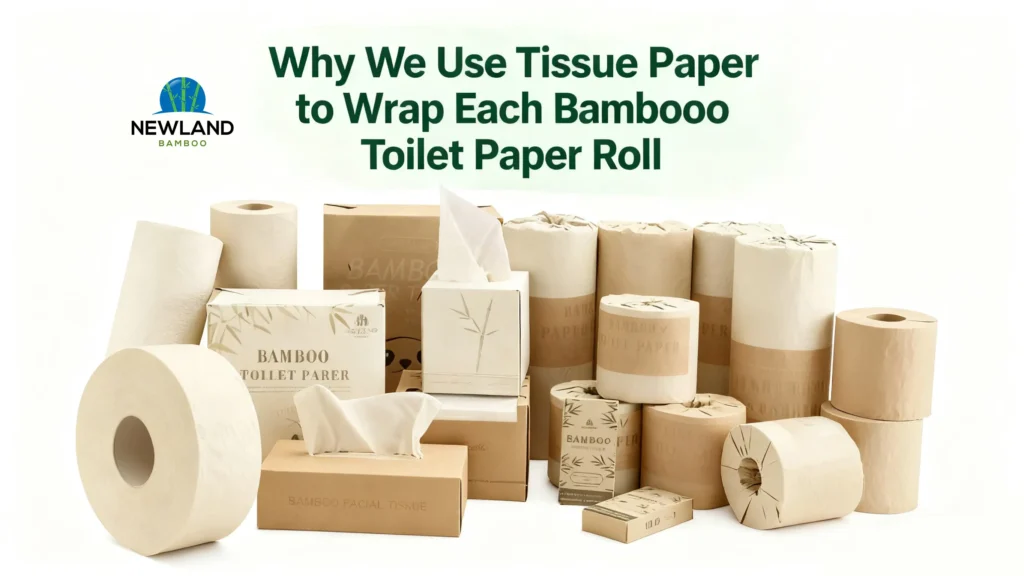
Introduction: Beyond Plastic in Modern Packaging
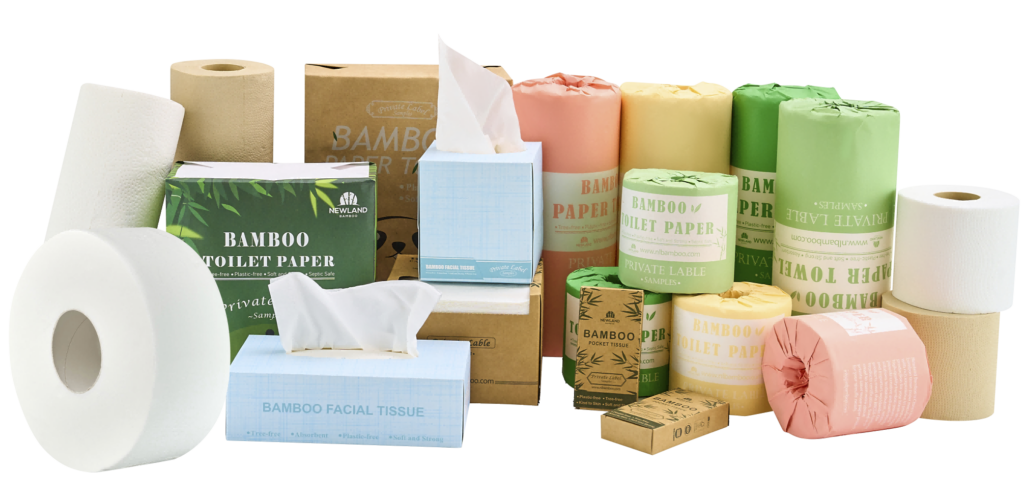
In today’s global tissue industry, the conversation is shifting from “what product to source” to “how it is packaged.” For wholesale buyers and procurement managers, packaging decisions are no longer secondary — they shape compliance, container efficiency, and brand perception in international markets. While plastic has long dominated packaging, mounting regulations and consumer demand for eco-friendly alternatives are accelerating the adoption of paper-based solutions. Wrapping each bamboo toilet paper roll in tissue paper is therefore not just an aesthetic choice but a strategic one, connecting hygiene, sustainability, and wholesale competitiveness.
Ensuring Hygiene and Meeting International Standards for Bulk Buyers
Individual wrapping protects each roll from dust, bacteria, and contamination during storage and distribution. For retail and hospitality buyers in Europe, North America, and Asia, hygiene standards are not optional — they are essential for market entry. Many regulations such as FDA contact guidelines and EU Ecolabel packaging criteria require safe and compliant materials for consumer-facing goods.
Tissue paper wrapping offers a clean, natural look that reassures customers and aligns with international hygiene expectations. Compared with plastic, paper avoids issues such as odor retention and perceived “cheapness,” making it a more trusted option for both retail and wholesale distribution.
Protection in Complex Supply Chains and Container Transport
Shipping bamboo toilet paper in bulk often involves long sea freight, high humidity, and multiple handling stages. Plastic bags may protect a group of rolls, but when the bag breaks, the entire pack risks contamination. With individual tissue wrapping, only the affected roll is compromised, lowering potential losses by up to 30–40%.
For humid climates such as Southeast Asia, paper wrapping can be produced in heavier weights to resist moisture. For drier markets such as the Middle East, it effectively prevents dust intrusion. This flexibility makes it a better fit for wholesale container transport across diverse global supply chains.
Aligning with Global Sustainability Mandates and Brand Value
Plastic packaging dominates with around 40–45% of the global packaging market, but paper and paperboard packaging already account for 30–35% and continue to grow thanks to recyclability and eco credentials (paper and paperboard packaging market).
The biodegradable packaging market is forecasted to expand at a CAGR of 10.1% from 2024 to 2034 (biodegradable packaging market), showing how global buyers are shifting toward sustainable alternatives.
Consumers are also willing to reward eco-friendly choices. In Europe, people are prepared to pay an average 6.4% more for products packaged sustainably (sustainable packaging consumer survey).
Meanwhile, overall sustainable packaging demand is growing rapidly as regulations restrict plastic use (sustainable packaging market). And global plastic recycling rates remain inefficient, with the majority still ending up in landfills or the environment (plastic recycling).
For wholesale brands, using FSC-certified or recycled wrapping paper not only ensures compliance but also elevates perceived value in premium markets. Printed wrapping provides an additional surface for logos, eco labels, and storytelling — something plastic cannot easily achieve.
Meeting Diverse Global Market Needs
Different wholesale markets require different packaging strategies, and tissue wrapping provides the flexibility buyers need.
High-end retail
Individual wrapping enhances shelf presentation and premium positioning.
Hospitality industry
Hotels, resorts, and airlines prefer individually wrapped rolls for hygiene and brand image.
Mass market & low-cost segments
Buyers can choose unwrapped or bulk packaging to optimize cost, while still using paper-based secondary packaging.
Climate adaptability
Paper wrapping can be customized for humid, dry, or mixed climates, making it more versatile than single-use plastic.
OEM/ODM branding
Wrapping can be customized in language, design, and regulatory printing to match local market requirements.
Data-Driven Comparison: Tissue Paper vs Plastic Wrapping
| Dimension | Plastic Wrapping | Tissue Paper Wrapping |
|---|---|---|
| Environmental Impact | 200–500 years to degrade | 2–6 weeks biodegradable, recyclable |
| Market Share Trend | Still 40–45%, but under heavy regulation | 30–35% and growing steadily |
| Consumer Perception | Cheap, less eco-friendly | 73% consumers prefer eco-friendly packaging |
| Market Access | Restricted by EU SUP, US/Canada bans | Supports entry into eco-sensitive markets |
| Transport Risk | Whole pack wasted if damaged | Lower loss rate (30–40% less) |
| Branding | Limited, low-end image | FSC/recycled options, full-color branding |
| ROI | Lower upfront cost | Higher retail premium (+5–10%), better long-term value |
Why Partner with Newland Bamboo for Wholesale Packaging Solutions
Switching from plastic to tissue paper wrapping only makes sense when the core product — bamboo toilet paper — also delivers on sustainability, quality, and compliance. At Newland Bamboo, we integrate both product and packaging into a complete wholesale solution:
- 100% Virgin Bamboo Pulp – Stable fiber quality from Guizhou, China’s bamboo capital, ensures every roll is soft, strong, and eco-friendly.
- FSC-Certified & Eco-Compliant – Both our bamboo tissue and wrapping paper meet FSC, BPI, FDA, and EU standards for smooth entry into strict global markets.
- OEM/ODM Packaging Flexibility – From embossed patterns and GSM to custom-printed wrapping and carton designs, we support brand positioning in diverse wholesale markets.
- Scale & Reliability – 25+ automated lines, 30,000 m² production base, and 400+ containers per month capacity guarantee on-time supply worldwide.
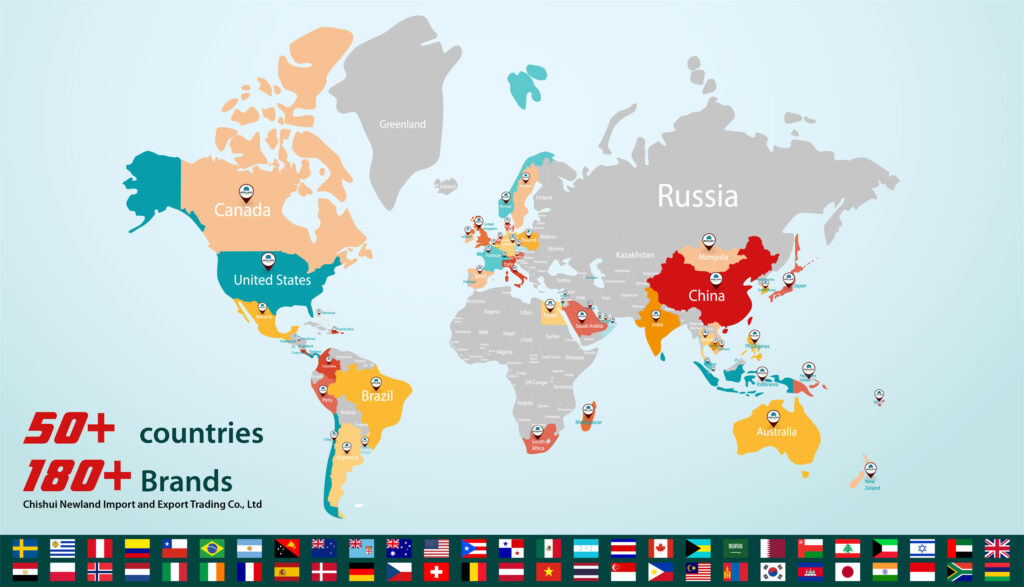
- Export Expertise – 20+ years of serving 50+ countries means we understand regulations, logistics, and wholesale buyer expectations.
- Lower Risk, Higher Value – By combining bamboo-based products with sustainable wrapping, we help bulk buyers meet compliance, reduce losses, and capture premium margins.
📩 Contact Newland Bamboo today to request bulk bamboo tissue samples, wholesale quotations, and customized packaging solutions for your target market.
Conclusion: More Than Wrapping — A Strategic Choice
Choosing tissue paper wrapping for bamboo toilet paper rolls is not just about replacing plastic. It is a strategic decision that touches hygiene, supply chain reliability, compliance with global sustainability mandates, and brand positioning in international wholesale markets.
With Newland Bamboo, buyers are not only sourcing bamboo toilet paper — they are securing a long-term partner who minimizes risks, protects their brand, and ensures profitable growth in bulk supply chains.
FAQ (For Wholesale Buyers)
-
Is tissue paper wrapping more eco-friendly than plastic?
Yes. Paper decomposes in 2–6 weeks and can be recycled, while plastic takes centuries and faces global regulatory bans.
-
Can I order rolls without individual wrapping?
Yes, we can provide both wrapped and unwrapped options depending on your target market and price positioning.
-
How effective is tissue wrapping in humid climates?
We offer heavier paper grades designed for moisture resistance, making them suitable for Southeast Asia and tropical markets.
-
Can the wrapping be customized for my market’s regulations?
Yes. We can print recycling logos, regulatory symbols, or brand messages to match local compliance and consumer expectations.
-
Does paper wrapping increase cost significantly?
It adds around 0.5–1 cent per roll, but buyers often achieve 5–10% higher retail pricing and improved market acceptance.