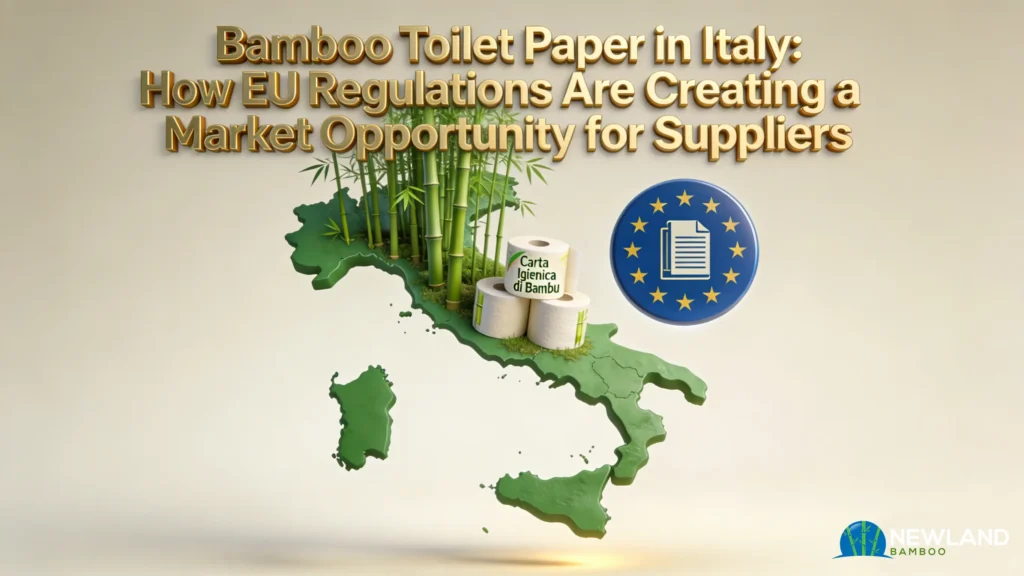
Bamboo Toilet Paper in Italy: How EU Regulations Are Creating a Market Opportunity for Suppliers
Why Bamboo Toilet Paper is Becoming a Business Necessity in Italy
As environmental policies become increasingly stringent across Europe, bamboo toilet paper has emerged not just as a sustainable alternative, but as a business necessity for suppliers targeting the Italian market. Driven by the European Union’s Single-Use Plastic Directive (SUP), the EU Green Deal, and the Circular Economy Action Plan, Italy is witnessing a substantial shift toward eco-friendly products like bamboo toilet paper. These policies are not just trends—they are legal requirements, pushing businesses to adopt greener practices to avoid non-compliance risks.
In Italy, where sustainability is a growing focus for both consumers and businesses, bamboo toilet paper offers a viable solution to fulfill these obligations. This transition is no longer a matter of “if” but “when”, making bamboo toilet paper an essential product for suppliers looking to thrive in the Italian market.
Market Overview: Bamboo Toilet Paper in Italy
Italy, a country known for its strong eco-conscious consumer base, is embracing bamboo toilet paper as a sustainable alternative to traditional wood pulp. In 2023, the demand for bamboo-based products, including toilet paper, grew rapidly as Italians increasingly prioritized eco-friendly and biodegradable materials.
Consumer Preferences
Italian consumers, especially in urban areas, are highly discerning when it comes to sustainability. Not only do they prefer eco-friendly products, but they also seek aesthetic appeal in packaging. Minimalistic, high-quality designs are becoming just as important as the environmental credentials of the products themselves.
This trend aligns with Italy’s broader design culture, where elegance and simplicity in packaging can significantly impact a product’s appeal. Bamboo toilet paper that features simple, sleek packaging—perhaps with clear certifications like FSC or Ecolabel—appeals to Italy’s increasingly eco-conscious consumers.
Retail Channels
Bamboo toilet paper is making its way into several key retail channels in Italy:
- Supermarkets & Organic Stores: Chains like NaturaSì (organic grocery stores) are increasingly stocking bamboo toilet paper as part of their sustainable offerings.
- E-commerce: Online retail platforms are seeing strong growth in eco-friendly products, providing a direct avenue for bamboo toilet paper to reach eco-conscious consumers.
- Zero-Waste Stores: These niche markets are also becoming a significant channel for bamboo products, providing bamboo toilet paper as part of a broader sustainable living range.
- Private Labels: Large Italian retailers such as Coop and Esselunga are increasingly launching their own eco-friendly product lines, including bamboo toilet paper. Suppliers who can provide high-quality, certified products are better positioned to win contracts with these major retailers.
Regional Market Differences
Italy’s regional market differences are also significant. Northern Italy, particularly cities like Milan and Turin, is more inclined toward high-end, eco-conscious products, while southern regions may prioritize cost-effective solutions. Tailoring your product offering to suit local preferences can enhance market penetration.
The Regulatory Engine: EU Policies Fueling Demand
The European Union’s regulatory environment has become a powerful driver for bamboo toilet paper’s success in Italy. The EUDR (EU Deforestation Regulation) is a prime example of how policies are reshaping the market. As the law imposes stricter regulations on the sourcing of wood-based products, suppliers of traditional wood pulp face higher compliance costs and risks. In contrast, bamboo, a fast-growing and low-deforestation-risk crop, presents a significant advantage for producers and importers.
Key EU Regulations Driving Demand:
- EUDR: Bamboo toilet paper, especially from sustainably managed bamboo forests, offers a low-deforestation-risk alternative, making it an attractive solution for businesses seeking to comply with the EU’s stricter deforestation laws.
- Green Public Procurement (GPP): Italian public institutions and large corporations are setting green procurement goals, and bamboo toilet paper fits these sustainability targets perfectly.
- Extended Producer Responsibility (EPR) & Packaging Tax: Bamboo’s compostable and recyclable nature reduces the environmental footprint for businesses, making it an attractive option in light of Italy’s packaging tax policies.
- Plastic Tax: With Italy’s tax on single-use plastics, bamboo toilet paper presents a cost-effective, plastic-free alternative for businesses in Italy.
Policy as a Market Catalyst
The EUDR and Green Public Procurement (GPP) are not just regulatory hurdles—they represent a market catalyst. The transition to bamboo toilet paper is not only an environmental necessity but is also quickly becoming a business imperative as Italian companies face the increasing demand for compliance with these policies.
Bamboo Toilet Paper Supply Chain in Italy
Italy’s demand for bamboo toilet paper requires efficient and sustainable supply chains. The supply chain for bamboo products involves multiple stages, including raw material sourcing, production, and distribution.
Challenges in Logistics
The primary challenge for suppliers is import tariffs and logistical hurdles. Bamboo toilet paper must be imported from countries like China, where bamboo is widely cultivated. Optimizing carbon-neutral logistics and ensuring that transportation meets EU standards for sustainable practices are key considerations for suppliers.
Sustainability Proof
Italian buyers, particularly those in the high-end retail and hospitality industries, are not just interested in the product itself but also in verifiable sustainability claims. Suppliers need to provide documentation on carbon footprint reduction and sustainable sourcing to meet these requirements.
Competitive Landscape: Who’s Already in the Italian Market
The bamboo toilet paper market in Italy is becoming increasingly competitive, with both local and international brands vying for market share. The competition is not just about product quality but also about compliance and branding.
Key Competitors:
- Private Labels: Italian retailers such as Coop and Esselunga are focusing on developing private label eco-friendly products, creating a competitive landscape where bamboo toilet paper suppliers must offer compliant, certified products to stay competitive.
- International Brands: Several international brands have already penetrated the Italian market, creating price competition while pushing for higher product standards.
- Opportunity for Niche Products: There is still a gap in the market for specific bamboo toilet paper types, such as bamboo kitchen rolls and bulk toilet paper for commercial customers (hotels, restaurants).
B2B Sourcing Opportunities: How to Win the Italian Market
The key to success in the Italian market lies in compliance, quality, and the ability to tailor products to the local market’s demands. To enter this market, suppliers should focus on more than just selling a product—they need to sell a compliance and sustainability solution.
Key Success Factors:
- Compliance Documents: Ensure that your bamboo toilet paper complies with EU regulations, including FSC certification, EUDR compliance, and carbon footprint documentation.
- Customization: Offer custom packaging that fits Italian aesthetics, such as minimalist designs with green branding.
- Local Trust: Establish relationships with local distributors or agents to build trust in the market, particularly when dealing with large institutions and public entities.
Strategy to Win:
- “Pilot First, Scale Later”: Start with pilot projects targeting businesses under significant policy pressure (e.g., hotels, restaurants, B2B suppliers) to build case studies and references.
Conclusion: Strategic Insights and Call to Action
As EU regulations such as the EUDR come into full effect, the demand for bamboo toilet paper in Italy will only increase. Companies that are able to quickly adapt to these new requirements and provide compliant, high-quality products will be well-positioned to capture market share. Now is the time to build partnerships, ensure your products meet regulatory standards, and position your company as a trusted supplier in the growing eco-friendly market in Italy.
Call to Action: If you are a supplier looking to enter the Italian market, now is the critical time to act. Ensure your bamboo toilet paper is compliant with all necessary regulations, and start building connections with Italian buyers and partners who value sustainability and compliance.
Conversion Paragraph: The Window of Opportunity to Act Now
Why Now is the Best Time to Enter the Italian Market
As EU regulations on environmental compliance tighten, the demand for bamboo toilet paper in Italy is accelerating. Bamboo toilet paper, which meets EUDR and green procurement goals, presents an unparalleled market opportunity for suppliers. For suppliers looking to enter this market, compliance is key. Companies that can provide comprehensive green certifications, carbon footprint reports, and lifecycle assessments will become the go-to choice for Italian B2B customers.
Act Now! Adapting to Italy’s market requirements today not only helps you avoid future compliance risks but also positions your company as a leader in sustainability in the market. Get in touch with potential partners in Italy now, ensure your bamboo toilet paper is EU-compliant, and seize the opportunity to lead the market as the green policy wave continues to grow.
FAQ
-
How can bamboo toilet paper help Italian businesses meet sustainability goals?
Bamboo toilet paper, as a biodegradable and compostable alternative, fits perfectly into Italy’s green procurement goals. It helps companies reduce their carbon footprint and enhances their sustainability performance, aligning with EU’s green procurement policies and the EUDR (EU Deforestation Regulation) requirements.
-
What EU certifications should bamboo toilet paper suppliers have to enter the Italian market?
Suppliers should ensure their bamboo toilet paper complies with EU environmental standards, including FSC certification (Forest Stewardship Council) and EUDR compliance. Providing carbon footprint reports and lifecycle assessment data (LCA) will help gain more market trust and ensure compliance with Italian environmental regulations.
-
How do Italian consumers perceive bamboo toilet paper compared to traditional options?
Italian consumers are increasingly accepting bamboo toilet paper, particularly due to the growing emphasis on sustainability. Bamboo toilet paper is being seen as a higher-quality, eco-friendly, and hypoallergenic alternative to traditional wood pulp toilet paper, and is gaining market share as a preferred option.What compliance documents are required for bamboo toilet paper suppliers entering the Italian market?
Suppliers must prepare compliance documents that meet EU environmental requirements, such as FSC certificates, EUDR due diligence reports, carbon footprint reports, and CE marking for quality control. These documents are not only vital for regulatory compliance but will also enhance a supplier’s competitiveness in the Italian market.
-
How can suppliers prove that bamboo toilet paper is not only eco-friendly but also helps Italian companies meet ESG goals?
Suppliers should prepare relevant lifecycle assessment (LCA) data to demonstrate how bamboo toilet paper reduces environmental impact across its production, transport, and usage stages. Additionally, offering green certification documents and carbon footprint reports will help clients showcase real outcomes in their ESG (Environmental, Social, and Governance) reports.
-
Besides supermarkets, which B2B customers are most urgently seeking bamboo toilet paper due to policy reasons?
Hotels, restaurants, public institutions, and large enterprises are key market segments that have an urgent need for bamboo toilet paper, especially those seeking to meet green procurement targets. These clients are under significant pressure to find sustainable alternatives to meet new policy requirements in the near future.