Introduction
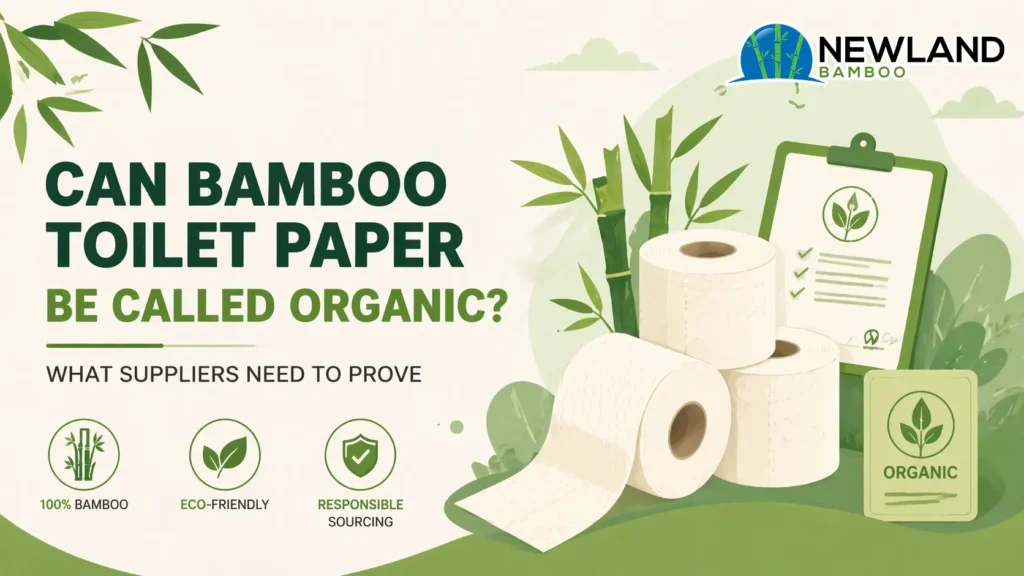
Once buyers move beyond the basic definition of organic toilet paper, the next question becomes much more practical: can a supplier actually call bamboo toilet paper organic?
That question matters because the word organic carries real commercial weight. It can influence product positioning, pricing, retailer communication, and even packaging language. But in the tissue category, that word can easily be used more broadly than the underlying proof really supports.
This is where many sourcing conversations become unclear. One supplier may use organic to describe the bamboo itself. Another may use it more loosely to create a cleaner, more natural product image. For buyers, that creates a real challenge. The issue is no longer what the term sounds like. The issue is what the supplier can actually prove.
If you want the basic definition first, start with our companion article What Is Organic Toilet Paper?. This article goes one step further. It focuses on supplier claims, proof requirements, and what buyers should verify before trusting the wording.
What Standard Are We Really Talking About?
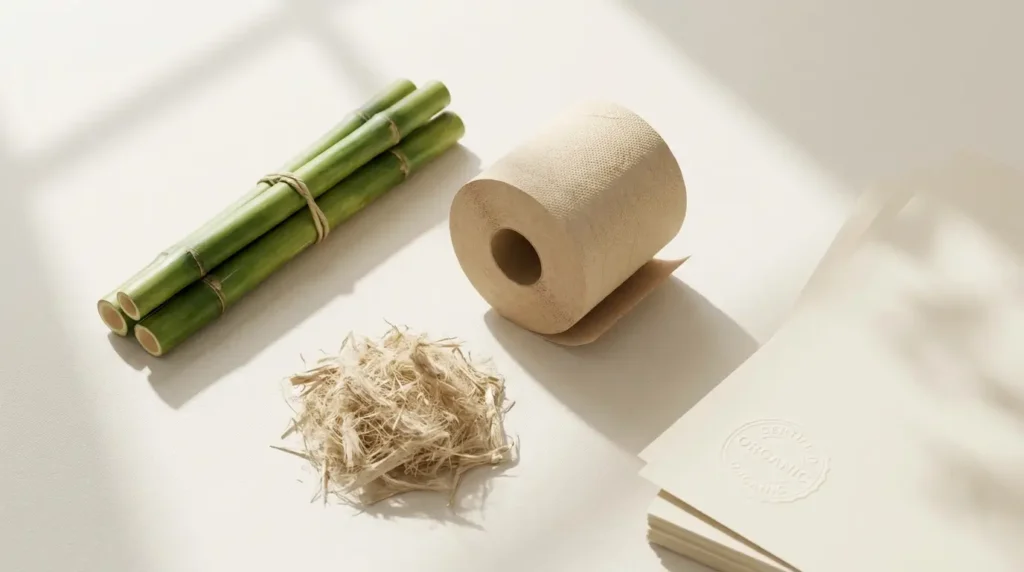
If you want the strictest answer, you first need to define the market. For U.S.-facing claims, the most relevant framework is the [USDA organic standards]. Under that framework, organic is not just a product mood or eco-friendly impression. It is a regulated labeling concept tied to specific standards.
That matters because buyers often assume the word organic simply means more natural, less chemical, or more sustainable. In reality, the term has a narrower meaning. The [USDA organic certification] system applies to farms and handling facilities, while the USDA organic labeling rules determine how the final product may be presented in the market.
So before a buyer accepts the phrase organic bamboo toilet paper, the first question should be simple:
What standard is the supplier actually referring to, and what part of the product does that standard cover?
Is It Enough That the Bamboo Itself Is Organic?
No. That is only the beginning.
At the raw material level, organic claims start with the crop system. According to the USDA organic standards, land used for an organic crop must not have had prohibited substances applied for at least three years before harvest. The same framework also prohibits certain methods and substances, including genetic engineering, ionizing radiation, and sewage sludge.
So if a supplier wants to say that the bamboo itself is organic, that statement should be tied to a real crop-side organic system, not just to the fact that bamboo is fast-growing or plant-based.
But even that does not automatically settle the final product claim.
The [USDA organic textiles guidance] makes this distinction especially useful for fiber-based products. If the finished product itself is certified and produced in compliance with USDA organic regulations, then the whole product may be labeled accordingly. If only specific fibers are certified organic, then the label may only identify those specific fibers and their percentage. That is a very different claim from presenting the entire finished toilet paper product as organic.
So the short answer is clear:
Organic bamboo is a raw material claim first. It is not automatic permission to market the finished toilet paper as organic.
Does the Whole Chain Need to Be Organic?
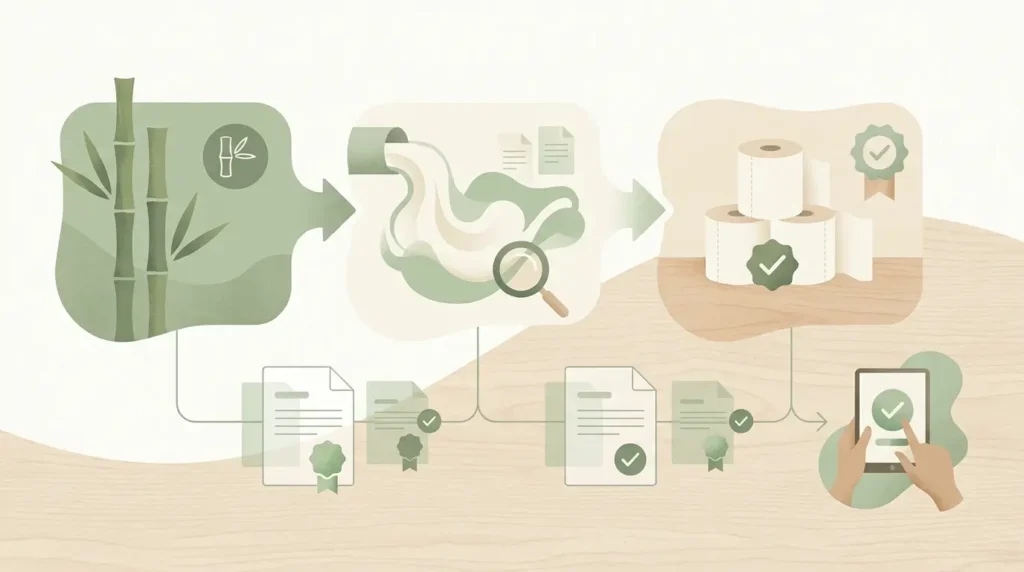
If the goal is a strong finished-product organic claim, then buyers should think in terms of a proof chain, not a single raw material statement.
The USDA organic standards do not only look at crops. They also look at handling and processing. That includes requirements related to allowed inputs, preventing commingling between organic and non-organic materials, and protecting organic products from contact with prohibited substances.
This is one of the most misunderstood parts of the topic. Buyers often ask, “If the bamboo is organic, isn’t that enough?” In a strict sense, no. If a supplier wants to make a strong organic finished-product claim, the crop story, the handling controls, and the final product wording all need to line up.
That does not necessarily mean every stage carries the exact same document title. But it does mean the claim has to survive the full chain.
A better question, therefore, is not:
“Is the bamboo organic?”
A better question is:
“Can the supplier show a complete proof chain from raw material to finished product wording?”
What Labeling Category Would the Finished Product Need to Fit?
This is one of the most important questions in the entire discussion.
The USDA organic labeling rules recognize different categories. In general terms:
- 100 percent organic is the strongest category
- Organic generally requires at least 95 percent certified organic content, excluding salt and water
- Made with organic … generally starts at 70 percent certified organic content
- Below that level, a product may identify specific organic ingredients in the ingredient statement, but cannot make the same kind of broad finished-product organic claim
This is where many supplier claims become too broad. A seller may have a bamboo source that supports an organic raw material story, but the finished product may not fit the strongest labeling category. If so, the wording should change accordingly.
That is why a buyer should always ask:
What labeling category does the finished product actually fit into?
If the supplier cannot answer that clearly, the claim is already weaker than it sounds.
What Should a Buyer Ask a Supplier to Prove?
If a supplier wants to use an organic claim credibly, buyers should ask for proof in three layers.
1. Raw Material Proof
At the first layer, buyers should ask whether the bamboo source itself is backed by crop-level organic proof. This is the part most closely tied to the farming side of the story.
Questions to ask:
- Is the bamboo source itself covered by organic crop certification?
- Can the supplier explain the raw material origin clearly?
- Is the organic story tied to the bamboo only, or to the finished product?
2. Handling or Processing Proof
At the second layer, buyers should ask whether the operation that handles or processes the material is working within the relevant organic framework.
Questions to ask:
- Is the handling or processing operation certified?
- Are there controls in place to prevent mixing organic and non-organic materials?
- Can the supplier explain how the product is kept consistent with the claim?
3. Finished Product Labeling Proof
At the third layer, buyers should ask which finished-product category the supplier believes the product fits into and whether the wording has been reviewed accordingly.
Questions to ask:
- Is the finished product itself being represented as organic?
- Does the wording match the actual labeling category?
- Can the supplier support the exact claim used in the quotation, brochure, or packaging draft?
A simple framework looks like this:
| Proof Layer | What Buyers Should Ask |
|---|---|
| Raw Material | Is the bamboo source itself supported by organic crop-level proof? |
| Handling / Processing | Is the operation controlled and documented for the claim being made? |
| Finished Product Wording | What labeling category does the final product actually fit into? |
What If the Supplier Does Not Have the Full Proof Chain?
This is where buyers need to stay practical.
If a supplier cannot support the strongest finished-product organic claim, that does not automatically mean the product is poor quality. It does not mean the bamboo toilet paper is not premium, tree-free, or responsibly sourced. It simply means the wording should be more precise.
That is an important distinction.
Under the [USDA organic labeling rules], if the final product is not certified, the seller generally must not make a broad organic claim on the principal display panel or use the USDA organic seal. The [FTC Green Guides] reinforce the same basic principle from another angle: broad, unqualified environmental claims can mislead if they imply more than the evidence supports.
So if the full proof chain is not there, safer wording is often better. For example:
- made from bamboo-based raw materials
- made with responsibly sourced bamboo pulp
- bamboo tissue for buyers seeking organic or sustainable fiber programs
- bamboo toilet paper with a cleaner, plant-based fiber story
This kind of language is often more credible than a strong organic claim that sounds bigger than the proof behind it.
Do Most Suppliers Actually Have This Complete Organic Chain?
Probably not.
That does not mean the topic is irrelevant. It means the full chain is harder to build and maintain than many buyers expect.
Crop-side compliance, handling controls, segregation, documentation, allowed-substance review, and correct finished-product labeling all require real system discipline. That is one reason many suppliers do not pursue the strongest possible finished-product organic positioning.
Another reason is simple: in many markets, they do not need to.
A supplier can still build a strong bamboo tissue program using terms such as:
- 100 percent bamboo
- tree-free
- FSC-certified
- chlorine-free
- plastic-free
- PFAS-free
Those claims often provide enough differentiation for retail and private label buyers without requiring the strongest organic finished-product claim.
Then Why Do So Many Sellers Still Use the Term “Organic Bamboo Toilet Paper”?

Because in the market, the phrase often works as a commercial shortcut.
Some brands use the wording very directly. For example, [Bampooh] uses “Organic 3-Ply Bamboo Toilet Paper” language prominently. [Seek Bamboo] also uses “Organic Bamboo Toilet Paper” while supporting the page with broader ideas such as FSC-certified bamboo, chlorine-free processing, and a cleaner product image.
At the same time, other brands take a different route. [Reel] tends to emphasize bamboo, tree-free positioning, and FSC-backed sourcing language rather than leading entirely with the word organic.
So the most accurate conclusion is this:
“Organic bamboo toilet paper” is often a common market phrase, but not every seller using that phrase is necessarily working with the same level of finished-product organic certification support.
That is why buyers should treat the term as the beginning of a discussion, not the end of one.
Market Habit vs Proof Chain
This is one of the clearest ways to understand the category:
| Supplier Wording | What It May Mean | What Buyers Should Verify |
|---|---|---|
| Organic bamboo | The raw material story is being emphasized | Whether the bamboo source itself is supported by crop-level organic proof |
| Made with organic bamboo | A material-level claim is being highlighted | Whether the finished product fits a valid labeling category |
| Organic bamboo toilet paper | A broad finished-product impression is being created | Whether the strongest claim is actually supported by the proof chain |
| FSC-certified bamboo toilet paper | Responsible sourcing and traceability are being emphasized | FSC is useful, but it is not the same as an organic certificate |
What Should Buyers Do Next?
Buyers do not need to reject every organic bamboo claim. They just need to stop treating all of them as equal.
A practical review sequence looks like this:
- Ask what part of the product the word organic refers to
- Ask whether the bamboo source itself is supported by crop-level proof
- Ask whether the handling or processing side is controlled for the claim being made
- Ask what finished-product labeling category the supplier believes the product fits into
- Compare the sales language with the actual documentation
That turns a vague marketing phrase into a sourcing conversation that can actually be evaluated.
Final Thoughts
If a supplier wants to make a strong organic bamboo toilet paper claim, the safest standard is not “the bamboo sounds natural.” The safer standard is whether the supplier can show a complete proof chain: organic raw material logic, compliant handling or processing, and finished-product wording that matches the actual labeling category.
That is why the simplest answer to the whole question is this:
Organic bamboo is not automatically the same as organic bamboo toilet paper. The stronger the claim, the more complete the proof chain needs to be.
Need a Bamboo Tissue Supplier Who Can Explain Claims Clearly?
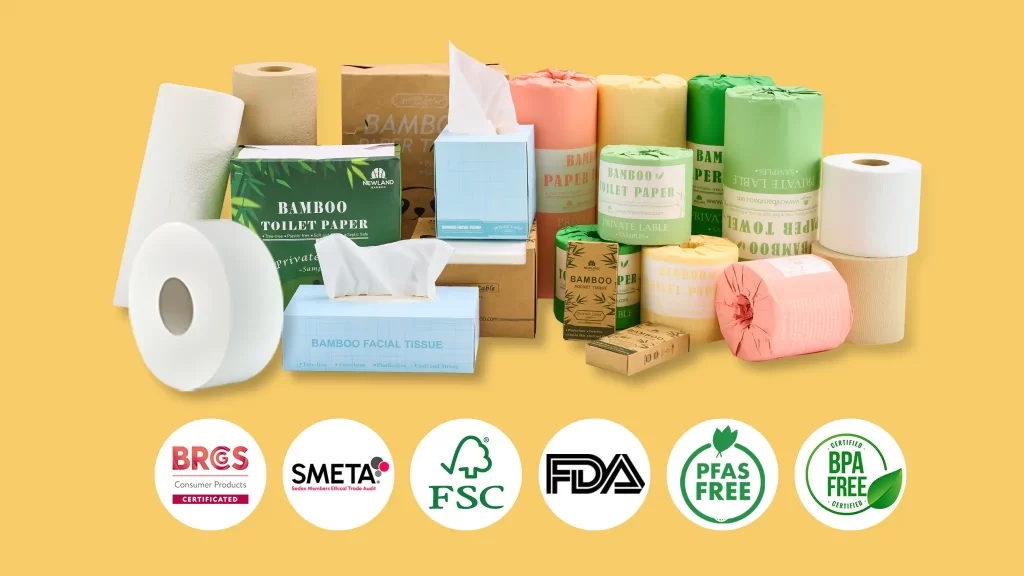
If you are evaluating bamboo toilet paper for wholesale, retail, or private label programs, Newland Bamboo can help you compare fiber positioning, sourcing language, and market-ready product specifications more clearly. We support buyers with FSC-backed bamboo supply communication, custom roll and sheet options, and practical packaging solutions for different markets. Instead of relying on vague sustainability wording, we focus on helping you build a bamboo tissue program that is easier to explain, easier to support, and easier to sell.
FAQ
-
Is organic bamboo the same as organic bamboo toilet paper?
No. Organic bamboo usually refers to the raw material story, while organic bamboo toilet paper is a stronger finished-product claim that depends on processing, certification, and labeling scope.
-
Does bamboo itself make toilet paper organic?
No. Bamboo can support an organic raw material discussion, but that does not automatically make the finished product an organic labeled product.
-
What does a supplier need to prove before using a strong organic claim?
At minimum, buyers should ask about the raw material basis, handling or processing controls, and the final labeling category the product actually fits into.
-
Why do so many sellers still use the term “organic bamboo toilet paper”?
Because the phrase often works as a market shortcut, even though the strength of supporting proof may differ from seller to seller.
-
Is FSC the same as organic certification?
No. FSC mainly supports responsible sourcing and traceability, not an organic finished-product claim.