
Introduction
At first glance, organic toilet paper sounds like a simple product category. Many buyers assume it means a cleaner, more natural, and more environmentally friendly tissue option. But once you look closer, the term becomes more complicated.
In the tissue market, words like natural, bamboo, eco-friendly, tree-free, and organic are often used in similar ways. They may overlap in meaning, but they are not interchangeable. A toilet paper product can be bamboo-based without being organic. It can be responsibly sourced without making an organic claim. It can also be marketed as soft, safe, or sustainable without being certified organic at all.
That is why the term matters. For private label brands, retailers, importers, and wholesale buyers, organic should not be treated as a vague marketing word. It needs to point to something specific. If buyers do not clarify that scope, the conversation quickly becomes confusing.
Bamboo is an important part of this discussion because it gives the tissue category a strong alternative to conventional wood pulp. It is fast-growing, plant-based, and already closely associated with sustainable product positioning. But even then, the key question remains the same: when people say organic toilet paper, what exactly do they mean?
What Does Organic Mean in Toilet Paper?
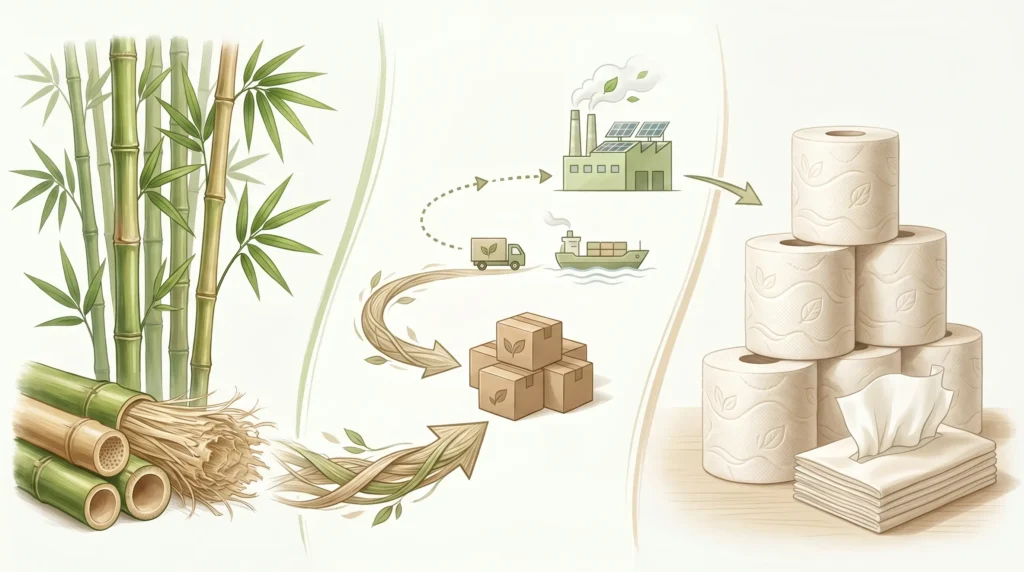
In simple terms, organic toilet paper usually refers to tissue made from raw materials grown under organic agricultural standards. That sounds straightforward, but it only explains the starting point. It does not automatically define the whole product.
This is where many product descriptions become unclear. In practice, organic is sometimes used as if it simply means cleaner, greener, or more natural. But those are broader impressions, not precise definitions. A product can create that impression without actually being organic in a strict sense.
For buyers, the most useful question is a practical one:
What exactly is organic here?
Is it the bamboo itself?
Is it the agricultural input behind the fiber?
Is it the pulp stage?
Or is it the final toilet paper product being presented as organic?
These distinctions matter because they affect how the claim should be understood. A product can be sustainable without being organic. It can be tree-free without being organic. It can be responsibly sourced without being organic. So when a supplier or brand uses the word organic, the first step is not to assume. The first step is to clarify what part of the product story the claim actually covers.
Can Bamboo Toilet Paper Be Organic?
Yes, bamboo can be part of an organic toilet paper discussion — but not automatically.
Bamboo is one of the strongest fibers in this conversation because it already fits many of the values that buyers associate with organic-style products. It is fast-growing, renewable, and widely seen as a cleaner alternative to virgin wood pulp. For that reason, bamboo toilet paper often feels like a natural fit for organic positioning.
But there is an important difference between organic bamboo as a raw material and organic bamboo toilet paper as a finished product.
A bamboo source may support an organic raw material story. That is one layer. But once bamboo is processed into pulp and then converted into tissue, the finished product enters a different stage of evaluation. At that point, buyers need to know whether the product claim still refers to the same thing or whether the language has become broader than the evidence behind it.
This is exactly why bamboo should not be treated as a shortcut to the word organic. It is a strong raw material, but it does not automatically settle the final product claim by itself.
A better way to understand the topic is to separate it into three layers:
- bamboo as a renewable raw material
- bamboo as a responsibly sourced material
- bamboo toilet paper marketed under an organic claim
In practice, many suppliers and brands use the term “organic bamboo toilet paper” more loosely than buyers expect. If you want to understand when that claim is credible and what suppliers actually need to prove, read our related guide: Can Bamboo Toilet Paper Be Called Organic?
These layers may overlap, but they are not identical. Once buyers see that clearly, the category becomes much easier to evaluate.
Organic Bamboo vs FSC Bamboo vs Safe Bamboo Tissue
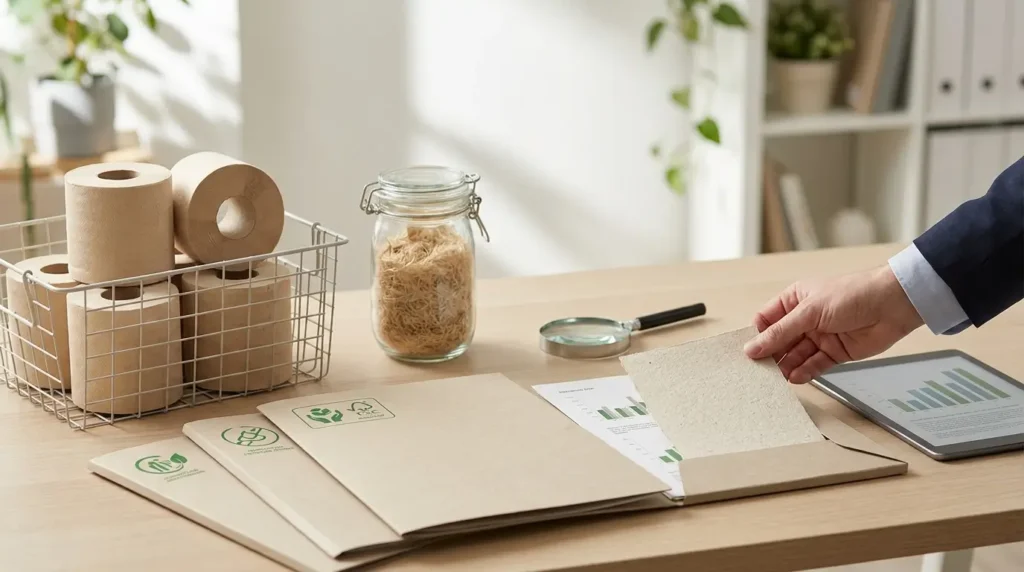
These terms often appear together in the same product space, but they do not mean the same thing. In fact, much of the confusion around organic toilet paper comes from blending raw material claims, sourcing claims, and finished-product claims into one message.
Organic Bamboo Focuses on the Raw Material Story
When people say organic bamboo, they are usually talking about the agricultural origin of the bamboo fiber. The focus is on how the material is grown and what that raw material represents.
This type of wording starts at the material level. It does not automatically define the final toilet paper roll on the shelf.
FSC Bamboo Focuses on Responsible Sourcing
FSC is different. It does not mean organic, and it does not tell buyers that the final tissue is an organic product. Instead, it supports a responsible sourcing and traceability story.
For many wholesale buyers, this matters a lot. In real procurement conversations, clear sourcing support is often more valuable than broad eco language because it gives the supply story more structure and credibility.
Safe Bamboo Tissue Focuses on the Finished Product
A third layer is product safety and performance. This is where buyers care about softness, strength, odor, daily-use comfort, and whether the tissue meets the expectations of their market.
A toilet paper product can perform very well and still not be organic. That is why safety language should not be treated as proof of an organic claim.
Why These Terms Should Not Be Mixed Together
The biggest mistake in this category is to treat all three ideas as if they are the same thing. That may sound attractive in marketing copy, but it creates confusion for serious buyers.
A much clearer approach is to separate the meanings.
| Term | What It Mainly Refers To | What It Does Not Automatically Prove |
|---|---|---|
| Organic bamboo | The agricultural origin of the bamboo raw material | That the finished toilet paper is certified organic |
| FSC bamboo | Responsible sourcing and traceable supply chain | That the material was grown under organic standards |
| Safe bamboo tissue | Finished product quality and usability | That the raw material or final product is organic |
This kind of precision does not weaken the product story. It strengthens trust.
What Certifications Should Buyers Actually Check?
Once buyers understand the difference between these claims, the next question becomes much simpler:
What should I actually verify?
The answer depends on what the buyer cares about most.
If the Focus Is Organic Positioning
If the product is described as organic, buyers should ask what part of the offer that wording actually covers.
Does it refer to the bamboo source?
Does it refer to the raw material only?
Does it extend to the finished product wording?
These are small questions with big consequences. They help buyers separate a clear product story from vague positioning language.
If the Focus Is Responsible Sourcing
Some buyers are less focused on the word organic and more concerned with source transparency. In that case, the more useful question is whether the bamboo pulp supply is documented, traceable, and clearly explained.
This is where FSC or related sourcing support becomes relevant. It helps buyers verify the sourcing story without confusing it with an organic finished-product claim.
If the Focus Is Product Quality
In the tissue category, performance still matters. Buyers want to know whether the product feels soft enough, holds together well, and fits the expected quality level of their market.
That means quality documents, testing support, and product consistency may matter just as much as sustainability wording. A strong natural-fiber story will not help much if the finished tissue does not perform well.
A Practical Buyer Checklist
Instead of relying on one phrase in a brochure or product title, buyers should look at the product from several angles.
| Buyer Question | Why It Matters |
|---|---|
| What part of the product is described as organic? | Helps avoid vague wording |
| Is the bamboo source clearly explained? | Clarifies whether the raw material story is credible |
| Is FSC or sourcing support available? | Strengthens responsible sourcing claims |
| Are there quality or safety documents for the finished tissue? | Confirms commercial usability |
| Does the wording match the documentation provided? | Reduces marketing and communication risk |
This kind of checklist makes product evaluation more practical and much less emotional.
Why the Term Is Often Misunderstood
One reason this topic causes so much confusion is that many buyers and consumers do not separate raw material language from final product language. They hear bamboo, natural, and organic and assume all three point to the same conclusion.
But the tissue category is more nuanced than that. Bamboo is a strong alternative fiber. It can absolutely support a cleaner and more sustainable product story. It may also fit well into an organic-focused discussion. But that still does not mean every bamboo tissue offer should be understood in the same way.
This is why clear wording matters. If a claim is too broad, it becomes less useful. If it is well defined, it becomes much more valuable to both buyers and suppliers.
In practice, many suppliers and brands use the term “organic bamboo toilet paper” more loosely than buyers expect. We will cover that market reality in a separate guide focused on supplier claims and what buyers should verify.
Final Thoughts
Organic toilet paper is not just another way of saying eco-friendly tissue. It is a more specific idea, and that idea only becomes useful when the wording is clear.
Bamboo belongs in this conversation because it gives buyers a renewable, plant-based alternative to conventional wood pulp. It also supports a stronger natural-fiber story than many traditional tissue options. But bamboo alone does not answer every question. The real issue is whether the claim refers to the raw material, the sourcing story, or the final product itself.
For brands, retailers, and wholesale buyers, that distinction matters. It is what separates a clear product position from a vague one. The best way to evaluate any organic toilet paper claim is not to react to the headline first, but to ask what exactly the wording is meant to describe.
Build a Clearer Bamboo Toilet Paper Program with Newland Bamboo
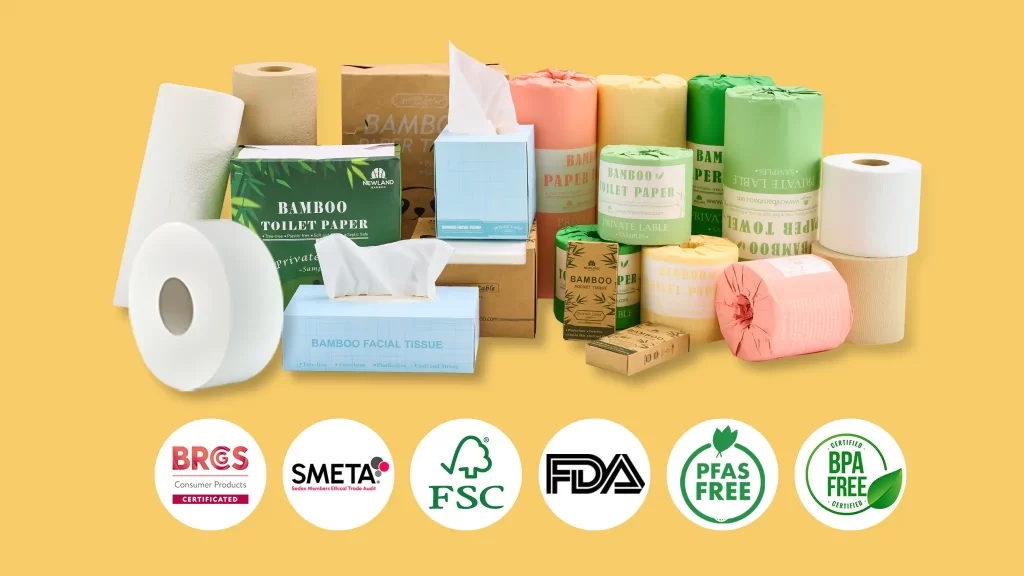
For brands, importers, and private label buyers, product claims matter just as much as product quality. Newland Bamboo supports bamboo toilet paper projects with FSC-backed sourcing communication, flexible product specifications, and practical packaging options for different market needs. If you are looking for a manufacturing partner who can help you present bamboo tissue more clearly and more professionally, our team is ready to support your next program.
FAQ
-
Is bamboo toilet paper automatically organic?
No. Bamboo can support an organic raw material discussion, but that does not automatically mean the finished toilet paper product should be understood as organic.
-
Is FSC the same as organic certification?
No. FSC is generally used to support responsible sourcing and supply chain traceability. It does not mean a product is organic.
-
Can a toilet paper product be sustainable without being organic?
Yes. A product can be bamboo-based, tree-free, responsibly sourced, or performance-focused without using an organic claim.
-
What should buyers check before trusting an organic toilet paper claim?
Buyers should first ask what part of the product the claim refers to. Then they should check whether the wording is supported by sourcing, product, or claim-related documentation.
-
Why is organic toilet paper often misunderstood?
Because the market often mixes together natural fiber language, sourcing language, and finished-product language. Without clear boundaries, those claims are easy to misunderstand.