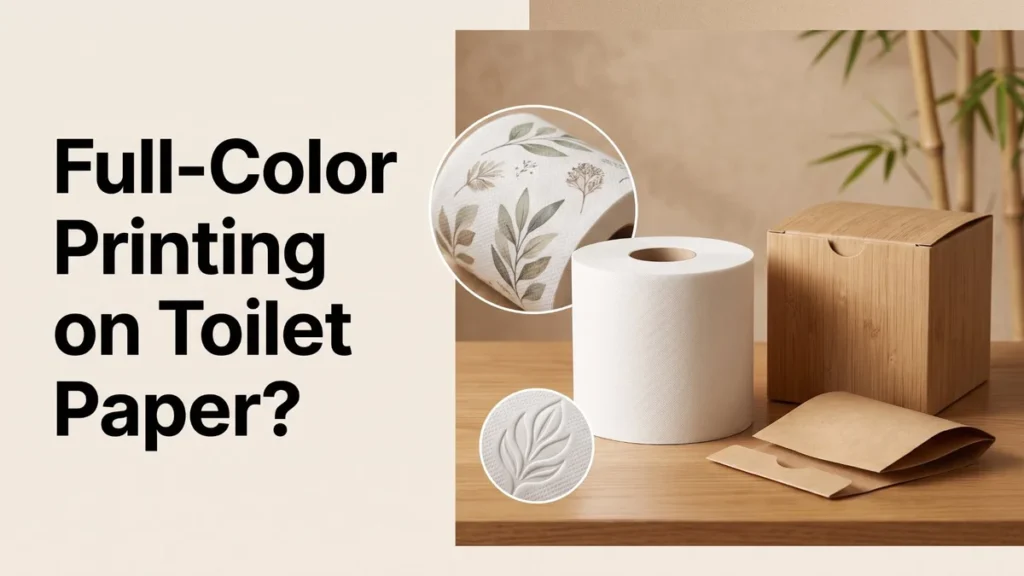
Vollfarbdruck auf Toilettenpapier ist für einige Spezial- oder Werbeprodukte technisch möglich, aber der direkte Tissue-Druck ist keine Standardoption auf jeder industriellen Verarbeitungslinie. Ein Käufer sollte die Druckmethode, Farbanzahl, Motivwiederholung, Perforationsbeziehung, Tintendokumentation, Endproduktprüfungen, Pilotmuster, Produktionsroute und die mindestbestellmenge pro Design bestätigen, bevor er die Idee als kommerziell machbar betrachtet.
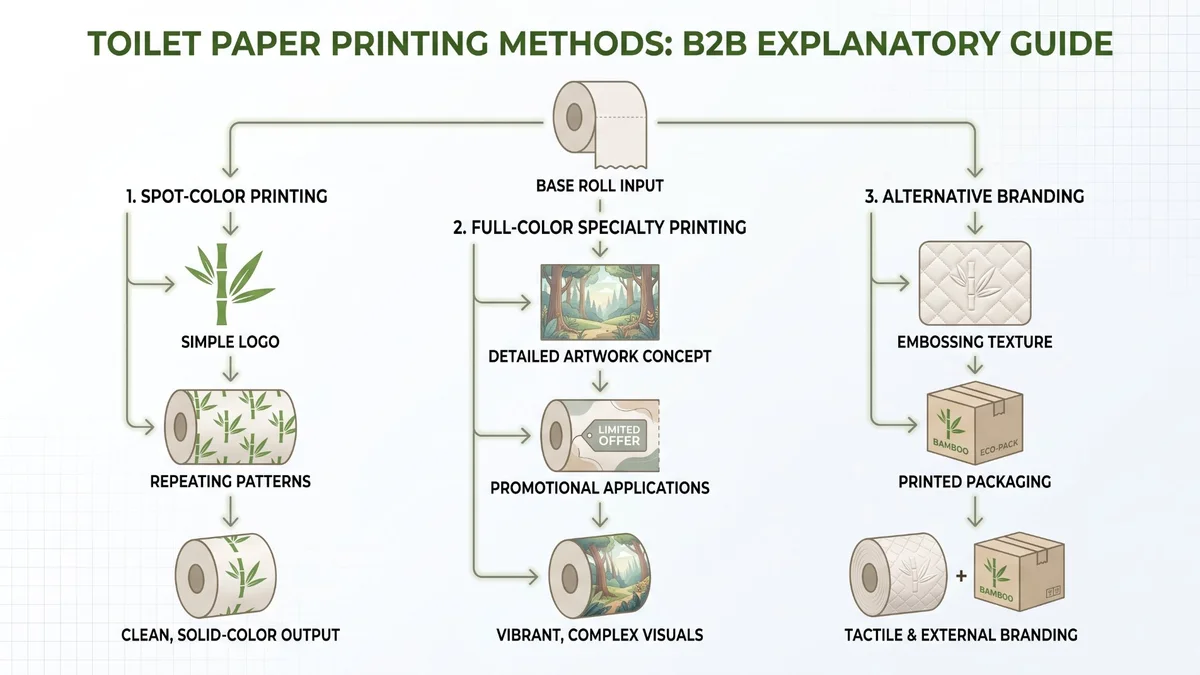
Newland Bamboo bietet derzeit keinen direkten Vollfarbdruck auf dem Toilettenpapier selbst an. Für Handelsmarkenprojekte können wir stattdessen kundenspezifische Prägung und bedruckte Verpackungsoptionen prüfen, einschließlich Einzelverpackungen, Multipacks, Papierverpackungen und Kartons.
Was “bedruckbar” bei einem Toilettenpapierprodukt wirklich bedeutet
Die Behauptung eines Lieferanten, dass Toilettenpapier “bedruckbar” sei, beweist nur, dass ein bestimmter Prozess ein Design auf ein bestimmtes Tissue-Produkt aufbringen kann. Sie beweist nicht die Eignung für eine Alltags-Haushaltsrolle, ein Hochgeschwindigkeits-OEM-Programm oder die Wiederholproduktion.
Der Käufer sollte zuerst den Verwendungszweck identifizieren. Eine Neuheitenrolle für eine Veranstaltung, Kampagne oder ein Geschenk hat andere wirtschaftliche Rahmenbedingungen und Genehmigungsanforderungen als ein Haushaltsprodukt, das für den regelmäßigen Gebrauch bestimmt ist. Einzelhandelsprojekte können zudem wiederholbare Weichheit, Geruchskontrolle, Motivkonsistenz, Rollenaussehen, Verpackungskompatibilität und dokumentierte Produktionskontrollen erfordern.
Die Fähigkeiten der Lieferanten unterscheiden sich. Einige Druckereien arbeiten mit ein oder zwei Schmuckfarben und wiederholten Motiven. Andere bieten Vollfarb-Spezial- oder Digitaldruck für Werbeaufträge an. Diese Angebote sollten als lieferantenspezifische Produktionsrouten bewertet werden und nicht als Beweis dafür, dass direkter Vollfarbdruck eine Standardfähigkeit der Tissue-Industrie ist.
Eine praktische Entscheidungsabfolge ist:
Verwendungszweck → Druckroute → Tintennachweis → Endproduktprüfungen → Pilotmuster → Fortfahren oder Alternative wählen
Welche Druckverfahren werden für bedrucktes Toilettenpapier verwendet?
Der Toilettenpapierdruck wird üblicherweise durch Druck mit begrenzter Farbanzahl oder eine spezialisierte Vollfarbroute angeboten. Diese Verfahren bieten nicht die gleiche Bilddetailgenauigkeit, Wiederholkontrolle, Rüstaufwand, Produktionsmaßstab oder Genehmigungsanforderungen.
Schmuckfarbendruck
Der Schmuckfarbendruck eignet sich im Allgemeinen besser für Logos, Slogans, Symbole und sich wiederholende Motive als für fotografische Vorlagen. Jede zusätzliche Farbe kann eine weitere Druckplatte, einen Tintenvorbereitungsschritt, eine Passeranpassung und einen Reinigungsprozess erfordern.
Eine Schmuckfarbenroute kann praktikabel sein, wenn das Motiv einfach ist, die Wiederholung klar definiert ist und der Käufer ein physisches Produktionsmuster genehmigen kann. Der Lieferant sollte dennoch eine akzeptable Übertragung, Geruch, Bildkonsistenz und Endpapierleistung auf dem vorgesehenen Tissue nachweisen.
Digitaler Vollfarb- oder Spezialdruck
Einige Spezialanbieter liefern Vollfarbdruck auf Toilettenpapier. Dies bestätigt, dass Vollfarbdruck in ausgewählten Produktionsmodellen technisch möglich ist, bedeutet aber nicht, dass ein konventioneller Tissue-Verarbeiter den Prozess zu einem Standard-OEM-Auftrag hinzufügen kann.
Der Käufer sollte fragen:
- Wann wird das Tissue bedruckt?
- Wird das Motiv digital gedruckt oder aus mehreren Schmuckfarben aufgebaut?
- Wie viel der Papierbahn ist bedeckt?
- Ist das Produkt für den täglichen Gebrauch, zur Ausstellung, als Geschenk oder zur Werbung bestimmt?
- Erfolgt der Druck intern oder extern?
- Kann der Lieferant ein produktionsspezifisches Muster und ein Nachweispaket bereitstellen?
Warum Motiv und Perforation möglicherweise nicht übereinstimmen
Ein sich wiederholendes Motiv platziert nicht automatisch ein vollständiges Bild auf jedem perforierten Blatt. Wenn Druck und Perforation getrennt gesteuert werden, kann eine Perforationslinie das Design durchschneiden oder das Motiv kann sich über aufeinanderfolgende Blätter verschieben.
Abnehmer, die ein zentriertes Bild pro Blatt benötigen, sollten die Rapportlänge des Motivs, die Perforationslänge, die Registerfähigkeit und eine abgerollte Musterrolle mit mehreren aufeinanderfolgenden Blättern anfordern.
| Tissue-Druckverfahren | Am besten geeignet für | Hauptprüfpunkt für die Freigabe | Haupteinschränkung |
|---|---|---|---|
| Schmuckfarbendruck | Logos, Slogans und einfache sich wiederholende Motive | Farbanzahl, Druckplatteneinrichtung, Rapport, Register, Übertragung und Muster | Eingeschränkte Bilddetails und Farbpalette |
| Vollfarben-Spezialdruck | Werbe-, Neuheits- oder ausgewählte Spezialprojekte | Exaktes Verfahren, Verwendungszweck, Tissue-Qualität, Muster und Nachweispaket | Lieferantenspezifische Verfügbarkeit und Freigabeanforderungen |
Sollte sich keines der Tissue-Druckverfahren als geeignet erweisen, können individuelle Prägung oder bedruckte Verpackungen einen praktikableren Weg zur Markenbildung bieten.
Was ändert sich, wenn Farbe auf weiches Toilettenpapier aufgebracht wird?
Das Aufbringen von Farbe auf weiches Toilettenpapier kann die Bildschärfe, den Geruch, die Oberflächenhaftung, das Übertragungsverhalten und die Verarbeitungsleistung verändern. Die Freigabe des Endprodukts sollte daher sowohl die optischen als auch die funktionalen Papiereigenschaften abdecken.
Druckschärfe, Trocknung und Absetzen
Toilettenpapier ist weich, porös, komprimierbar und oft geprägt. Feine Texte, Farbverläufe, Fotografien und große Vollflächen können weniger scharf wiedergegeben werden als auf Verpackungspapier.
Unzureichende Trocknung oder zu hoher Wickeldruck können ebenfalls zu Absetzen, Durchscheinen oder Übertragung zwischen benachbarten Lagen beitragen.
Ein klares Bild auf der Außenseite einer Rolle beweist nicht, dass die Druckqualität über die gesamte Rolle hinweg gleichbleibend ist. Abnehmer sollten Blätter aus den äußeren, mittleren und inneren Lagen prüfen.
Checkliste für bedruckte Toilettenpapier-Muster
Das bedruckte Muster sollte mit dem unbedruckten Basistissue verglichen und nicht nur nach dem visuellen Eindruck freigegeben werden. Prüfen Sie:
- Motivschärfe und Lesbarkeit kleiner Texte;
- Farbkonsistenz über verschiedene Rollenlagen hinweg;
- Durchscheinen auf der Rückseite;
- Farbübertragung trocken und feucht;
- Geruch nach dem Öffnen;
- Oberflächengefühl und Steifigkeit;
- Saugfähigkeit;
- Lagenbindung und -trennung;
- Fusseln oder Abrieb an der Oberfläche;
- Vergleichendes Zerfalls- oder Dispergierverhalten.
Eine einfache Glas- oder Spüldemonstration kann helfen, zwei Muster zu vergleichen, sollte aber nicht als formeller Konformitätsnachweis oder universelle Bestätigung für Kanal-, Klärgruben-, Wohnmobil- oder Schiffssysteme dargestellt werden.
Welche Nachweise sollten Abnehmer vor der Freigabe von bedrucktem Toilettenpapier anfordern?
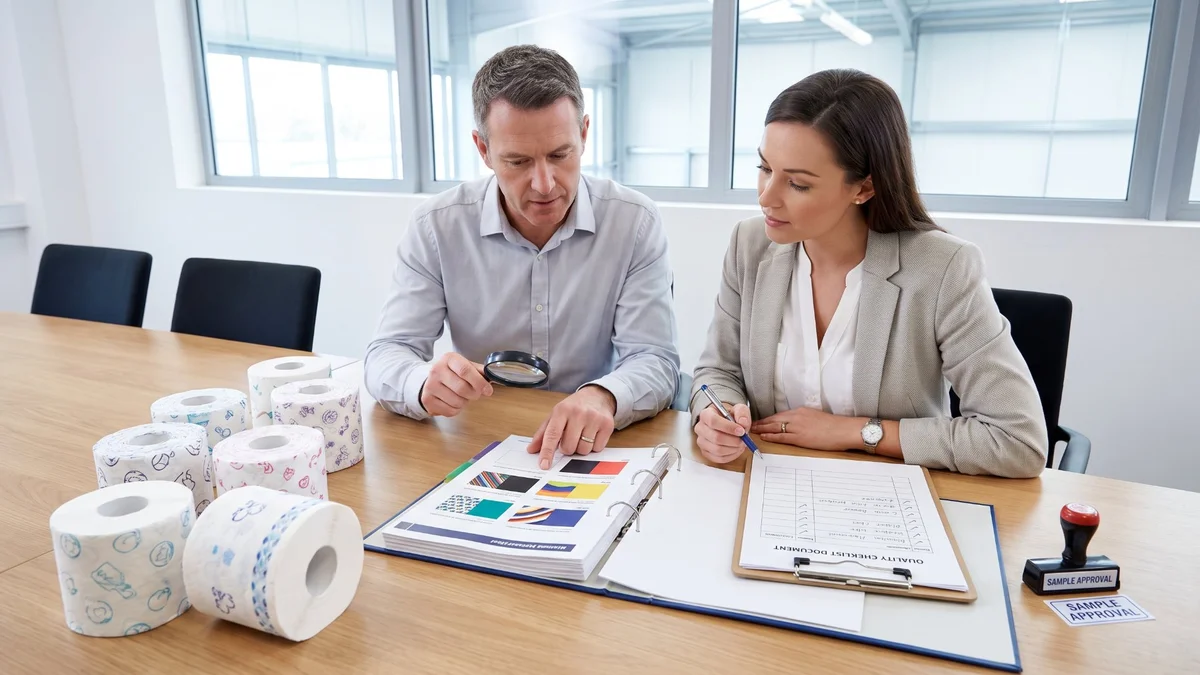
Abnehmer sollten vor der Freigabe von bedrucktem Toilettenpapier für die Massenproduktion eine Farbdokumentation, Nachweise zur Übertragungs- oder Echtheit des Endprodukts, ein produktionsspezifisches Pilotmuster und eine kontrollierte Freigabeaufzeichnung anfordern.
Dokumentation zu Farbe und Farbmitteln
Bitten Sie den Lieferanten, den Farb- oder Farbmittelhersteller zu benennen und eine für den Zielmarkt und Verwendungszweck relevante Dokumentation bereitzustellen. Je nach Projekt kann dies Folgendes umfassen:
- Ein aktuelles Sicherheitsdatenblatt;
- Erklärungen zu reglementierten Substanzen;
- Informationen zum Verwendungszweck;
- Eine Rezeptur- oder Produktreferenz;
- Bestätigung, dass die Massenproduktion dem freigegebenen Muster entspricht;
- Anforderungen an die Änderungskontrolle bei Wechsel von Farbe, Tissue oder Verfahren.
Die EU-Ecolabel-Kriterien für Tissue-Papier bieten eine nützliche externe Benchmark, da sie bedruckte und unbedruckte Tissue-Produkte adressieren und chemische sowie Endproduktanforderungen enthalten.
Das EU-Umweltzeichen ist jedoch freiwillig und stellt keine universelle rechtliche Zulassung für jedes bedruckte Toilettenpapierprodukt oder jeden Absatzmarkt dar.
Abrieb, Echtheit und Endproduktprüfungen
Der Prüfplan sollte auf das Produkt, die Druckdeckung, den Verwendungszweck und den Zielmarkt abgestimmt sein. Je nach Projekt können dokumentierte Prüfungen Trockenreiben, Feuchtreiben, sichtbaren Farbabrieb, Abfärben, Geruch und Farbveränderung umfassen.
Sichtbarer Abrieb und formale Farbmigration sind unterschiedliche Fragestellungen. Die erforderliche Prüfmethode und die Annahmeregel sollten daher definiert und nicht aus einer allgemeinen Farbaussage abgeleitet werden.
Der Bericht sollte Folgendes ausweisen:
- Die verwendete Methode;
- Den Probenzustand;
- Das Ergebnis;
- Die Annahmeregel;
- Ob die Prüfung intern oder von einem Labor durchgeführt wurde.
Begriffe wie “lebensmittelechte Farbe”, “Öko-Farbe” oder “sichere Farbe” sind kein vollständiger Nachweis. Diese Formulierungen identifizieren weder das Endprodukt, die aufgebrachte Menge, die Kontaktbedingung, den Zielmarkt noch die Prüfgrundlage.
Pilotmuster und Produktionsversuche
Das Freigabemuster sollte das vorgesehene Tissue, das Artwork, die Farbanzahl, die Druckdeckung, die Rapportlänge, die Perforation, die Prägung, den Verarbeitungsweg und die Verpackung verwenden.
Käufer und Lieferant sollten Folgendes dokumentieren:
- Freigegebene Artwork-Version;
- Farbreferenzen;
- Druckfläche und -deckung;
- Rapportlänge;
- Perforationsbezug;
- Tissue-Qualität;
- Musterdatum;
- Produktionsweg;
- Akzeptierte Toleranzen;
- Aufbewahrtes physisches Muster.
| Freigabenachweis | Was er ausweisen sollte | Warum der Käufer ihn benötigt |
|---|---|---|
| Farbdokumentation | Lieferant, Formulierungsreferenz, Verwendungszweck und aktuelles SDB oder Deklaration, sofern zutreffend | Filtert unbelegte Farbsicherheitsbehauptungen heraus |
| Abrieb- oder Echtheitsprotokoll | Methode, Probenzustand, Ergebnis und Annahmeregel | Prüft Reiben, Abfärben und Farbbewegung |
| Pilotmuster | Vorgesehenes Tissue, Artwork, Farben, Rapport, Perforation und Verarbeitungsweg | Zeigt das tatsächliche Endprodukt |
| Freigabeprotokoll | Artwork-Version, physische Referenz, Toleranzen, Verpackung und Änderungskontrolle | Unterstützt die Wiederholproduktion |
Was bestimmt die Kosten und die Mindestbestellmenge von individuell bedrucktem Toilettenpapier?
Die Kosten und die Mindestbestellmenge von individuell bedrucktem Toilettenpapier werden durch das Druckverfahren, die Farbanzahl, den Artwork-Rapport, die Registeranforderung, die Einrichtung, den Versuchsabfall, die Auftragsgröße, die Tissue-Spezifikation, die Verpackung und die Anzahl separater Designs bestimmt.
Farbanzahl, Artwork-Rapport und Einrichtung
Jede zusätzliche Sonderfarbe kann eine weitere Druckplatte, einen Farbvorbereitungsschritt, eine Registeranpassung und einen Reinigungsprozess erfordern.
Feiner Text, Verläufe, Fotografien, große Vollflächen und Artwork, das auf die Perforation ausgerichtet werden muss, sind anspruchsvoller als ein einfaches, sich wiederholendes Logo.
Eine nützliche Erstspezifikation sollte Folgendes ausweisen:
- Vorgesehenes Druckverfahren;
- Anzahl der Farben;
- Druckdeckung;
- Artwork-Rapportlänge;
- Perforationslänge;
- Anforderung an die Registerhaltigkeit von Artwork zu Perforation, falls vorhanden;
- Rollenabmessungen;
- Lage und Tissue-Farbe;
- Menge pro Design.
Versuchsabfall und Mindestbestellmenge pro Design
Bedrucktes Tissue kann Einrichtungsabfall verursachen, bevor verkaufsfähige Rollen produziert werden. Jedes neue Design kann ein weiteres Datei- oder Druckplatten-Setup, eine Farbanpassung, einen Reinigungszyklus, eine Pilotfreigabe und ein Produktionsprotokoll erfordern.
Ein Lieferant kann daher die Einrichtung und die Mindestbestellmenge für jedes Design separat berechnen, anstatt mehrere Artworks zu einer Gesamtmenge zusammenzufassen. Das Minimum eines Werbedruckers sollte nicht als Branchenstandard für die Einzelhandels- oder OEM-Tissue-Produktion betrachtet werden.
Direktes Bedrucken von Tissue kann Einrichtung, Anlaufabfall, Reinigung, längere Freigabezyklen und separate MOQs pro Design verursachen. Für viele Handelsmarken bietet die Investition in bedruckte Einschläge oder Kartons ein besser reproduzierbares Markensystem, ohne eine weitere Variable im Tissue selbst hinzuzufügen.
Eine aussagekräftige RFQ sollte Folgendes enthalten:
- Gesamtrollenmenge;
- Menge pro Design;
- Anzahl der Farben;
- Tissue-Spezifikation;
- Rapport- und Perforationsanforderungen;
- Verpackungsformat;
- Bestimmungsort;
- Musteranforderung;
- Dokumentationsanforderung;
- Zieltermin für die Markteinführung.
Welche praktikableren Alternativen gibt es für Handelsmarken?
Für viele Handelsmarkenprojekte bieten individuelle Prägung und bedruckte Verpackungen einen praktikableren und reproduzierbareren Markenweg als das Aufbringen vollfarbiger Grafiken direkt auf das Tissue.
Individuelle Prägung ohne Farbe
Durch Prägung kann ein Logo, Symbol oder Rapportmuster in die Papierstruktur eingebracht werden, ohne Druckfarbe hinzuzufügen. Käufer sollten Musterklarheit, Tiefe, Rollengefühl, Lagenverklebung, Werkzeugkosten und MOQ prüfen.
Newland Bamboo unterstützt derzeit Standard- und individuelle Prägeoptionen für geeignete Handelsmarken-Toilettenpapierprojekte. Direkter vollfarbiger Druck auf dem Tissue ist nicht Teil unseres aktuellen Produktionsangebots.
Bedruckte Einzelverpackungen, Multipacks und Kartons
Verpackungen bieten mehr Platz für Markenfarben, Auslobungen, Barcodes, Packungszählungen, Produktanweisungen und die Präsentation im Einzelhandel. Die Markenpräsenz kann auf einer Einzelverpackung, Papierverpackung, einem Multipack, einer Box oder einem Versandkarton erfolgen.
Newland Bamboo kann individuelle Tissue-Verpackungsformate, Artwork-Ausrichtung, Barcode-Bereiche, Produkttexte, Kartonetiketten und Versandmarkierungen prüfen. Die Machbarkeit hängt vom gewählten Material, den Auslobungen, dem Zielmarkt, der Packungskonfiguration und der Bestellmenge ab.
| Markenweg | Wo die Marke erscheint | Am besten geeignet für | Hauptfreigabepunkt |
|---|---|---|---|
| Individuelle Prägung | Tissue-Oberfläche ohne Farbe | Logo oder Muster auf der Rolle sichtbar | Musterklarheit, Gefühl, Lagenverklebung und Werkzeug |
| Bedruckte Einzelverpackung | Jede Rolle | DTC, Gastgewerbe, Abonnements und Premium-Präsentation | Artwork, Verpackungsmaterial, Auslobungen und Versiegelung |
| Bedrucktes Multipack oder Papierverpackung | Einzelhandelspackung | Regal, E-Commerce und Mehrrollen-Markenpräsenz | Stanze, Packungszählung, Barcode und Druckbereich |
| Bedruckter Karton | Versand- oder Großkarton | Großhandel, Lager und Logistik-Kennzeichnung | Kartonfestigkeit, Etiketten, Markierungen und SKU-Kontrolle |
Prüfen Sie eine praktikable Alternative mit Newland Bamboo
Newland Bamboo unterstützt Importeure, Distributoren, Handelsmarken, Einzelhandelskäufer und E-Commerce-Verkäufer, die einen praktikablen Weg von einer visuellen Idee zu einem reproduzierbaren Toilettenpapier-SKU benötigen.
Senden Sie den Verwendungszweck, ein Referenzbild, den Zielmarkt, die geschätzte Menge, den Produkttyp, die bevorzugte Rollenspezifikation und die Verpackungsidee.
Unser Team kann prüfen, ob individuelle Prägung, eine bedruckte Einzelverpackung, ein Multipack oder ein bedruckter Karton der praktikablere Weg ist, bevor es zu Bemusterung und Angebotserstellung kommt.
Käufer, die ein umfassenderes Beschaffungsprojekt vorbereiten, können auch unseren Leitfaden zum Kauf von Toilettenpapier im Großhandel einsehen.
Häufig gestellte Fragen
Kann bedrucktes Toilettenpapier Farbe übertragen oder ausbluten?
Bedrucktes Toilettenpapier kann bei Trockenheit oder Feuchtigkeit Farbübertragung zeigen, wenn Tinte, Trocknung, Deckung, Tissue oder Verarbeitungsprozess ungeeignet sind. Käufer sollten dokumentierte Übertragungs- oder Echtheitsprüfungen anfordern und ein physisches Pilotmuster unter den vorgesehenen Nutzungsbedingungen prüfen.
Kann jedes perforierte Blatt ein vollständiges Bild tragen?
Ein vollständiges Bild auf jedem Blatt erfordert, dass der Motivrapport und die Perforation im Register bleiben. Käufer sollten die Rapportlänge, Perforationslänge, Registerfähigkeit und mehrere aufeinanderfolgende Blätter aus der Produktionsmuster bestätigen.
Beeinflusst der Druck das Zerfallsverhalten von Toilettenpapier in Wasser?
Der Druck kann das Zerfallsverhalten wesentlich verändern oder auch nicht, da das Ergebnis von der Farbe, der Farbdeckung, der Tissue-Struktur, der Lagenverklebung, der Prägung und den Verarbeitungsbedingungen abhängt. Vergleichen Sie das bedruckte Muster mit dem unbedruckten Basistissue und betrachten Sie eine einfache Glasdemonstration nicht als formalen Systemnachweis.
Was sollten Käufer vor der Massenproduktion freigeben?
Geben Sie die Motivversion, Farbreferenzen, den Druckbereich, die Rapportlänge, die Perforationsbeziehung, die Tissue-Qualität, die Farbdokumentation, den Nachweis der Abrieb- oder Farbechtheit, das Pilotmuster, die Verpackung, die akzeptierten Toleranzen und das aufbewahrte physische Referenzmuster frei.