Why New Zealand, Why Now
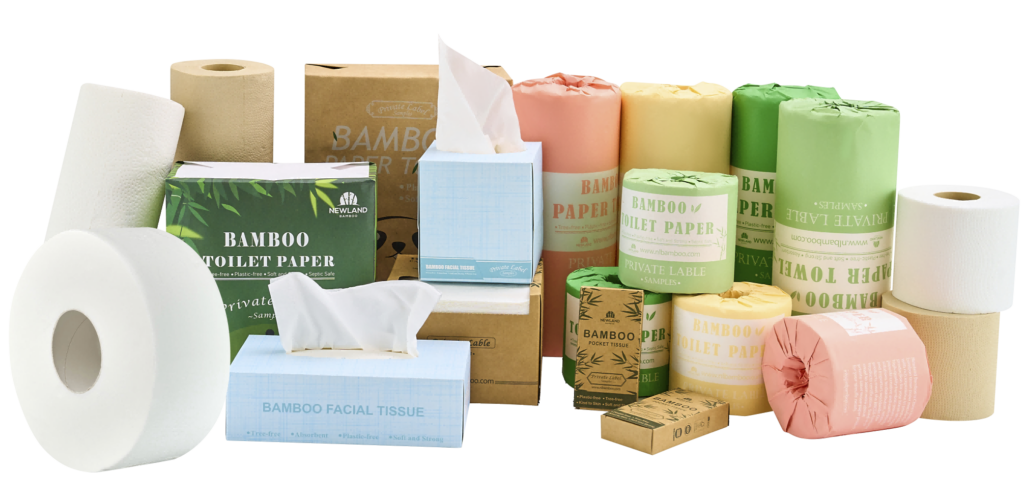
New Zealand’s transition toward low-waste, low-emissions consumption is accelerating demand for eco-friendly tissue products. Bamboo toilet paper—soft, strong, rapidly renewable, and bleach-light—is well positioned to benefit as retailers, institutions, and consumers seek verifiable sustainability. Coupled with government direction on plastics and emissions, the market is becoming one where compliance and quality provide a competitive advantage. For importers, wholesalers, and brand owners, this is the right moment to partner with a reliable factory that offers certifications and stable supply chains.
Market Overview & Growth Trends
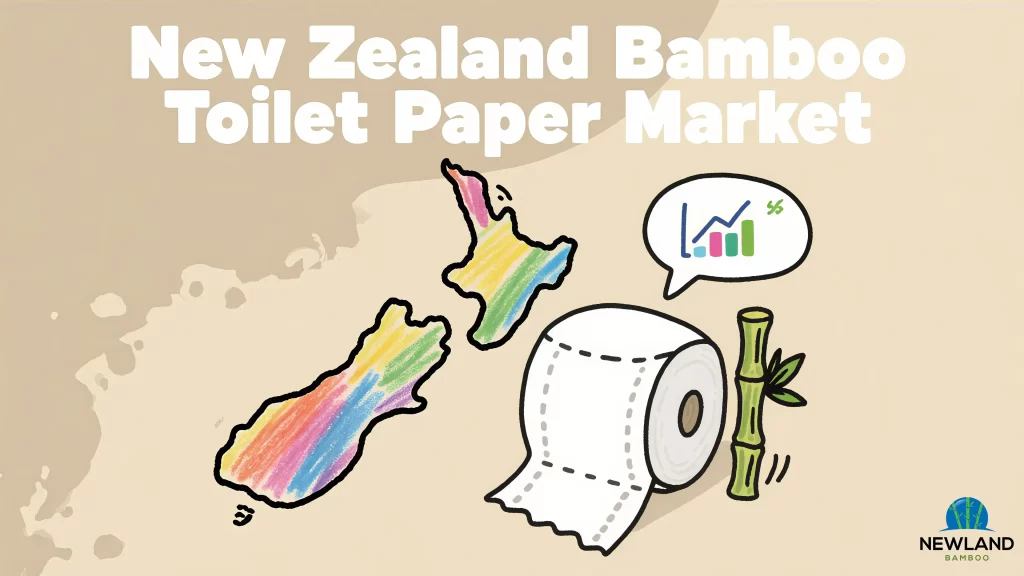
As of 2023, New Zealand’s toilet paper market is valued at approximately NZD 200 million, with the eco-friendly segment expanding rapidly. Bamboo toilet paper represents about 2.5% of the market, but is projected to grow at a double-digit annual rate over the next five years, driven by consumer demand and regulatory policies. This shift presents an important opportunity for businesses that want to introduce sustainable products and stay ahead of regulatory requirements.
Table 1. New Zealand Bamboo Toilet Paper — Market Size & Share (2019–2030)
| Year | Total NZ Toilet Paper Market (NZD Mn) | Eco-Friendly Segment Share | Bamboo Toilet Paper Share of Total | Bamboo Toilet Paper Value (NZD Mn) |
|---|---|---|---|---|
| 2019 | 170 | 4% | 0.8% | 1.36 |
| 2021 | 185 | 5% | 1.5% | 2.78 |
| 2024 | 200 | 7–8% | ~2.5% | 5.00 |
| 2027* | 215 | 10% | ~3.5% | 7.50 |
| 2030* | 230 | 15% | ~5% | 11.50 |
Table 2. New Zealand Bamboo Toilet Paper — YoY Growth (2019–2030)
| Year Range | YoY Growth % |
|---|---|
| 2019–2021 | +24.0% |
| 2021–2024 | +20.5% |
| 2024–2027* | +14.5% |
| 2027–2030* | +15.1% |
Implication for B2B: Even modest share gains deliver significant value in this stable category. A segment worth NZD 11.5M by 2030 creates room for private-label launches and institutional supply contracts.
Methodology: Estimates are based on New Zealand category sizing, government policies (plastic phase-out, net-zero targets), and international bamboo tissue growth trends. Retailer sustainability roadmaps from Woolworths New Zealand and New World further support the eco shift.
New Zealand’s Environmental Policies and Market Impact
- Plastics phase-out & low-waste transition. The Ministry for the Environment is removing hard-to-recycle and single-use plastics, favoring plastic-free packaging and compostable materials such as bamboo tissue.
- Zero Carbon Act (Net Zero by 2050). The 2019 Climate Change Response (Zero Carbon) Amendment Act sets long-term carbon reduction targets, influencing procurement toward lower-carbon products.
- Government Procurement Rules. Public procurement explicitly supports environmental outcomes, creating opportunities for certified sustainable tissue products.
Retail alignment: Woolworths New Zealand (formerly Countdown) is targeting a 50% reduction in virgin plastic packaging by 2025, while New World is advancing plastic reduction initiatives. Both open shelf space for eco-friendly tissue with recyclable or plastic-free wraps.
Consumer Behavior and Purchasing Trends
- Sustainability as a default value. Shoppers respond to verifiable eco claims and plastic-free packaging.
- Health and softness. Bamboo tissue can be positioned as hypoallergenic and chlorine-free, meeting “better-for-you” expectations.
- Premium + subscriptions. Consumers accept higher pricing when quality matches, with DTC subscription models helping stabilize demand.
- Institutional demand. Hotels, offices, and public facilities increasingly require certified low-carbon, low-waste consumables.
Competitive Landscape & Why Factory-Direct Wins
Well-known brands such as Who Gives A Crap, Betterway Bamboo, and Caboo have raised consumer awareness but mostly rely on imported finished rolls. This leaves space for B2B buyers to benefit from factory-direct supply, customization, and faster turnaround.
Advantages of partnering directly with a certified manufacturer:
- Compliance by design. FSC and compostability certifications streamline retailer onboarding and support procurement bids.
- OEM/ODM flexibility. Custom embossing, packaging, and plastic-free options tailored to retailer guidelines.
- Cost & control. Eliminating intermediaries reduces costs while improving control over specifications.
- Supply assurance. Multi-SKU programs, including retail and jumbo rolls, ensure volume consistency and logistics efficiency.
Certifications matter: FSC is widely recognized in Australasia, while BPI and TÜV AUSTRIA marks help substantiate compostability claims, particularly for multi-market portfolios.
Market Opportunities & Challenges
Opportunities
- Expanding eco-ranges at Woolworths NZ and Foodstuffs banners.
- Public procurement rules supporting environmentally-certified tissue.
- Growth potential for private-label and subscription models, with bamboo projected to reach NZD 11.5M by 2030.
Challenges
- Price sensitivity requiring clear quality justification.
- Freight variability impacting landed costs.
- Demand for verified claims and documentation (FSC CoC, compostability certificates).
Solutions
- Certifications: FSC CoC and compostability options with global recognition.
- OEM/ODM: Flexible sampling and packaging to meet retailer requirements.
- Cost management: Efficient pack formats and direct factory pricing.
- Documentation: Ready-to-submit spec sheets and certificates for smooth onboarding.
Seizing the Bamboo Opportunity in New Zealand
With bamboo toilet paper forecast to reach NZD 11.5 million by 2030, businesses that act early can capture premium margins and win key retail and institutional contracts. Partnering factory-direct ensures compliance, quality, and cost control—critical advantages as New Zealand accelerates its low-waste transition.
FAQ — Practicalities for Importers & Distributors
-
Which certifications help with NZ retail or tenders?
FSC Chain-of-Custody for fiber traceability; and for compostability claims, a recognized scheme such as BPI.
-
Does the Government’s policy environment really help eco tissue?
Yes. The plastics phase-out and net-zero framework tilt procurement and shelf space toward low-waste options.
-
How should packaging be positioned?
Plastic-free or widely recyclable formats align with major retailer priorities.
-
What about import duty into New Zealand?
Many goods are duty-free, but confirm HS 4818 specifics in the Tariff Finder. GST (15%) applies above threshold.
-
Typical lead times?
Ocean freight from East Asia to New Zealand is typically 2–4 weeks depending on port and service.