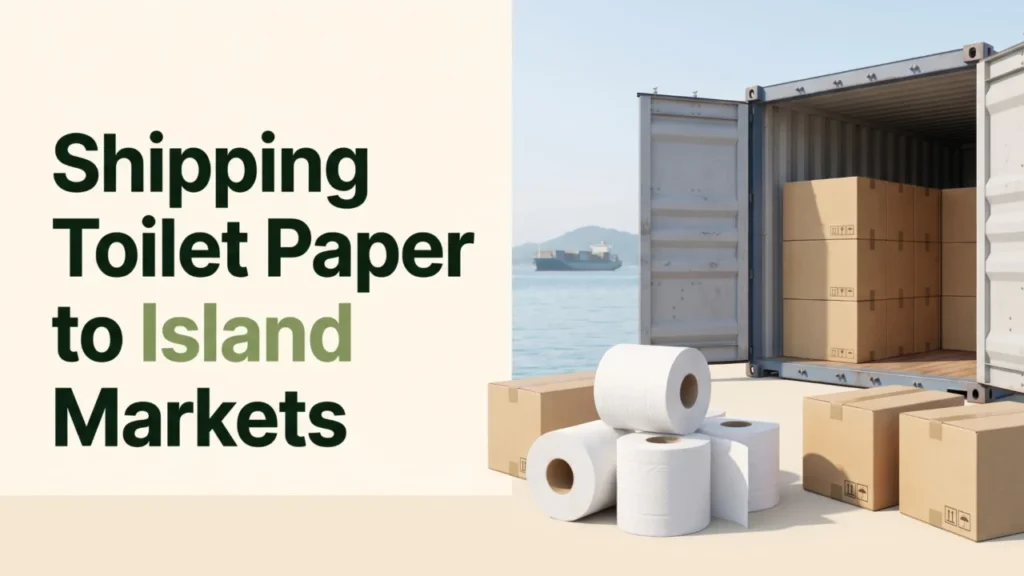
Het verschepen van toiletpapier naar eilanden en kleine afzetmarkten vereist meer dan alleen het vergelijken van een zeevrachtofferte. Importeurs dienen de verschepingsstructuur, de bestemmingshaven, vochtbeheersing en het bestelpunt als één samenhangend plan te kiezen. De meest voorkomende aankomstschade is doorgaans te wijten aan zwakke dozen, vochtige laadomstandigheden, ongeschikte containers, blootstelling aan condensatie, instabiele vloerbelading of gebrekkige deurvergrendeling, in plaats van uitsluitend aan de zeereis.
Beoordeeld door: Newland Bamboo Export Operations
Waarom eiland- en kleinvolumemarkten een ander verzendplan voor toiletpapier nodig hebben
Eiland- en kleinere markten hebben doorgaans minder afvaartopties, meer blootstelling aan overlading en minder ruimte voor voorraadfouten. Een zending kan via een grote hub gaan voordat deze een feederhaven bereikt, en elk extra overslagpunt kan de betrouwbaarheid van het schema, de bestemmingskosten en de staat van de dozen beïnvloeden.
Het commerciële risico is ook anders. Toiletpapier is volumineus in verhouding tot de waarde, dus een slechte containerbenutting kan de landed cost snel verhogen. Tegelijkertijd kan te veel bestellen de magazijncapaciteit onder druk zetten, terwijl te weinig bestellen een stockout kan veroorzaken voordat de volgende zending door de douane is. UNCTAD merkt op dat kleine eilandstaten in ontwikkeling te maken hebben met structurele uitdagingen in het zeevervoer, waaronder beperkte connectiviteit en hoge transportkosten. Kopers dienen daarom de volledige route te evalueren in plaats van het zeetarief als de volledige verzendbeslissing te beschouwen. Zie de UNCTAD maritime transport review voor kleine eilandstaten in ontwikkeling.
Kies de verschepingsstructuur voordat u vrachttarieven vergelijkt
De juiste verschepingsstructuur hangt af van volume, SKU-mix, overslagrisico en bestemmingsomstandigheden. Een laag headline-vrachttarief is niet automatisch de optie met de laagste landed cost als de lading herhaaldelijk wordt behandeld, via een duur consolidatiepunt wordt geleverd of inefficiënt wordt geladen.
Gebruik FCL wanneer volume en behandelingscontrole het belangrijkst zijn
Een volle containerlading geeft de importeur meer controle over laden, verzegelen en ladingsdocumentatie. Het vermindert ook het aantal keren dat dozen tussen faciliteiten worden overgeslagen. Voor toiletpapier is dit belangrijk omdat lichtgewicht dozen kunnen worden geplet, geschaafd of blootgesteld aan vocht wanneer ze worden gemengd met ongeschikte lading.
FCL is doorgaans de sterkere optie wanneer de bestelling de containerruimte efficiënt kan benutten, de koper voldoende magazijncapaciteit heeft en de verwachte verkoopsnelheid de hoeveelheid ondersteunt. Kopers dienen de bruikbare laadhoeveelheid te vergelijken op basis van de afmetingen van de eindverpakking, niet alleen op basis van het aantal rollen.
Gebruik gemengde SKU-lading om de containerbenutting te verbeteren
Voor kleinere markten kan een container met gemengde SKU's commerciële variëteit en vrachtefficiëntie in evenwicht brengen. Toiletpapier, keukenpapier en gezichtstissues kunnen worden gecombineerd wanneer productieplanning, doosafmetingen en bestemmingsvereisten dit toelaten. Newland Bamboo kan gemengde productlading voor geschikte orders beoordelen, maar het definitieve plan moet gebaseerd zijn op bevestigde specificaties en doosafmetingen.
Een gemengde container dient nog steeds een duidelijke laadkaart te volgen. Zware of sterkere dozen mogen geen compressierisico vormen voor lichtere verpakkingen, en dozen aan de deurzijde moeten stabiel blijven tijdens het lossen.
Gebruik LCL alleen na beoordeling van overslag- en bestemmingskosten
LCL-verzending kan ondersteuning bieden voor monsters, proefbestellingen of een beperkte lancering, maar brengt consolidatie- en deconsolidatiehandling met zich mee. De koper dient de ladingbescherming, magazijnhandling, bestemmingskosten, levertijd en het risico van het delen van ruimte met natte, geurende of zware lading te beoordelen.
| Verzendstructuur | Het meest geschikt voor | Belangrijkste voordeel | Belangrijkste risico om te controleren |
|---|---|---|---|
| FCL | Stabiele vraag en grotere bestellingen | Betere controle over laden en verzegelen | Overtollige voorraad of slechte containerbenutting |
| Gemengde SKU FCL | Kleinere markten die meerdere tissueproducten nodig hebben | Breder assortiment in één container | Complex laadplan en ongelijke kartonsterkte |
| LCL | Monsters, proeven of zeer kleine initiële volumes | Lagere initiële verzendhoeveelheid | Meer handling, consolidatieblootstelling en bestemmingskosten |
Kies de haven op basis van de volledige route, niet alleen op basis van het zeetarief
De havenkeuze moet gebaseerd zijn op het volledige traject van fabriek tot eindmagazijn. Het laagste zeetarief kan duurder uitvallen na overslag, terminalhandling, douaneprocedures, vrije-tijdlimieten en binnenlands vervoer.
Vergelijk directe, overslag- en feeder-routes
Een directe dienst kan het overdrachtsrisico verminderen, maar is mogelijk niet beschikbaar voor elke eilandbestemming. Een overslagroute kan frequentere afvaarten bieden, maar voegt een extra schema-afhankelijkheid toe. Kopers dienen de expediteur te vragen het hoofdvaartuig, de overslaghub, de feeder-dienst en het verwachte aansluitvenster te identificeren.
Bij de havenkeuze moet ook worden overwogen of de bestemming de gekozen containergrootte betrouwbaar kan verwerken, of congestie gebruikelijk is en of de importeur een werkbare leveringsregeling heeft na vrijgave door de douane.
Controleer bestemmingskosten, vrije tijd en binnenlands vervoer
Bestemmingskosten kunnen de landed cost van toiletpapier aanzienlijk veranderen. Importeurs dienen een schriftelijke schatting te verkrijgen die terminalhandling, documentatie, deconsolidatie waar van toepassing, douanegerelateerde kosten, blootstelling aan containerdetentie of demurrage en levering aan het eindmagazijn dekt.
Vrije tijd is belangrijk omdat toiletpapier aanzienlijke opslagruimte in beslag neemt. Een koper die de container niet snel kan ontvangen en lossen, kan vermijdbare kosten oplopen, zelfs als het zeetarief concurrerend was.
Hoe de meest voorkomende transportschade aan toiletpapier te voorkomen
De meest voorkomende aankomstschade kan worden verminderd door kartonsterkte, ladingdroogheid, containerconditie, blootstelling aan vocht, laadstabiliteit en verzenddocumentatie te controleren voordat de deuren worden verzegeld. Droogmiddelen helpen, maar kunnen natte kartons, blootstelling aan regen of een ongeschikte container niet corrigeren.
Bevestig de kartonsterkte voor het daadwerkelijke laadpatroon
Kartons moeten worden beoordeeld op het afgewerkte pakgewicht, de stapelhoogte, de route en de handlingmethode. Een karton dat goed presteert in een lokaal magazijn, kan tijdens een lange exportroute nog steeds vervormen als de kartonsterkte, naden of interne pakondersteuning onvoldoende zijn.
De koper en leverancier dienen kartonafmetingen, brutogewicht, verpakkingsindeling en eventuele stapelbeperkingen te bevestigen vóór massaproductie. Voor merkverpakkingen mag goedkeuring van het artwork een fysieke karton- en laadbeoordeling niet vervangen.
Inspecteer de lege container vóór het laden
De lege container moet droog, schoon, geurvrij en geschikt zijn voor papierproducten. Inspecteer het dak, de zijwanden, de vloer, de deurrubbers en het sluitsysteem. Let op gaten, actief vocht, vlekken, uitsteeksels, sterke geuren of restanten van eerdere lading.
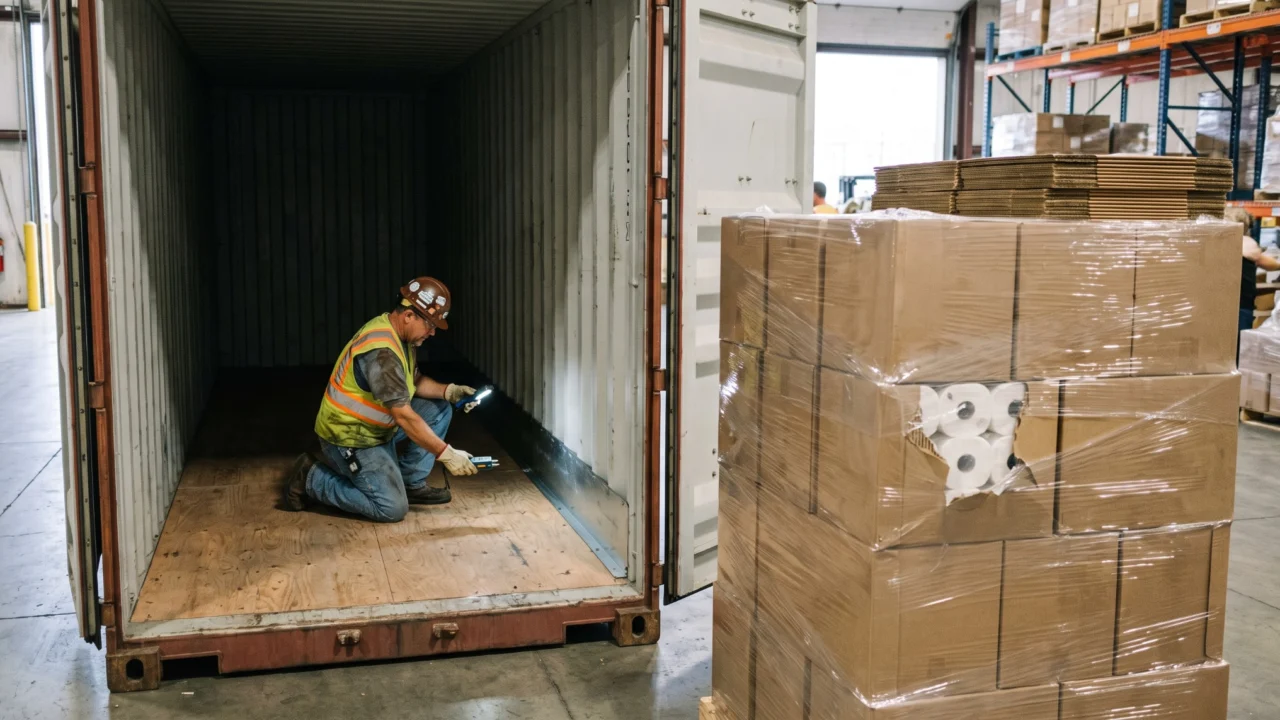
De IMO/ILO/UNECE CTU-code biedt internationale richtlijnen voor het beladen van ladingtransporteenheden. Het ondersteunt het principe dat containergeschiktheid, ladingverdeling, zekering en documentatie als onderdeel van één laadproces moeten worden beheerst.
Houd dozen droog voordat u droogmiddelen kiest
Het laden mag niet beginnen met vochtige dozen of tijdens ongecontroleerde blootstelling aan regen. Gereed product moet in een droge ruimte worden opgeslagen en het laadteam moet de weersomstandigheden controleren voordat dozen tussen het magazijn en de container worden verplaatst.
De hoeveelheid droogmiddel moet worden gekozen op basis van de route, het seizoen, de containergrootte, de conditie van de lading en de verwachte temperatuurveranderingen. Vochtigheidsindicator kaarten of bewakingsapparatuur kunnen registraties ondersteunen, maar vervangen geen containerinspectie of droge laadpraktijken.
Gebruik stabiele vloerbelading en bescherm het deureinde
Newland toiletpapierzendingen worden normaal gesproken als vloerbelading in dozen geladen. Palletbelading is voorbehouden aan specifieke klant- of ordervereisten. Vloerbelading kan het containervolume efficiënt benutten, maar de dooslagen moeten waterpas, stabiel en compatibel met de doossterkte blijven.
Vermijd onzorgvuldige druk tegen beschadigde wanden of scherpe oppervlakken. Gebruik aan het deureinde een geschikte zekering methode zodat dozen niet naar buiten vallen wanneer de deuren worden geopend. Het laadteam moet ook voorkomen dat er een onstabiele lege ruimte bij de deuren achterblijft. Elke geplande speling, bekleding of beschermingsmateriaal moet gebaseerd zijn op de werkelijke container- en ladingconditie in plaats van een willekeurige universele opening.
Registreer laadomstandigheden, containernummer en zegel
Een volledig laadrapport helpt de koper en leverancier te verifiëren wat er vóór vertrek is gebeurd. De fotoset moet de lege container, het containernummer, de vloer en wanden, de laadfasen, de uiteindelijke deureinde-opstelling, gesloten deuren en het zegelnummer tonen.
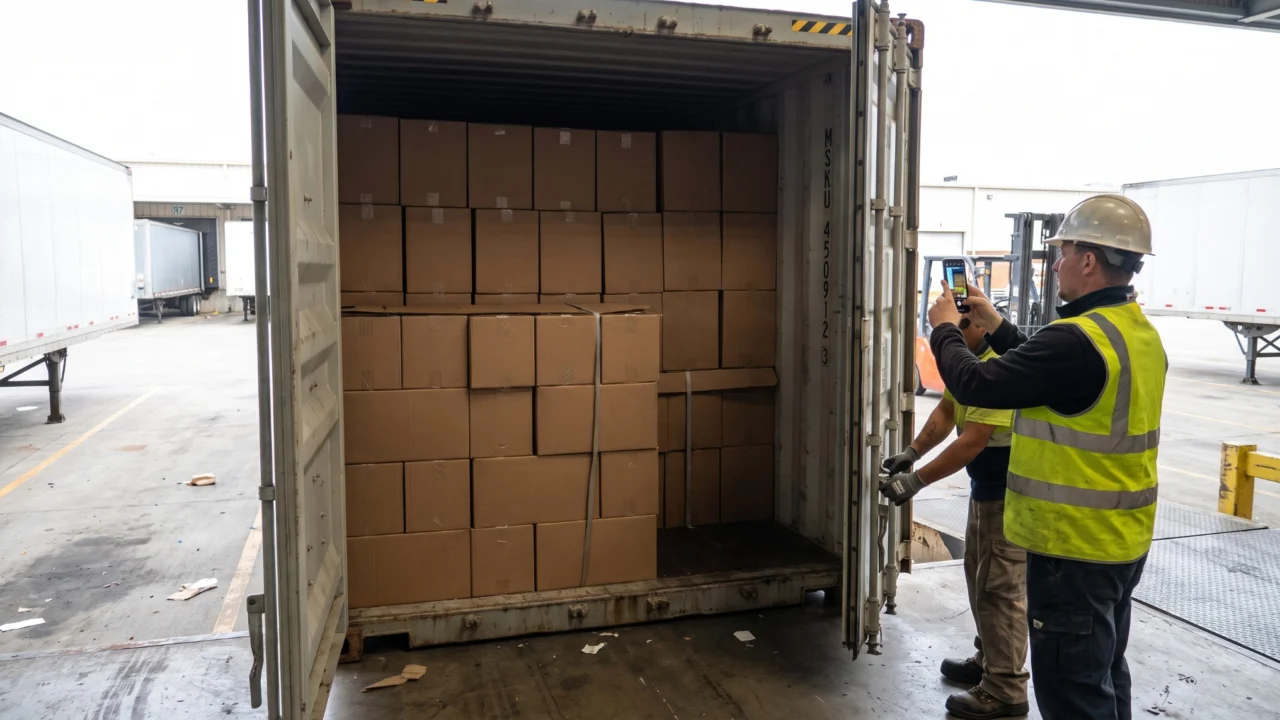
- Fotografeer de lege container voordat de eerste doos wordt geladen.
- Registreer het laadweer en eventuele tijdelijke regenbeschermingsmaatregelen.
- Fotografeer de doosconditie en laadlagen in verschillende stadia.
- Registreer eventuele gebruikte droogmiddelen, bekleding, vochtigheidskaarten of bewakingsapparatuur.
- Fotografeer de uiteindelijke zekering opstelling aan het deureinde.
- Registreer het containernummer en zegelnummer duidelijk.
Plan de voorraad rond de volledige aanvullingscyclus
Het bestelpunt moet de volledige aanvullingscyclus dekken, niet alleen de geschatte dagen op zee. Productie, verpakkingsgoedkeuring, boeking, afhandeling op de plaats van herkomst, overlading, douane op de bestemming, binnenlands vervoer en magazijnontvangst kunnen allemaal de beschikbaarheid beïnvloeden.
Een praktisch planningsmodel is: verwachte vraag tijdens de volledige aanvullingscyclus, plus een risicobuffer die geschikt is voor de markt. De buffer moet de vaarfrequentie, routebetrouwbaarheid, douanevariabiliteit, seizoensgebonden vraag en de commerciële kosten van een voorraadtekort weerspiegelen. Het mag niet van een ander land worden gekopieerd zonder de lokale omstandigheden te controleren.
Breng het risico op voorraadtekort in evenwicht met de magazijncapaciteit
Toiletpapier is volumineus, dus een buitensporig grote veiligheidsvoorraad kan opslag- en cashflowdruk creëren. Kopers moeten de voorraad modelleren in dozen, pallets waar gebruikt, kubiek volume en weken van verwachte verkoop. Het magazijn moet droog zijn en in staat om papierproducten te beschermen tegen lekken, vochtigheid en vloercontact.
Bij een eerste bestelling is het vaak beter om de commerciële aannames te bevestigen, waaronder de SKU-mix, maandelijkse vraag, promotievolume en de bevoorradingsroute, voordat de containerhoeveelheid wordt gemaximaliseerd. Het doel is een herhaalbare leveringscyclus, niet simpelweg de grootste eerste zending.
Checklist vóór verzending voor eiland- en kleine marktbestellingen
- Bevestig de haven van bestemming, het uiteindelijke afleveradres en de beschikbare containerdiensten.
- Vergelijk FCL, gemengde SKU-FCL en LCL op basis van totale landed cost en handlingrisico.
- Bevestig productspecificaties, verpakkingsaantallen, doosafmetingen en brutogewichten.
- Controleer de doossterkte en het geplande stapelpatroon.
- Inspecteer de lege container op droogheid, reinheid, geur, gaten en de staat van de deurafdichting.
- Controleer het laadweer en houd de afgewerkte dozen droog.
- Selecteer vochtbescherming, droogmiddelen en monitoring op basis van de daadwerkelijke route en het seizoen.
- Bevestig de vloerbelading en de borging aan de deurzijde.
- Maak foto's van de laadfase, het containernummer en het zegelnummer.
- Bevestig de vrije tijd op de bestemming, het douaneplan, de loscapaciteit en de magazijnruimte.
- Stel een besteltrigger in op basis van de volledige aanvulcyclus en een passende buffer.
Vraag een haalbaarheidsbeoordeling voor verzending aan vóór de offerte
Importeurs, distributeurs en private-labelmerken moeten de haven van bestemming, de uiteindelijke afleverlocatie, de verwachte maandelijkse vraag, de SKU-mix, de verpakkingsconfiguratie, de beoogde bestelhoeveelheid en de magazijnbeperkingen verstrekken voordat ze een definitief verzendplan aanvragen.
Newland Bamboo kan productspecificaties, doosafmetingen, haalbaarheid van gemengde SKU's, vloerbeladingsregelingen en exportdocumentatie voor geschikte bestellingen beoordelen. Voor algemene inkoopvoorbereiding, zie hoe toiletpapier in het groot te kopen. Kopers die een branded programma plannen, kunnen ook onze groothandel toiletpapier oplossingen en bulk tissue leveringsmogelijkheden bekijken.
Stuur de bestemming, productmix en het verwachte inkoopvolume naar Newland Bamboo voor een praktische laad- en aanvulbeoordeling voordat de commerciële offerte wordt afgerond.
Veelgestelde vragen
Kan toiletpapier met LCL naar eilandmarkten worden verzonden?
Ja. LCL kan worden gebruikt voor monsters, proefbestellingen of kleinere commerciële lanceringen, maar kopers moeten de consolidatieafhandeling, ladingbescherming, bestemmingskosten en het aantal overslagpunten beoordelen voordat ze hiervoor kiezen in plaats van een volledige containerzending.
Welke informatie moeten kopers verstrekken voordat ze toiletpapier internationaal verzenden?
Kopers moeten de haven van bestemming, de uiteindelijke afleverlocatie, de geschatte maandelijkse vraag, de SKU-mix, de verpakkingsvereisten, de beoogde bestelhoeveelheid, de magazijnbeperkingen en de verwachte voorraaddekking verstrekken. Deze input helpt de leverancier het containergebruik, de laadvereisten en de aanvulhaalbaarheid te beoordelen.
Hoe kunnen importeurs het risico op voorraadtekorten van toiletpapier verminderen?
Importeurs kunnen het risico op voorraadtekorten verminderen door te plannen vanuit de volledige aanvulcyclus, inclusief productie, boeking, zeetransport, overslag, douanevrijgave, binnenlands transport en ontvangsttijd. De besteltrigger moet de verwachte vraag tijdens die cyclus dekken plus een marktconforme risicobuffer.