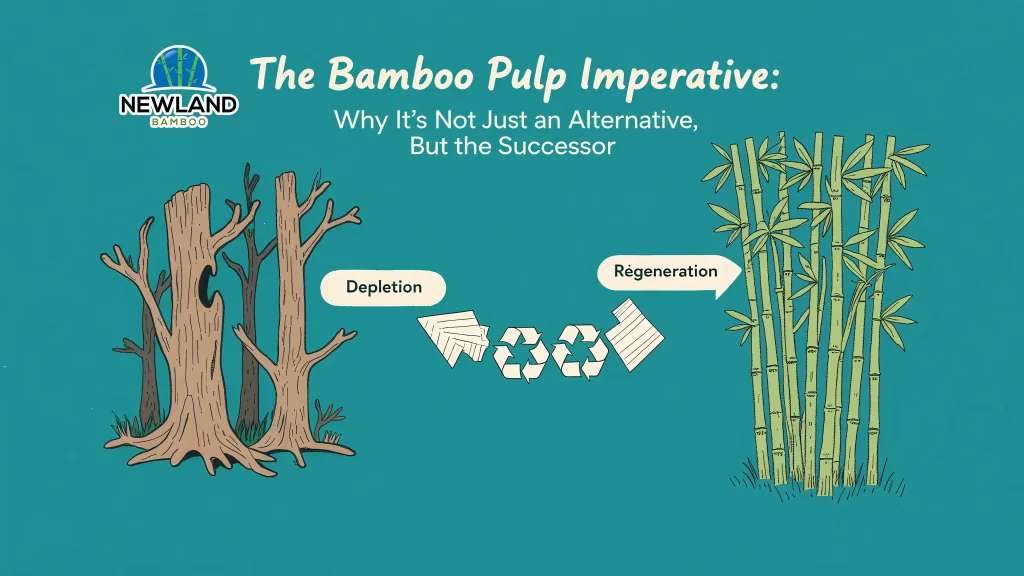
The Bamboo Pulp Imperative: Why It’s Not Just an Alternative, But the Successor
Introduction: The Hidden Weakness of Today’s Tissue Industry
For decades, the global tissue and hygiene paper industry has relied almost exclusively on wood pulp. From toilet tissue to paper towels, the supply chains have been optimized around forests in Canada, Brazil, Northern Europe, and Russia.
But this reliance has created structural vulnerabilities:
- Deforestation and ESG pressure: Retailers and governments are targeting wood-based products for stricter sustainability standards.
- Price volatility: Global wood pulp prices rose by over 40% in 2022, devastating margins for importers and retailers.
- Supply chain fragility: Forest fires, shipping disruptions, and geopolitical tensions expose buyers to unpredictable risks.
At the same time, consumer expectations have shifted. Eco-conscious shoppers are demanding products that align with their values. For wholesalers and distributors, the challenge is clear: how to future-proof procurement against both regulatory pressure and consumer scrutiny.
The answer lies in bamboo pulp—not as a temporary alternative, but as the successor material that will define the tissue industry’s future.
Global Supply Chain Vulnerability: Wood Pulp’s Weak Link
Wood pulp’s dominance is not just a matter of tradition; it is also a matter of concentration. A majority of global pulp production comes from a handful of regions:
- Canada & U.S. (softwood, bleaching-intensive)
- Brazil & Chile (eucalyptus hardwood plantations)
- Russia & Scandinavia (boreal forests, geopolitical exposure)
Key Risks Facing Wood Pulp Buyers
- Geopolitical Risk: Sanctions, wars, and export bans have already affected Russian pulp exports.
- Climate Risk: Canada’s 2023 wildfires disrupted supply and increased global pricing.
- Logistics Risk: Blockages in the Suez Canal (2021) and Red Sea conflict (2024) showed how fragile global shipping is.
- Market Volatility: Global wood pulp benchmark prices are more volatile than oil in some years, leaving importers exposed.
Case Study: In 2022, global bleached hardwood kraft pulp (BHKP) prices jumped from $780/ton to $1,100/ton in just six months. Many mid-size distributors reported margin losses exceeding 20%.
For procurement officers, wood pulp is no longer just a raw material—it is a risk asset.
3Bamboo Pulp: The Supply Chain Hedge
Unlike wood, bamboo grows abundantly in Asia, particularly China and Southeast Asia, with significantly shorter supply chains.
Why Bamboo Is More Resilient
- Growth Cycle: 3–5 years vs. 20–50 years for trees.
- Regionalization: Concentrated production near export hubs reduces shipping distance.
- Cost Predictability: Faster harvest cycles reduce exposure to long-term commodity volatility.
- Diversification: Expanding production in China, Vietnam, and India creates multiple sourcing points.
| Supply Chain Factor | Wood Pulp 🌲 | Bamboo Pulp 🌱 |
|---|---|---|
| Growth Cycle | 20–50 years | 3–5 years |
| Production Regions | Canada, Brazil, Russia, Nordics | China, Southeast Asia |
| Price Volatility | High (2022 spike +40%) | Medium, more stable |
| ESG/Deforestation Risk | High | Very Low |
| Logistics Vulnerability | Long intercontinental shipping | Regionalized Asia exports |
Takeaway: Bamboo pulp is not just eco-friendly; it is a supply chain hedge for buyers seeking resilience against global disruption.
From Greenwashing to Verified Sustainability
Sustainability sells—but greenwashing is rampant. Many wood pulp products claim “eco-friendly” status, yet their raw materials often originate from deforestation-heavy regions.
The Problem with Current ESG Claims
- Limited traceability
- Over-reliance on recycled content that still depends on wood pulp
- Inconsistent certification
Why Bamboo Excels
- Easier certification through FSC, OEKO-TEX, BPI Compostability
- Potential for blockchain-enabled traceability: customers can scan QR codes to trace bamboo back to certified plantations
- Stronger alignment with zero-deforestation regulations
For importers, this transparency is not just marketing—it is risk management. By switching to bamboo pulp, buyers can confidently meet retailer audits and consumer expectations.
Technology Gap: Why Not All Bamboo Pulp Is Equal
It is a misconception that “all bamboo pulp is the same.” In reality, production technology defines quality and environmental impact.
Two Production Paths
- Low-End Mills:
- Rely on alkali cooking
- High effluent discharge
- Shorter, damaged fibers → rougher tissue
- High-End Mills (like Newland Bamboo):
- Use oxygen-based pulping
- Elemental chlorine-free (ECF) or totally chlorine-free (TCF) bleaching
- Automated fiber control → soft, strong, odor-free tissue
Customer Benefit
By partnering with advanced mills, buyers secure premium-grade bamboo pulp tissue that meets both quality expectations and regulatory standards.
This is why not every “bamboo pulp” brand on the market can compete in high-end retail or institutional contracts. Technology is the new competitive moat.
Profit Re-Engineering: From Commodity to Brandable Asset
Wood pulp tissue is treated as a commodity—retailers squeeze margins, and suppliers compete on cents. Bamboo pulp changes this equation.
Why Bamboo Tissue Unlocks Higher Profits
- Brand Storytelling: “Eco-friendly,” “sustainable,” and “plastic-free” labels command higher prices.
- Premium Channels: Organic supermarkets, boutique hotels, zero-waste stores prioritize bamboo SKUs.
- Price Elasticity: Consumers willingly pay 20–30% more for bamboo-based products.
Example Case:
A European distributor launched bamboo toilet paper under its private label. By targeting eco-conscious retailers, it increased gross margins from 5% (wood pulp tissue) to 22% (bamboo tissue).
Conclusion: Bamboo pulp is not just raw material; it is a margin-expansion tool.
Regulatory Horizon: Future-Proofing with Bamboo
Regulation is shifting quickly—and wood pulp faces growing scrutiny.
Upcoming Policies to Watch
- EU Deforestation-Free Regulation (2025): Bans imports linked to forest degradation.
- U.S. SEC ESG Disclosure Rules (2026): Retailers will need audited sustainable sourcing data.
- Australia & Japan: Expanding bans on non-sustainable fiber packaging.
Conclusion: The Bamboo Pulp Imperative
Bamboo pulp is no longer a “nice-to-have” eco-friendly alternative. It is the successor to wood pulp—offering resilience, transparency, profitability, and compliance advantages.
For procurement managers, distributors, and retailers, the decision is clear:
- Adapt early and capture eco-conscious market share
- Or remain locked into wood pulp’s volatile, high-risk future
At Newland Bamboo, we help buyers transition smoothly:
- 30,000 m² factory in China’s bamboo hub
- 400+ containers shipped monthly
- FSC, BPI, compostability certifications
- OEM/ODM customization for tissue brands worldwide
Contact us today to request free samples, wholesale prices, or our supply chain de-risking guide.
FAQs (SEO Schema-Ready)
-
Is bamboo pulp more sustainable than wood pulp?
Yes. Bamboo regenerates in 3–5 years, uses fewer pesticides, and does not contribute to deforestation.
-
Is bamboo pulp more expensive than wood pulp?
Currently slightly higher per ton, but more stable in price and offset by retail premium margins.
-
What certifications should I demand from suppliers?
FSC, BPI, OEKO-TEX, and ISO are essential for global compliance.
-
Can bamboo pulp help with ESG compliance?
Yes. Bamboo pulp aligns with deforestation-free regulations and provides clear sustainability reporting.
-
Is bamboo pulp suitable for all tissue products?
Absolutely. Toilet rolls, facial tissues, kitchen towels, and even specialty hygiene products can be produced from bamboo pulp.
Why Bamboo Is Advantageous
- Not classified as “forest” under deforestation laws (bamboo is a grass).
- Easier compliance with ESG frameworks.
- Aligns with corporate carbon-neutral strategies.
For global buyers, bamboo pulp is not just a greener option—it is a compliance passport for the next decade.