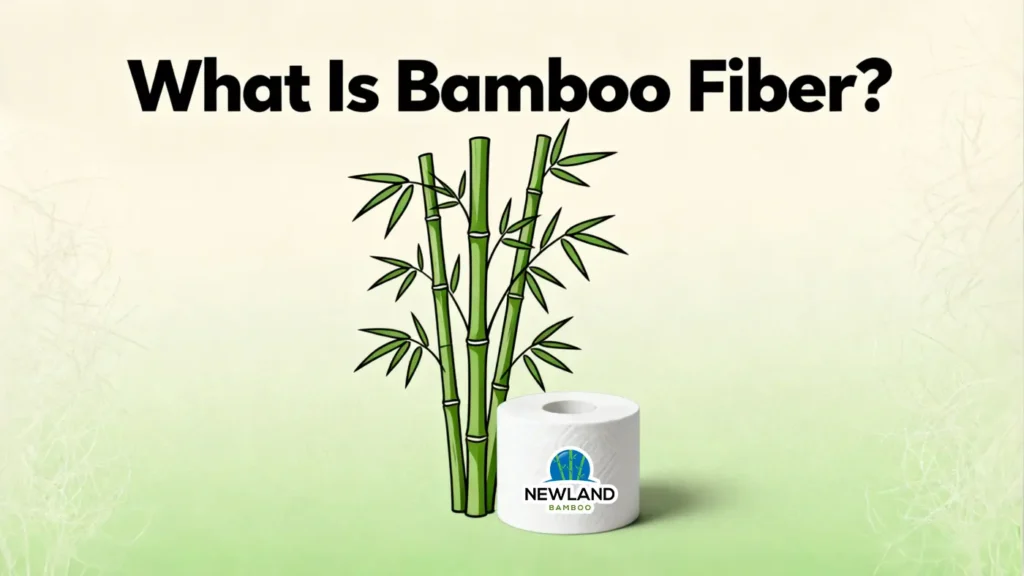
What Is Bamboo Fiber? A Complete Guide for Sustainable Products
Introduction: The Rise of Bamboo Fiber
Global industries are under pressure to reduce carbon emissions, replace plastics, and adopt renewable raw materials. Against this backdrop, bamboo fiber has gained significant attention. Derived from one of the fastest-growing plants on Earth, bamboo fiber combines environmental advantages with practical performance, making it a preferred choice for eco-conscious brands and bulk buyers alike.
From clothing to food packaging, and especially toilet paper, bamboo fiber is redefining how sustainable materials enter everyday life. Understanding bamboo fiber is the first step toward making informed purchasing decisions in the global marketplace.
What Is Bamboo Fiber?
Bamboo fiber refers to the cellulose fibers extracted or processed from bamboo plants. There are two main types:
Natural Bamboo Fiber (Mechanical Method)
This method involves crushing bamboo and extracting fibers mechanically. The process is closer to how linen is made, preserving much of bamboo’s natural properties such as antimicrobial resistance. However, it is resource-intensive and less commonly used for mass-market tissue.
Regenerated Bamboo Fiber (Chemical or Pulping Method)
In this process, bamboo is turned into pulp and then regenerated into fiber. This is the method used for bamboo pulp tissue paper. The process ensures scalability and consistent quality while still maintaining bamboo’s environmental advantages.
Key Properties of Bamboo Fiber
Strength and Durability
Bamboo fiber is known for its high tensile strength, making it suitable for both textiles and hygiene products that require resilience.
Softness and Comfort
Despite its strength, bamboo fiber produces a soft texture, comparable to premium cotton or high-grade virgin wood pulp. This balance is critical for tissue paper where softness and durability are both essential.
Natural Antimicrobial Resistance
Bamboo contains “bamboo kun,” a natural antimicrobial agent. While much of this property is reduced during chemical processing, bamboo fiber tissue is still considered hypoallergenic and safer for sensitive skin.
Eco-Friendly Characteristics
- Rapid Growth: Bamboo grows up to 1 meter per day in some species, making it highly renewable.
- Low Input: Requires less water and no replanting after harvest.
- Biodegradability: Bamboo fiber tissue can decompose within weeks, unlike plastics which persist for centuries.
Bamboo Fiber vs Other Fibers
Bamboo Fiber vs Wood Pulp
- Growth Cycle: Bamboo matures in 3–5 years, while trees require 20–30 years.
- Environmental Impact: Bamboo has a lower carbon footprint and helps reduce deforestation.
- Product Performance: Bamboo fiber offers similar or superior softness and durability.
Bamboo Fiber vs Recycled Paper
- Consistency: Recycled fibers often result in weaker products with quality variation.
- Customer Experience: Bamboo fiber tissue is softer and more reliable.
- Market Acceptance: Eco-conscious buyers prefer bamboo as a premium sustainable alternative.
Bamboo Fiber vs Cotton
- Resource Use: Cotton is water-intensive and pesticide-dependent.
- Eco Credentials: Bamboo is naturally pest-resistant and less resource-intensive.
- Applications: Cotton dominates textiles, but bamboo is catching up in eco-friendly niches.
Applications of Bamboo Fiber
Textiles
Bamboo fiber is used in fabrics, towels, and clothing, offering a soft and breathable alternative to synthetic or cotton-based textiles.
Household Products
From bedding to cleaning cloths, bamboo fiber products are marketed for their eco-friendly and hypoallergenic properties.
Hygiene and Tissue Products
The fastest-growing application is in tissue products — toilet paper, napkins, and kitchen rolls. Bamboo fiber tissue combines environmental responsibility with consumer demand for softness and reliability, making it a natural fit for wholesale buyers targeting eco-conscious markets.
Why Bamboo Fiber Toilet Paper Is Growing Globally
Regulatory Drivers
- Plastic bans in Europe, Canada, and parts of Asia encourage eco-friendly packaging and sustainable product adoption.
- Eco-labels such as FSC and EU Ecolabel push brands to seek bamboo-based alternatives.
Consumer Demand
Surveys show that over 73% of consumers prefer eco-friendly packaging and products, and many are willing to pay a premium for sustainable options. This willingness extends to daily essentials like toilet paper.
Market Growth
Paper and paperboard packaging now represent 30–35% of the global packaging market, and the biodegradable packaging sector is forecasted to grow at a CAGR of over 10% between 2024 and 2034. Bamboo fiber tissue is well positioned within this trend.
Premium Positioning
In high-end retail and hospitality industries, bamboo toilet paper wrapped in tissue paper is not only seen as hygienic but also as a mark of premium sustainability. This makes it easier for wholesale buyers to justify higher retail pricing.
Choosing a Reliable Bamboo Fiber Toilet Paper Supplier
Raw Material Purity
Ensure the supplier uses 100% virgin bamboo pulp, not mixed or recycled fibers, for consistent quality.
GSM and Specifications
Evaluate grams per square meter (GSM), ply, and roll length to calculate true cost per meter, not just cost per roll.
Bleaching and Compliance
Ask for TCF (Totally Chlorine-Free) or ECF (Elemental Chlorine-Free) bleaching processes to comply with EU and US standards.
Production Capacity
Check monthly output and number of automated lines to ensure stable bulk supply. Newland Bamboo, for example, operates 25+ automated lines with a monthly output of over 400 containers.
OEM/ODM Capabilities
Look for flexibility in embossing, wrapping, branding, and packaging design. This helps align products with local retail or hospitality needs.
Quality Control Systems
Ensure suppliers provide IPQC (In-Process Quality Control) and OQC (Outgoing Quality Control) reports to guarantee consistency between samples and bulk shipments.
Why Partner with Newland Bamboo?
At Newland Bamboo, we integrate raw bamboo fiber, tissue production, and sustainable packaging into one complete solution for wholesale buyers:
- 100% Virgin Bamboo Pulp – Stable and eco-friendly fiber from Guizhou, China’s bamboo capital.
- Certified Compliance – FSC, BPI, FDA, and EU standards for global market entry.
- Scale and Reliability – 30,000 m² production base, 25+ automated lines, 400+ containers per month.
- OEM/ODM Excellence – Custom embossing, wrapping, packaging, and branding solutions.
- Export Expertise – Serving 50+ countries with tailored documentation and logistics support.
- Risk Reduction – Combining bamboo tissue and eco wrapping minimizes losses and increases brand value.
📩 Contact Newland Bamboo today to request bulk bamboo tissue samples, wholesale quotations, and packaging solutions tailored to your market.
Conclusion
Bamboo fiber represents more than just an alternative material. It is a sustainable, high-performance solution that addresses global regulatory requirements, consumer demand for eco-friendly products, and the wholesale need for reliable supply chains.
For buyers of tissue products, bamboo fiber toilet paper is the clearest example of how material innovation meets real-world demand. By partnering with experienced manufacturers like Newland Bamboo, buyers can ensure compliance, protect their brand, and secure long-term growth in the eco-conscious global marketplace.
FAQ (For Wholesale Buyers)
-
What is bamboo fiber made from?
It is derived from the cellulose of bamboo plants, either through mechanical extraction or pulping and regeneration.
-
Is bamboo fiber toilet paper better than regular toilet paper?
Yes. It is softer, stronger, and more sustainable compared with wood pulp or recycled paper.
-
Can bamboo fiber toilet paper be customized?
Yes. We offer OEM/ODM services including embossing, roll length, ply, and packaging customization.
-
Is bamboo fiber toilet paper safe for septic systems?
Yes. Properly manufactured bamboo tissue is septic-safe and decomposes naturally.
-
What is the MOQ for wholesale orders?
Our standard MOQ is one 40HQ container, with mixed loading available for trial orders.