U.S. Market Overview – Size, Growth, and Structure
1. Market Size and Growth Trends
The U.S. bamboo toilet paper market currently represents roughly 25% of the eco-friendly toilet paper segment, which itself makes up about 8–10% of the total U.S. toilet paper market (Verified Market Reports). While this share may seem small compared to conventional wood-pulp toilet paper, it’s expanding rapidly—driven by younger demographics, growing environmental awareness, and retailer commitments to sustainable product lines.
HTF Market Intelligence projects that the U.S. bamboo toilet paper segment will see double-digit growth over the next five years, outpacing the overall toilet paper market.
Key Growth Drivers Include:
- Rising deforestation concerns and environmental activism
- Retailer ESG (Environmental, Social, and Governance) commitments
- Increased availability of certified products meeting FSC and BPI standards
- Expanding DTC (Direct-to-Consumer) subscription models
U.S. Bamboo Toilet Paper Market Size & Share (2019–2030)
| Year | Total U.S. Toilet Paper Market (USD Bn) | Eco-Friendly Segment Share | Bamboo Toilet Paper Share of Total | Bamboo Toilet Paper Value (USD Bn) |
|---|---|---|---|---|
| 2019 | 9.8 | 5% | 1.2% | 0.12 |
| 2021 | 10.5 | 6% | 1.8% | 0.19 |
| 2024 | 11.3 | 8–10% | ~2.5% | 0.28 |
| 2027* | 12.1 | 12% | ~3.5% | 0.42 |
| 2030* | 12.8 | 15% | ~5% | 0.64 |
*Values marked with * are projections based on CAGR trends and eco-friendly segment penetration rates.
Insight: The U.S. bamboo toilet paper segment has more than doubled in value since 2019, and is forecasted to grow at 10%+ annually, outpacing the conventional toilet paper market. For importers, this means higher-margin opportunities in a category still under 5% penetration, leaving significant headroom for expansion.
Based on the market size data above, the following table outlines the year-on-year (YoY) growth rates for the U.S. bamboo toilet paper market, highlighting its sustained double-digit expansion compared to conventional toilet paper.
U.S. Bamboo Toilet Paper Year-on-Year Growth Rate (2019–2030)
| Year | YoY Growth % |
|---|---|
| 2019–2021 | +27.8% |
| 2021–2024 | +15.8% |
| 2024–2027* | +14.3% |
| 2027–2030* | +14.9% |
Values marked with * are projections based on CAGR trends and eco-friendly segment penetration rates.
Insight: The U.S. bamboo toilet paper market has sustained double-digit annual growth, far surpassing the conventional toilet paper market’s 2–3% YoY rate. This momentum reflects both increasing consumer adoption and B2B procurement in hospitality, corporate, and public sectors.
The following chart visualizes the market size trends for the total U.S. toilet paper market and the bamboo toilet paper market from 2019 to 2030, based on the data above.
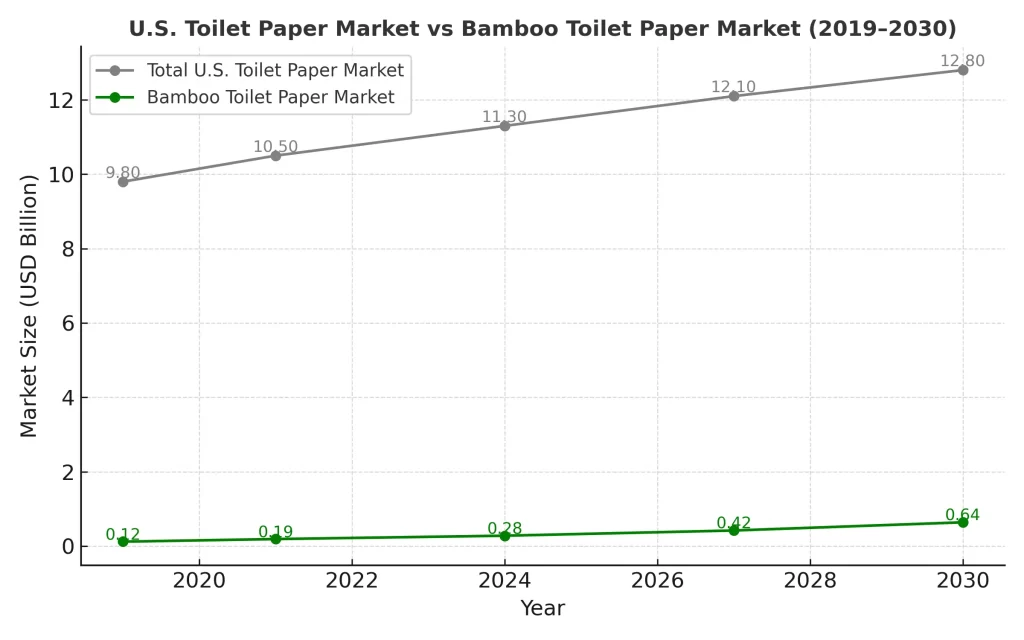
Insight: The U.S. bamboo toilet paper segment has more than doubled in value since 2019, and is forecasted to grow at 10%+ annually, outpacing the conventional toilet paper market. In contrast, the conventional toilet paper market is projected to grow at only ~2–3% annually, highlighting bamboo toilet paper’s significant growth advantage.
Source: Valuates Reports, Verified Market Reports, HTF Market Intelligence, American Forest & Paper Association.
Consumer Segmentation and Usage Scenarios
The U.S. bamboo toilet paper market serves multiple segments:
- Residential Consumers: Households seeking eco-friendly alternatives that are septic-safe, hypoallergenic, and chemical-free.
- Commercial Buyers: Hotels, offices, restaurants, and universities integrating sustainable procurement policies.
- Institutional Buyers: LEED-certified buildings, government agencies, and healthcare facilities committed to low-carbon products.
The adoption rate is highest among urban, higher-income, and younger demographics (Millennials and Gen Z), who are more likely to identify sustainability as part of their lifestyle.
Consumer Behavior Insights – Preferences, Perceptions, and Purchase Triggers
Awareness and Sustainability Mindset
According to Pew Research, a majority of Americans believe companies have a responsibility to reduce their environmental impact. Within the toilet paper category, bamboo’s image as a fast-growing, renewable, and chemical-light material has strong appeal. Consumers increasingly scrutinize “green” claims, looking for third-party verification like FSC and BPI Compostable certifications to ensure authenticity.
Willingness to Pay and Price Sensitivity
Consumers are willing to pay a 10–20% premium for bamboo toilet paper if it delivers both environmental benefits and quality performance. This “eco-premium” is more acceptable among high-income households and urban dwellers. However, maintaining competitive pricing is crucial for mass adoption—especially in wholesale and private-label supply.
Brand Recognition and Loyalty
Several U.S.-available brands have established strong consumer recognition:
- Reel Paper – Known for plastic-free packaging and strong online presence.
- Who Gives A Crap USA – Socially driven business model donating profits to sanitation projects.
- Betterway Bamboo – Focused on softness and premium home delivery.
- Caboo – Offers bamboo and sugarcane blend for wider product range.
- Cloud Paper – Subscription-based, emphasizing carbon-neutral shipping.
- Grove Collaborative – Eco-friendly marketplace stocking bamboo tissue as part of a wider sustainable product range.
- Amazon Aware – Amazon’s own sustainable product line featuring bamboo toilet paper.
While these brands have built consumer trust, most depend on imported bamboo tissue or finished rolls, leaving room for direct-from-manufacturer B2B supply partnerships that offer better pricing and customization.
Purchasing Channels and Buying Habits
The U.S. bamboo toilet paper market sees a balanced mix of online and offline sales:
- Online: DTC brand websites, Amazon, and eco-focused marketplaces.
- Offline: Big-box retailers, grocery chains, and specialty eco-stores.
Subscription models are growing in popularity, particularly for urban households seeking convenience and predictable costs. B2B buyers, such as hotels and offices, tend to purchase in bulk through wholesale distributors or directly from importers.
Supply Chain and Production – From Bamboo Forest to U.S. Store Shelves
Raw Material Sourcing and Sustainability
The U.S. has no significant domestic bamboo cultivation for paper production, making it entirely dependent on imports from bamboo-rich regions like China, Vietnam, and Indonesia.
China remains the global leader in bamboo pulp production, with major capacity in Sichuan, Fujian, and Guangxi provinces. For U.S. buyers, sourcing directly from Chinese manufacturers allows greater customization, full certification, and competitive pricing compared to buying from intermediaries.
Bamboo offers a major sustainability advantage: it matures in 3–5 years versus 20–30 years for trees, regenerates without replanting, and requires fewer pesticides and fertilizers. This positions bamboo toilet paper as a low-carbon alternative that supports corporate ESG goals.
To quantify sourcing capacity and export reliance, the table below summarizes global bamboo pulp production by key origins and their estimated shares of U.S.-bound exports in 2024. This helps importers evaluate supply depth and resilience by source country.
Global Bamboo Pulp Production & U.S. Export Dependency (2024)
| Origin (Country/Region) | Estimated Annual Capacity | Share of U.S.-Bound Exports |
|---|---|---|
| China (Sichuan/Fujian/Guangxi) | 1.2M tons | ~68% |
| Vietnam | 350K tons | ~22% |
| Indonesia | 180K tons | ~7% |
Notes: Figures are directional estimates for buyer planning. For formal sourcing due diligence, validate with suppliers and trade data (e.g., FAOSTAT, ITC Trade Map, AF&PA).
Takeaway for U.S. importers: China remains the primary capacity center for bamboo pulp with the highest share of U.S-bound exports, while Vietnam and Indonesia provide meaningful diversification. Securing multi-origin options and factory-direct agreements reduces price and lead-time risk.
Manufacturing Process and Quality Control
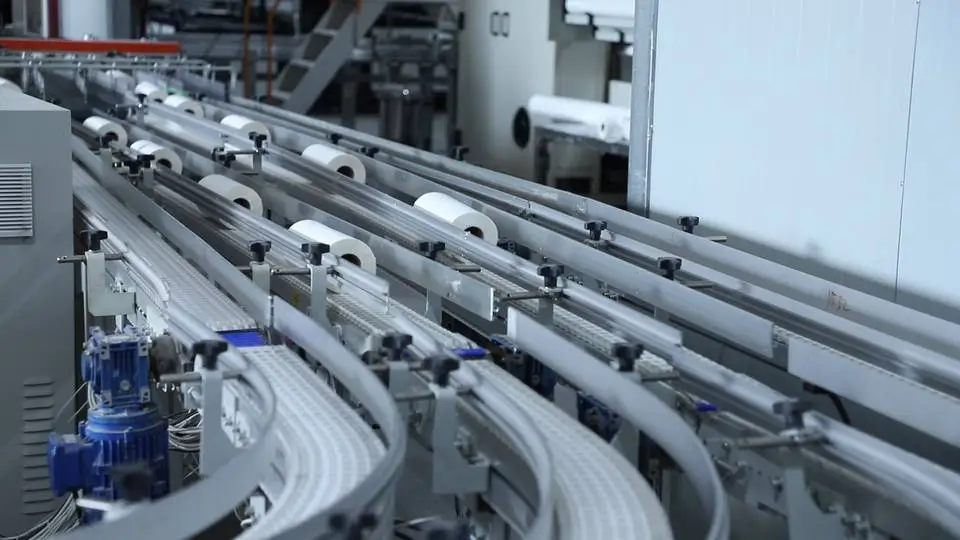
Bamboo toilet paper production involves several key stages:
- Pulping – Typically via a combination of mechanical and chemical processes to ensure softness while maintaining fiber strength.
- Sheet Formation & Drying – Advanced paper machines create consistent GSM and ply counts.
- Embossing & Perforation – Custom patterns for brand differentiation (waves, dots, or panda embossing).
- Packaging – Increasingly shifting to plastic-free wraps, kraft paper, or compostable films.
Direct manufacturers like Newland Bamboo offer OEM/ODM services, enabling buyers to choose GSM, ply, sheet count, embossing, and packaging design to fit U.S. retail standards.
Logistics and Distribution
Shipping from Asia to the U.S. generally takes 18–25 days to West Coast ports (e.g., Los Angeles, Seattle) and 28–35 days to East Coast ports (e.g., New York, Savannah). Some importers route goods through Mexico under USMCA to avoid certain tariffs.
Efficient supply chain management is critical:
- Mixed-container shipping for smaller buyers.
- Port diversification to avoid congestion (e.g., using Oakland or Houston as alternatives).
- Rail and trucking integration to reach inland hubs like Chicago, Dallas, and Atlanta.
Competitive Landscape – Local vs. Direct Manufacturers
| Factor | Local U.S. Brands (e.g., Reel Paper) | Direct Manufacturers (China) |
|---|---|---|
| Raw Material Cost | High (import pulp + local production) | Low (source at origin) |
| Customization | Limited (SKU constraints) | High (OEM/ODM flexibility) |
| Certifications | Often FSC only | FSC, BPI, OK Compost available |
| Lead Time | 3–6 months (due to intermediaries) | 1–2 months |
| Price Competitiveness | Lower | Higher |
For U.S. buyers, partnering with a direct manufacturer can mean better margins, faster turnaround, and greater product differentiation.
How We Supply the U.S. Market – Newland Bamboo’s Advantage
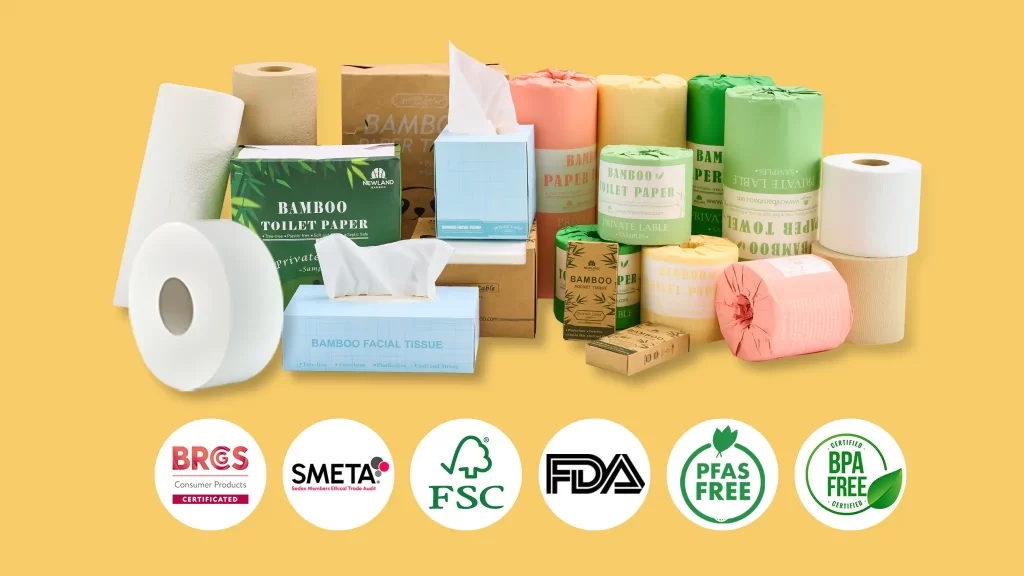
At Newland Bamboo, we provide:
- Full Certification Package – FSC, BPI Compostable, OK Compost.
- Flexible OEM/ODM – GSM, ply, embossing, and packaging tailored to your market.
- Competitive Pricing – Factory-direct, without middlemen markups.
- Optimized Logistics – Familiarity with U.S. customs clearance and regional distribution hubs.
We have successfully supplied:
- Private-label DTC brands launching premium bamboo toilet paper lines.
- Hotel chains requiring bulk jumbo rolls with custom labeling.
- Retail distributors stocking eco-friendly SKUs in supermarkets.
Tips for U.S. Buyers
- Check Certifications – FSC is essential; compostability certifications strengthen retail acceptance.
- Plan Lead Times – Factor in 1–2 months shipping plus production time.
- Consider Port Options – Avoid single-port reliance to reduce congestion risks.
- Negotiate OEM Flexibility – Custom embossing and packaging can improve shelf appeal.
- Watch Tariff Policies – Stay updated on U.S.-China trade measures and exemptions.
Conclusion – Will Bamboo Toilet Paper Drive the U.S. Green Revolution?
Bamboo toilet paper aligns perfectly with U.S. market trends: environmental responsibility, product innovation, and premium positioning. Its ability to combine profitability with sustainability makes it a compelling choice for both retail and institutional buyers.
Given the U.S.’s complete reliance on imports for bamboo tissue products, early partnerships with direct manufacturers will be key to capturing market share before saturation.
The next 5 years present a critical window for brands and distributors to secure supply, differentiate their offerings, and build loyalty in a segment projected for double-digit growth.
FAQ – U.S. Bamboo Toilet Paper Imports & Market
-
Is bamboo toilet paper septic-safe?
Yes, most bamboo toilet paper is septic-safe and breaks down quickly in water systems.
-
What certifications should bamboo toilet paper have for U.S. retail?
FSC is essential; BPI Compostable and OK Compost further validate environmental claims.
-
How long does shipping from Asia to the U.S. take?
Typically 18–25 days to West Coast ports, 28–35 days to East Coast ports.
-
What is the import duty on bamboo toilet paper?
Under HS Codes 4818.10 or 4818.20, duties range from 0–6% depending on trade status.
-
Which U.S. brands sell bamboo toilet paper?
Brands include Reel Paper, Who Gives A Crap USA, Betterway Bamboo, Caboo, Cloud Paper, Grove Collaborative, and Amazon Aware.
CTA – Partner with Us for Your U.S. Bamboo Toilet Paper Supply
If you’re a U.S.-based distributor, retailer, or institutional buyer, now is the time to secure a direct manufacturing partnership.
- Full FSC, BPI, OK Compost certifications
- OEM/ODM flexibility for GSM, ply, embossing, and packaging
- Factory-direct pricing with competitive margins
- U.S. market logistics expertise
📩 Contact us today for samples and a tailored quote.