Quick Answer: Where Is Toilet Paper Manufactured in 2026?
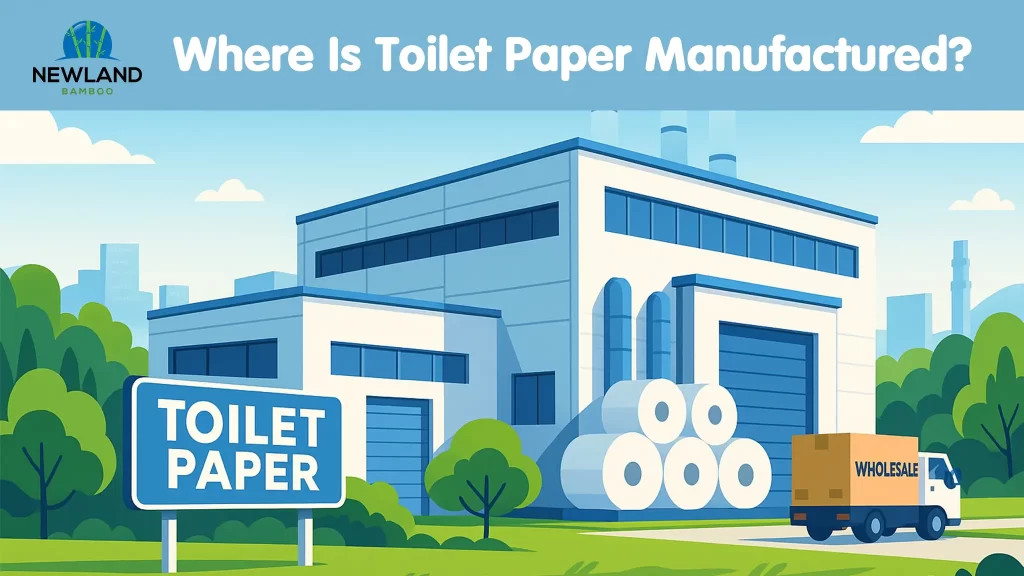
Toilet paper is manufactured in major regional supply hubs, including China, the United States, Japan, Italy, Brazil, Germany, Mexico, Canada, Indonesia, Spain and other tissue-producing markets. Standard household toilet paper is often produced close to the market where it is sold because finished toilet rolls are bulky, freight-sensitive and usually ordered in high volume.
For B2B buyers asking where is toilet paper made, the better sourcing question is not only the country of manufacture. Buyers should also check whether a manufacturing region can support the target market, roll specification, packaging format, certification needs, lead time, carton packing and repeat-order plan.
Latest Available Production Data by Country
| Rank | Country | 2024 Output | Share | Buyer Note |
|---|---|---|---|---|
| 1 | China | 12,799,000 t | 31.8% | Largest production base in this dataset; relevant for tissue converting, bamboo toilet paper, OEM/private label and export-oriented supply |
| 2 | United States | 7,139,000 t | 17.7% | Strong domestic production base for household tissue, commercial tissue and large retail channels |
| 3 | Japan | 1,868,907 t | 4.6% | Mature tissue market with quality-focused production and stable domestic demand |
| 4 | Italy | 1,633,629 t | 4.1% | Important European tissue manufacturing base; relevant for regional EU supply |
| 5 | Brazil | 1,434,000 t | 3.6% | Significant regional producer with pulp-linked supply relevance |
| 6 | Germany | 1,370,823 t | 3.4% | Mature European market; relevant for quality and regional supply |
| 7 | Mexico | 1,318,000 t | 3.3% | Relevant for North American regional supply and near-market sourcing |
| 8 | Canada | 1,164,000 t | 2.9% | Useful for North American supply continuity and regional distribution |
| 9 | Indonesia | 970,712 t | 2.4% | Relevant for Asia-based regional supply and export comparison, but the flat imputed value should not be overinterpreted |
| 10 | Spain | 925,500 t | 2.3% | European production base with regional supply relevance |
Source: FAOSTAT Forestry Production and Trade. The latest complete production year available for this 2026 update is 2024. The data covers household and sanitary papers, so it is best used as a manufacturing-region reference for toilet paper and related tissue products.
To avoid double counting, this table uses the FAOSTAT “China” total and does not add separately listed China subareas such as China mainland, Hong Kong SAR or Taiwan Province.
For buyers, this table is useful for comparing major toilet paper manufacturing countries, but production volume alone does not determine the best sourcing region.
2020–2024 Production Trend by Country
Single-year production ranking is useful, but B2B buyers also need to know whether a region is growing, stable or declining. The table below shows the five-year production trend for the top 10 countries in the 2024 FAOSTAT household and sanitary paper dataset.
| Country | 2020 | 2021 | 2022 | 2023 | 2024 | 2024 vs 2023 | Five-Year Trend |
|---|---|---|---|---|---|---|---|
| China | 10,999,000 t | 11,249,000 t | 11,549,000 t | 12,299,000 t | 12,799,000 t | +4.1% | Steady growth |
| United States | 7,281,000 t | 6,928,170 t | 6,958,109 t | 7,057,000 t | 7,139,000 t | +1.2% | Stable, slightly below 2020 |
| Japan | 1,836,000 t | 1,797,000 t | 1,872,000 t | 1,823,000 t | 1,868,907 t | +2.5% | Stable mature market |
| Italy | 1,622,580 t | 1,588,000 t | 1,592,000 t | 1,556,000 t | 1,633,629 t | +5.0% | Stable with 2024 recovery |
| Brazil | 1,330,000 t | 1,321,000 t | 539,046 t | 889,271 t | 1,434,000 t | +61.3% | Large data swing; source notes should be reviewed |
| Germany | 1,514,476 t | 1,479,322 t | 1,465,565 t | 1,378,997 t | 1,370,823 t | -0.6% | Gradual decline |
| Mexico | 1,258,300 t | 1,242,000 t | 1,260,000 t | 1,297,000 t | 1,318,000 t | +1.6% | Stable growth |
| Canada | 1,123,000 t | 1,497,000 t | 1,347,000 t | 1,187,000 t | 1,164,000 t | -1.9% | Volatile, slightly above 2020 |
| Indonesia | 970,712 t | 970,712 t | 970,712 t | 970,712 t | 970,712 t | 0.0% | Flat imputed data |
| Spain | 802,500 t | 813,200 t | 848,800 t | 809,900 t | 925,500 t | +14.3% | Moderate growth with 2024 jump |
For annual updates, this section should refresh the latest available production year, compare it with previous years and explain what changed for B2B buyers. The goal is not only to show data, but to help buyers understand whether a manufacturing region is expanding, stable or becoming more difficult to rely on.
Brazil shows a strong reported increase in 2024, but the five-year series also shows a large drop in 2022 and recovery afterward. Buyers should treat this as a data point that needs source-note review, not a simple signal that capacity suddenly expanded. Indonesia shows a flat five-year value because the FAOSTAT data is imputed, so it should be used carefully.
Major Toilet Paper Manufacturing Countries and Regions for B2B Buyers
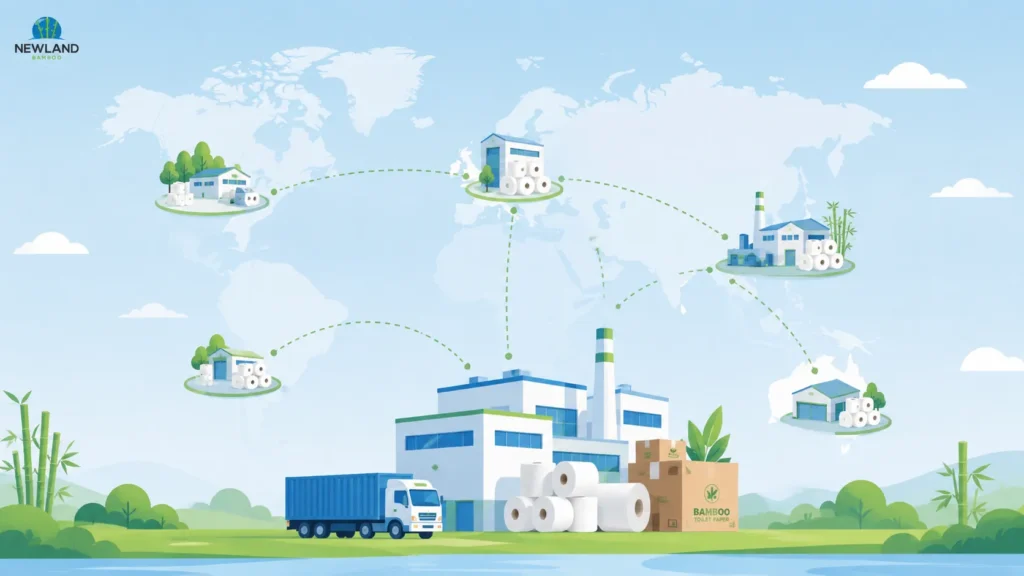
After reviewing the latest production data, buyers should still compare the practical role of each region. Production volume alone does not tell the full sourcing story. Some countries mainly support domestic supply, while others may be more relevant for export converting, private label tissue, premium toilet tissue, custom packaging or backup supply planning.
| Region / Country | Manufacturing Role | Common Product Types | B2B Sourcing Notes |
|---|---|---|---|
| United States and Canada | Strong regional tissue production for domestic and commercial demand | Household toilet paper, bath tissue, commercial tissue, away-from-home rolls | Useful for domestic supply continuity, large retail channels and regional distribution |
| China and Asia-Based Export Supply | Tissue converting, export supply, bamboo toilet paper and OEM/private label support | Bamboo toilet paper, wrapped rolls, retail multipacks, jumbo rolls, private label tissue | Useful for custom packaging, bamboo material, export orders and flexible specification projects |
| Western Europe | Quality-focused tissue production and regional retail supply | Premium toilet tissue, certified bath tissue, retail tissue products | Useful for regional EU supply, sustainability positioning and quality-sensitive channels |
| Latin America | Regional supply connected with pulp and tissue production | Household tissue, commercial tissue, regional toilet roll supply | Useful for local and regional markets, especially where pulp and converting capacity are available |
| Southeast Asia | Regional manufacturing and export-oriented supply options | Cost-sensitive tissue, private label tissue, commercial rolls | Useful for alternative supply planning, regional sourcing and export comparison |
The ranking table answers where production is concentrated. This regional table explains how those manufacturing countries and regions may fit different B2B sourcing plans.
Why Toilet Paper Is Often Manufactured Close to Demand
Toilet paper is a high-volume, space-sensitive product. Finished toilet rolls take up significant carton and container space, even when the paper itself is lightweight. This makes freight, storage and distribution costs important parts of the final landed cost.
For standard household toilet paper, many markets prefer domestic or regional supply because it supports faster replenishment, shorter delivery routes and more predictable stock planning. Retailers, distributors, hotels, offices and commercial buyers often need repeat supply rather than one-time spot orders, so production location can affect service stability.
International sourcing becomes more useful when the buyer needs something beyond a standard local roll. This may include bamboo toilet paper, private label packaging, individual paper wraps, custom retail packs, jumbo rolls, commercial roll formats or backup supply outside the buyer’s main region.
For B2B buyers, manufacturing location should be reviewed together with the full product specification. A low factory price may not be competitive if the carton volume is too large, the roll diameter is not optimized or the shipping route creates a high landed cost. A nearby supplier may also not be the best choice if it cannot support the required material, packaging format or private label service.
Where Toilet Paper Comes From: Country and Regional Notes for Buyers
United States and Canada
The United States and Canada have strong regional tissue manufacturing capacity. Many household toilet paper and commercial bath tissue products sold in North America are produced within the region or supplied through nearby manufacturing and converting networks.
For B2B buyers, North American production is useful when the priority is domestic supply continuity, shorter lead time, large-scale retail distribution or commercial tissue programs. Regional production can also reduce exposure to long-distance shipping delays.
However, strong domestic supply does not remove the need for imports. Imported toilet paper may still be used for specialty materials, private label programs, bamboo toilet paper, price-tier expansion, custom packaging projects or backup supply planning. Buyers comparing domestic and imported options can review US toilet paper imports separately because import data should not be mixed with production data.
Buyers comparing North American supply should look beyond the country name. The more important question is what the supplier actually controls: parent roll production, tissue converting, finished roll packing, carton planning, private label packaging or distribution. Buyers researching supplier options can also compare toilet paper manufacturers in the USA before choosing a sourcing path.
China and Asia-Based Export Supply
China and other Asia-based supply regions are especially relevant when a project involves export-oriented tissue production, bamboo toilet paper, OEM supply, private label packaging, custom wrapped rolls or retail multipacks.
For buyers, the value of this region is not only price. It can also come from material options, converting capability, packaging flexibility, export order experience and the ability to adjust specifications for different markets.
This is important for brand owners that need custom paper wraps, carton marks, roll count options, sheet count changes, embossing choices, packaging samples or export cartons before production. In these projects, supplier communication and specification control matter as much as the country of manufacture.
Buyers comparing Asia-based suppliers often need to understand how toilet paper made in China fits bamboo material, OEM production, private label wrapping and export carton planning.
For bamboo toilet paper, buyers should check bamboo pulp sourcing, FSC documentation where required, bleaching method, ply, GSM, sheet size, roll diameter, core size, wrapping material, carton packing and sample performance.
Western Europe
Western Europe has a mature tissue market with strong expectations for quality, softness, performance, packaging and sustainability claims. Many products in this region compete on user experience, certification, retail presentation and environmental positioning.
For buyers selling into European markets, regional production may support faster distribution and market fit. Overseas sourcing can still be relevant for special materials, private label projects or alternative supply plans, but buyers need to check packaging, labeling and documentation carefully.
B2B buyers should pay attention to sustainability claims, FSC-related documents, packaging materials, recycled content claims and country-specific retail expectations. A toilet roll specification that works in one market may need adjustment before it fits another market’s shelf space, dispenser format or price level.
Latin America
Latin America is relevant for regional pulp and tissue supply. Some markets in this region have pulp-linked production, domestic converting and regional toilet paper demand.
For B2B buyers, Latin America may be more relevant as a regional supply base than as a universal export answer. Freight route, pulp availability, converting capability, local demand and destination market requirements all need to be reviewed.
Buyers should compare finished roll specifications carefully. Ply, GSM, sheet count, roll diameter, core size and carton packing can vary by market. A product designed for one retail channel may not automatically fit another country’s distributor requirements, storage system or price point.
Southeast Asia
Southeast Asia can be relevant for regional tissue production, export supply comparison and alternative sourcing. Some buyers consider the region when they want cost-sensitive tissue products, backup supply or regional sourcing outside their main supplier base.
However, buyers should not evaluate a region only by price. The supplier still needs to prove product consistency, packaging capability, export experience, carton planning and repeat-order reliability.
For private label or retail tissue products, the practical questions are straightforward: Can the supplier match the required ply, GSM, sheet count, roll diameter and packaging format? Can they provide stable samples and repeat production? Can carton dimensions and loading plans support the buyer’s freight target?
How Manufacturing Origin Affects Toilet Paper Buyers
Manufacturing origin affects the full purchasing plan. It can influence product cost, freight cost, delivery time, packaging design, documentation and repeat-order control.
| Buyer Concern | Why Manufacturing Origin Matters | What Buyers Should Check |
|---|---|---|
| Lead time | Regional supply may shorten delivery time, while overseas sourcing may require longer planning | Production location, port, shipping route, production schedule |
| Landed cost | Toilet paper is bulky, so carton size and loading efficiency can affect final cost | Roll diameter, carton dimensions, container loading, freight plan |
| Product specification | Different suppliers may specialize in different roll types, materials and quality levels | Ply, GSM, sheet count, sheet size, core size, embossing |
| Packaging | Not every factory supports retail packs, wrapped rolls or private label packaging | Wrapper style, pack count, carton marks, artwork process, MOQ |
| Certification and claims | Environmental and sourcing claims depend on documents, not only product descriptions | FSC documents, pulp source, bleaching method, packaging material |
| Supply stability | Regional disruptions, port delays or demand spikes can affect availability | Backup supplier, safety stock, repeat-order planning |
| Market fit | Different markets expect different roll sizes, softness levels and packaging formats | Target country, sales channel, buyer price point, shelf format |
For bulk buyers, origin should be reviewed together with specification. A cheaper production region may not be cheaper after freight, carton volume and storage are considered. A closer production region may not be the best fit if it cannot support the required material, packaging or private label flexibility.
When Imported Toilet Paper Makes Sense
Imported toilet paper can make sense when the buyer needs a product that is not easily available from local or regional suppliers. This may include bamboo toilet paper, specialty fiber products, private label tissue, custom wrapped rolls, jumbo rolls, commercial tissue programs or backup supply for distribution.
Imports can also help buyers expand their product range. A distributor may use local supply for standard toilet paper while importing specialty rolls for eco-positioned customers. A retail brand may import private label bamboo toilet paper because the supplier can support custom packaging, sample review and export carton planning. A hospitality buyer may compare imported commercial tissue if the roll size, carton packing and cost structure fit the project.
Imported supply is not automatically better or worse than domestic supply. It depends on the buyer’s specification, target market, pricing model, freight route and risk tolerance. The best sourcing decision usually comes from comparing full landed cost, not only factory price.
Buyers should also treat toilet paper supply chain risk as a separate planning topic. Manufacturing origin is one part of the decision, but inventory planning, backup suppliers and freight routes also matter.
How to Choose a Toilet Paper Sourcing Region
The right sourcing region depends on the buyer’s market, order size, product type and packaging needs. There is no single best country for every toilet paper project.
| Buyer Type | Better Sourcing Direction | Why |
|---|---|---|
| Local retail distributor | Start with regional supply, then compare imports for specialty SKUs | Standard products need stable replenishment, while imports can expand the product range |
| Private label brand | Compare suppliers that support OEM production, samples and packaging | Packaging, specification control and repeat production are critical |
| Eco-positioned brand | Review bamboo, recycled or certified pulp options | Material claims and documentation matter for brand trust |
| Hotel or commercial buyer | Focus on carton packing, repeat supply and cost stability | Large-volume buyers need predictable performance and delivery |
| E-commerce seller | Check pack design, shipping volume and carton durability | Product size and packaging affect fulfillment cost and damage risk |
| Importer or wholesaler | Compare domestic, regional and overseas backup supply | A mixed sourcing plan can reduce supply disruption risk |
A buyer sourcing toilet paper for a discount retail program may prioritize cost, roll count and carton efficiency. A buyer building a premium private label brand may care more about softness, embossing, packaging design and certification documents. A buyer supplying hotels or offices may focus on repeat availability, commercial roll formats and carton packing.
The sourcing region should support the business model. If the buyer needs frequent small replenishment, regional supply may be easier. If the buyer needs private label bamboo toilet paper with custom packaging, an export-focused supplier may be more suitable.
What Bulk and Private Label Buyers Should Confirm
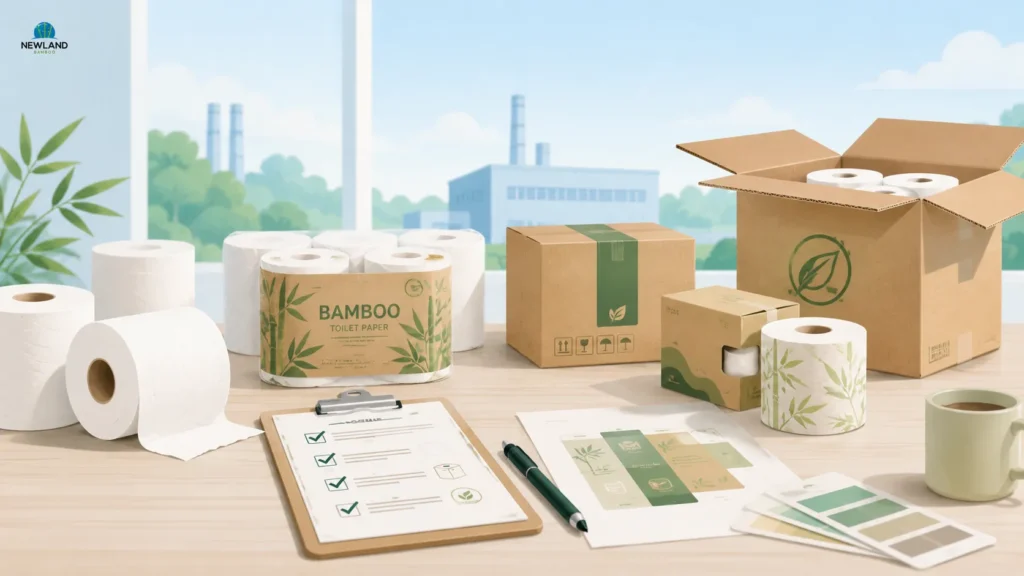
Before choosing a toilet paper supplier, buyers should prepare the core specification and sourcing requirements. This helps avoid unclear quotations, mismatched samples and production delays.
| Buyer Should Confirm | Why It Matters |
|---|---|
| Target market | Different countries have different roll size, softness, labeling and price expectations |
| Sales channel | Retail, e-commerce, hotel, commercial and wholesale channels need different formats |
| Material | Wood pulp, bamboo pulp, recycled fiber or mixed material affects positioning |
| Ply and GSM | These affect softness, thickness, strength, roll weight and cost |
| Sheet size and sheet count | These define roll value, roll diameter and packaging structure |
| Roll diameter and core size | Important for shelf fit, dispenser fit and carton planning |
| Embossing | Affects appearance, softness, absorbency and product differentiation |
| Packaging format | Individual wraps, 4-pack, 6-pack, 12-pack, 24-pack and cartons require different planning |
| Certification needs | Buyers may need FSC, material documents or packaging-related claim support |
| MOQ and lead time | Private label and custom packaging often require more planning |
| Carton size and loading | Toilet paper is volume-sensitive, so logistics can change landed cost |
| Sample approval | Samples help verify softness, strength, size, packaging and buyer expectations |
For private label toilet paper projects, buyers should also prepare brand positioning, artwork direction, preferred packaging material, destination market, target price level and expected reorder volume. A supplier can only recommend the right manufacturing and packing plan if the buyer’s project details are clear.
How Newland Bamboo Supports Toilet Paper Sourcing Projects
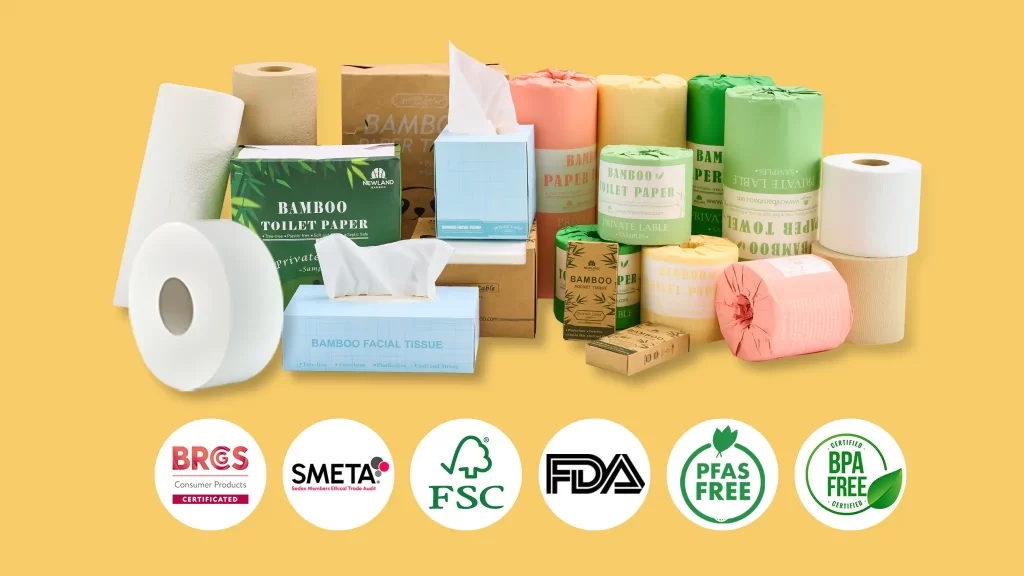
Newland Bamboo supports bamboo toilet paper and related tissue product projects for wholesale, retail, hospitality, e-commerce and private label buyers. Our role is not only to supply finished rolls, but also to help buyers review specifications, packaging formats and export order planning before production.
For bamboo toilet paper projects, China and Asia-based supply chains are especially relevant because bamboo pulp sourcing, tissue converting, private label wrapping and export carton planning often need to be coordinated together. Buyers comparing bamboo-based tissue supply should review not only the manufacturing country, but also pulp sourcing, FSC documentation, roll specifications, sample consistency, packaging feasibility and repeat-order support.
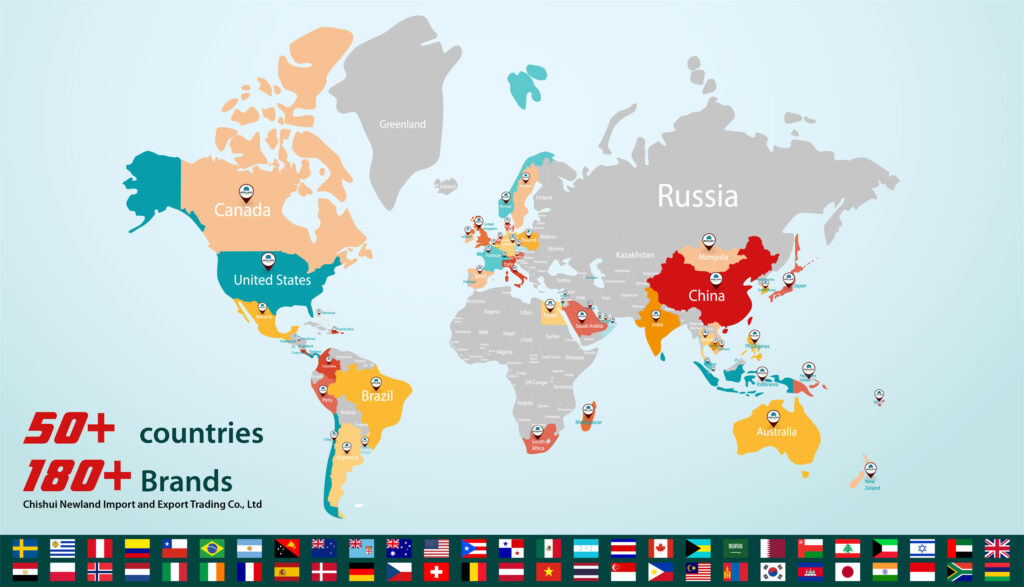
For buyers comparing sourcing regions, understanding where bamboo toilet paper is made can help clarify the relationship between bamboo material supply, converting capability and export packaging support.
For OEM and private label tissue projects, packaging feasibility, artwork requirements, carton marks, MOQ, lead time and repeat-order consistency should be reviewed early. If the project involves individual paper wraps, retail multipacks or branded cartons, custom tissue packaging should be confirmed together with the roll specification.
The right manufacturing region depends on the buyer’s product plan. Standard retail toilet paper, commercial tissue, bamboo toilet paper and custom private label rolls may need different sourcing strategies. Buyers can contact Newland Bamboo to discuss product specifications, packaging requirements, sample review and bulk order planning.
FAQ About Where Toilet Paper Is Manufactured
Where is most toilet paper manufactured?
Based on the latest available FAOSTAT household and sanitary paper production data, China and the United States are the two largest producers in this dataset. Japan, Italy, Brazil, Germany, Mexico, Canada, Indonesia and Spain also appear among the top production countries in 2024.
Where is toilet paper made?
Toilet paper is made in many countries, with production often concentrated near major consumer markets. In many markets, toilet paper is also sold as toilet tissue, and standard household rolls are usually produced domestically or regionally because finished toilet rolls take up a lot of shipping space. Specialty products, private label tissue and bamboo toilet paper may be sourced internationally.
Where is toilet paper produced?
Toilet paper is produced in many countries, with production concentrated in major regional tissue manufacturing markets. Based on the latest available FAOSTAT household and sanitary paper data, China and the United States are the two largest production countries in this dataset.
Where does toilet paper come from?
Toilet paper comes from tissue manufacturing and converting operations that turn pulp into parent rolls, then convert those rolls into finished toilet rolls. For B2B buyers, the practical sourcing question is not only the country of origin, but also whether the supplier can support roll specifications, packaging, carton loading and repeat orders.
Where is toilet tissue made?
Toilet tissue is made in many of the same regional tissue manufacturing markets as toilet paper. The product name may vary by market, but B2B buyers should still compare manufacturing origin, roll specification, packaging format, carton loading and repeat-order reliability.
What country makes the most toilet paper?
In the FAOSTAT household and sanitary paper dataset used for this guide, China has the largest 2024 output, followed by the United States. Because the dataset covers household and sanitary papers rather than toilet paper alone, it should be used as a manufacturing-region reference rather than a narrow toilet-paper-only ranking.
What data source is used in this guide?
This guide uses FAOSTAT Forestry Production and Trade data for household and sanitary papers. The data year is 2024 because it is the latest complete production year available in the dataset at the time of the 2026 update.
Is this a toilet-paper-only production ranking?
No. Official country-level statistics are usually reported under broader household and sanitary paper categories. This means the data should be used as a manufacturing-region reference for toilet paper and related tissue products, not an exact toilet-paper-only production ranking.
Where is toilet paper produced in the United States?
Toilet paper in the United States is produced through domestic tissue mills, converting facilities and supplier networks. For B2B buyers, the important question is whether the supplier can support the required roll specification, packaging format, delivery schedule and order volume.
Is toilet paper made in China?
Yes, toilet paper and toilet tissue products are made in China. China is also relevant for bamboo toilet paper, export-oriented tissue products, private label packaging and OEM supply. Buyers should check product samples, documentation, packaging capability and export experience before confirming orders.
Does the US import toilet paper?
Yes, the United States imports some toilet paper and related tissue products, even though it also has strong domestic production. Imports may be used for specialty products, bamboo toilet paper, private label programs, price-tier expansion or backup supply.
Why is toilet paper usually manufactured near the market?
Toilet paper is bulky and freight-sensitive. Manufacturing close to the sales market can reduce shipping pressure, support faster replenishment and make carton planning easier. Imported supply is more common when the product has special material, packaging or sourcing requirements.
Where does bamboo toilet paper come from?
Bamboo toilet paper is usually made where bamboo pulp supply, tissue converting and export packaging capability are available. For B2B buyers, the key points are bamboo pulp sourcing, certification documents, roll specification, packaging format, samples and carton loading.
What should B2B buyers check before choosing a toilet paper supplier?
B2B buyers should check material, ply, GSM, sheet size, sheet count, roll diameter, core size, packaging format, certification needs, carton size, MOQ, lead time, sample quality and repeat-order consistency.