Respuesta rápida: ¿A qué velocidad crece el bambú?
Algunas especies de bambú pueden llegar a crecer hasta unos 91 cm, o 35 pulgadas, en un día en circunstancias excepcionales, de acuerdo con Récords Mundiales Guinness. Esa es la famosa cifra que la mayoría de la gente ve cuando busca «velocidad de crecimiento del bambú».
Sin embargo, no debe interpretarse como la tasa de crecimiento diaria habitual de todas las plantas de bambú.
Una respuesta más adecuada es: el bambú puede crecer muy rápido durante su temporada de crecimiento activo, sobre todo las especies de bambú de gran tamaño en condiciones cálidas y húmedas. El bambú más pequeño, el de climas fríos, las plantaciones jóvenes, los suelos secos o el bambú ornamental pueden crecer mucho más lentamente.
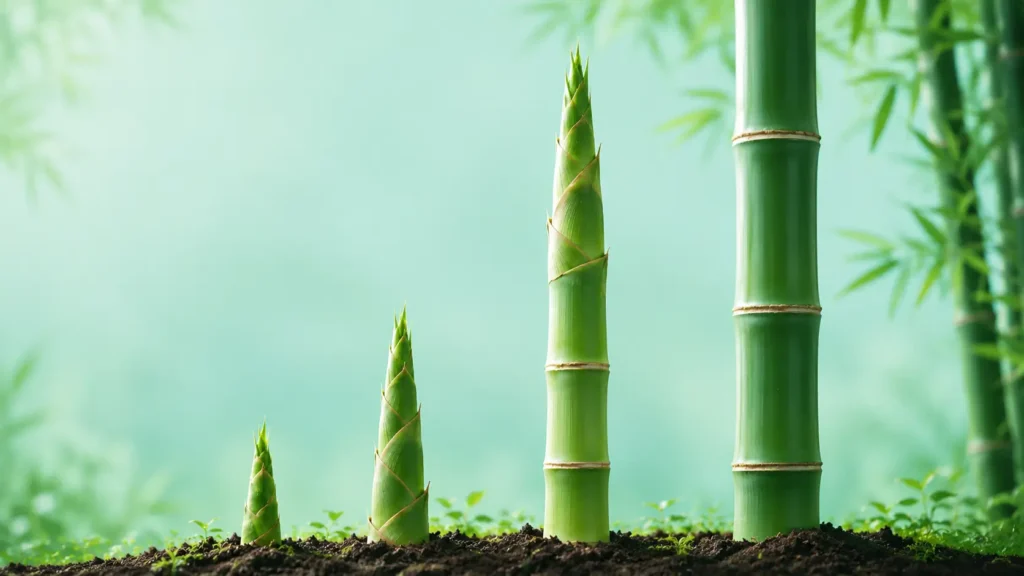
El bambú también crece de forma diferente a un árbol. El bambú es una hierba, no un árbol. Los nuevos tallos brotan de un sistema de rizomas subterráneos, y muchos de ellos alcanzan la mayor parte de su altura definitiva durante una sola temporada de crecimiento. A partir de entonces, se endurecen y maduran, en lugar de seguir creciendo en altura año tras año como el tronco de un árbol.
Puntos clave sobre el crecimiento del bambú
| Pregunta | Respuesta práctica |
|---|---|
| ¿A qué velocidad puede crecer el bambú en un día? | Algunas especies de bambú pueden crecer hasta unos 91 cm / 35 pulgadas al día en condiciones excepcionales. |
| ¿Esa es la tarifa media? | No. Se trata de un récord máximo, no de la tasa habitual para todo el bambú. |
| ¿A qué velocidad puede crecer el bambú gigante? | Kew señala que el bambú gigante puede crecer hasta 30 cm al día durante la temporada alta. |
| ¿Qué altura puede alcanzar el bambú gigante? | El bambú gigante puede alcanzar unos 25 m de altura, dependiendo de la especie y las condiciones. |
| ¿Crece el bambú durante todo el año? | No. El bambú crece más rápido durante la época de brotación. |
| ¿Por qué crece el bambú tan rápido? | El crecimiento rápido está relacionado con los rizomas, la elongación de los brotes, el crecimiento de los entrenudos, la temperatura y la genética de las especies. |
| ¿Es lo mismo el crecimiento rápido que la sostenibilidad? | No. El rápido crecimiento es un factor material importante, pero el abastecimiento, el procesamiento, la certificación y el envasado siguen siendo importantes. |
Tasa de crecimiento del bambú por hora, día, semana, mes y año
El error más común es tomar la cifra de 35 pulgadas y considerarla una tasa de crecimiento constante. El bambú no funciona así.
Un brote rápido puede crecer de forma espectacular durante un breve periodo de tiempo. Eso no significa que crezca al mismo ritmo cada hora, cada día o durante todo el año.
| Plazo | ¿Qué puede pasar? | Cómo leerlo |
|---|---|---|
| Por hora | El bambú de crecimiento muy rápido puede presentar cambios visibles en cuestión de horas cuando las condiciones para el crecimiento son óptimas. | El crecimiento por hora es una estimación máxima, no una tasa constante como la de un reloj. |
| Al día | Algunas especies de bambú pueden crecer hasta unos 91 cm / 35 pulgadas en un solo día. | Se trata de una cifra récord, no de la media de todo el bambú. |
| Por semana | Los brotes nuevos pueden crecer notablemente en una semana durante la fase de crecimiento activo. | La especie, el agua, la temperatura y el suelo marcan una gran diferencia. |
| Al mes | Muchos tallos de bambú alcanzan gran parte de su altura durante el periodo de crecimiento. | El crecimiento en altura no es lo mismo que la madurez completa del material. |
| Al año | Un bosque de bambú se desarrolla a través de ciclos repetidos de brotación. | Una arboleda ya consolidada se comporta de forma diferente a una plantación joven. |
Así pues, cuando la gente pregunta a qué velocidad crece el bambú, la respuesta depende de a qué se refieran: a un brote en plena temporada, a un tallo maduro, a una plantación joven de bambú o a un recurso de bambú gestionado.
Crecimiento máximo frente a crecimiento medio: qué significa realmente la cifra de 35 pulgadas
La cifra de 35 pulgadas es útil, pero hay que situarla en su contexto.
Esto significa que se ha observado que ciertas especies de bambú crecen a un ritmo extremadamente rápido en condiciones excepcionales. No significa que todas las plantas de bambú crezcan 35 pulgadas al día.
Esa diferencia es importante porque muchos artículos sobre el bambú repiten esa cifra sin explicar las condiciones que hay detrás. No se debe comparar un bambú gigante tropical en plena temporada con un pequeño bambú ornamental en un clima más fresco, como si ambos siguieran el mismo patrón de crecimiento.
Una forma más precisa de explicar el crecimiento del bambú es la siguiente:
- El bambú puede alcanzar un crecimiento diario sin precedentes en condiciones ideales;
- el crecimiento más rápido suele producirse durante la fase de floración;
- la especie y el clima influyen considerablemente en el resultado;
- los tallos maduros no siguen creciendo indefinidamente;
- El rápido crecimiento en altura no es lo mismo que la madurez del material útil.
Por eso también se suele hablar del bambú como un recurso vegetal renovable de rápido crecimiento, pero no todos los productos de bambú deben considerarse automáticamente sostenibles solo porque el bambú crezca rápidamente.
¿Por qué crece el bambú tan rápido?
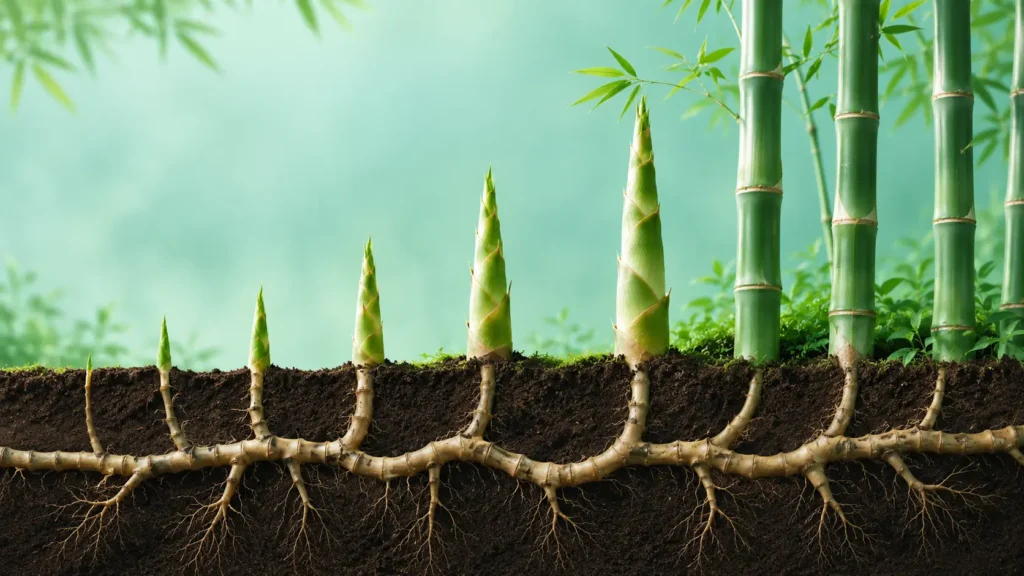
El bambú crece rápido debido a la estructura de la planta.
Un nuevo brote de bambú se sustenta gracias a un sistema de rizomas subterráneos. Ese sistema de rizomas almacena energía y ayuda a producir nuevos brotes cuando comienza la temporada de crecimiento. Una vez que el brote emerge, gran parte del crecimiento visible se debe a la rápida elongación de los entrenudos.
Los entrenudos son los tramos que se encuentran entre los nudos de un tallo de bambú. Durante el crecimiento rápido, estos tramos pueden alargarse rápidamente, por lo que el bambú puede ganar altura en poco tiempo.
Hay varios factores que influyen conjuntamente:
- rizomas ayudan a almacenar y transportar energía;
- brotes nuevos crecen más rápido que los tallos maduros;
- internodos puede alargarse rápidamente;
- temperatura cálida favorece el crecimiento activo;
- calidad del agua y del suelo influyen en la fuerza de los brotes;
- genética de las especies determinar el potencial de crecimiento natural de la planta.
Un estudio publicado en La célula vegetal en rápido crecimiento del bambú Moso muestra que el proceso implica el desarrollo de los entrenudos, la división celular, el alargamiento celular, la temperatura y la regulación biológica en el interior del brote en crecimiento.
Para los lectores, la conclusión práctica es más sencilla: el bambú tiene un sistema de crecimiento que permite que broten nuevos tallos rápidamente cuando las condiciones son adecuadas.
Las especies de bambú de más rápido crecimiento
No todos los bambúes crecen a la misma velocidad. Los que crecen más rápido suelen ser especies de bambú de gran tamaño que crecen en climas adecuados.
| Tipo de bambú | Por qué se menciona | Nota sobre el crecimiento |
|---|---|---|
| Bambú Moso | Ha sido objeto de numerosos estudios y reviste gran importancia comercial en Asia. | Se suele mencionar en relación con el rápido crecimiento de los brotes y los materiales de bambú. |
| Bambú gigante | Se caracteriza por sus tallos altos y por su rápido crecimiento en plena temporada. | Kew describe el bambú gigante alcanzando unos 25 m y creciendo hasta 30 cm al día durante la temporada alta. |
| Madera de bambú | Se utiliza en la construcción y en aplicaciones relacionadas con los materiales. | La tasa de crecimiento y el uso final dependen de la especie. |
| Bambú rastrero | Se propaga a través de rizomas subterráneos. | El crecimiento en anchura y el crecimiento en altura son cuestiones distintas. |
| Bambú cespitoso | Crece formando racimos más compactos. | Es más fácil describirlo como un crecimiento compacto, aunque no siempre es el que crece más rápido en altura. |
| Bambú ornamental | Se utiliza habitualmente en jardinería. | Normalmente no es el mejor ejemplo de la velocidad máxima de crecimiento del bambú. |
Hay otro aspecto que conviene destacar: El bambú de la suerte no es un bambú auténtico. Es una planta de interior muy popular, pero no debe utilizarse para evaluar las tasas de crecimiento del bambú auténtico.
¿Crecen todas las especies de bambú a la misma velocidad?
No. El término “bambú” engloba muchas especies, y sus patrones de crecimiento no son los mismos.
Algunas especies de bambú crecen mucho y rápido. Otras se quedan más bajas. Algunas prefieren las regiones cálidas y húmedas. Otras pueden tolerar zonas más frescas, aunque es posible que crezcan más lentamente. Un bosquecillo de bambú que ya haya desarrollado un sistema de rizomas sólido también puede producir brotes más fuertes que uno joven o sometido a estrés.
Por eso, una sola cifra diaria nunca es suficiente.
Si una fuente afirma que el bambú crece 35 pulgadas al día, hazte estas tres preguntas:
- ¿Qué especie de bambú?
- ¿En qué condiciones de cultivo?
- ¿Se trata de un récord histórico o de una tasa de crecimiento normal?
Esa es la diferencia entre un dato útil y una afirmación engañosa.
¿Hasta qué altura puede crecer el bambú?
La altura del bambú depende en gran medida de la especie.
Las especies de bambú pequeñas pueden mantenerse relativamente bajas. Las especies de bambú gigante pueden alcanzar alturas impresionantes. Kew describe el bambú gigante como una de las gramíneas más altas del mundo, ya que alcanza unos 25 m.
La altura y la velocidad de crecimiento están relacionadas, pero no son lo mismo. Una especie de bambú puede ser alta, pero no siempre crece a la velocidad máxima diaria. Otra puede crecer rápidamente durante la fase de brotación, pero llegar a ser una planta más pequeña una vez madura.
En este artículo, la comparación más útil no es la de “el bambú frente a los árboles” en un sentido general. Se trata de la diferencia entre un brote de bambú que crece rápidamente en altura y un tronco de árbol que gana altura y grosor a lo largo de un ciclo mucho más prolongado.
El bambú puede crecer mucho en poco tiempo porque produce tallos a partir de los rizomas. Los árboles crecen mediante una estructura diferente.
¿Cuánto tiempo tarda el bambú en alcanzar su tamaño máximo?
Esto depende de lo que se entienda por “tamaño completo”.
Si te refieres a la altura visible de un tallo nuevo, muchos tallos de bambú alcanzan la mayor parte de su altura durante una sola temporada de crecimiento activo. El crecimiento visible puede ser rápido.
Si te refieres a material maduro, la respuesta es que tarda más. Un tallo puede alcanzar una gran altura antes de que se haya endurecido por completo o de que sea apto para todos los usos. Para la fabricación de pasta de papel, la construcción, el mobiliario u otras aplicaciones, la edad de tala y la especie son factores importantes.
Si te refieres a un bosque de bambú completo, la respuesta es aún más larga. Un bosque de bambú se fortalece a través de ciclos anuales repetidos de brotación. Los bosques ya consolidados suelen comportarse de forma diferente a las plantaciones jóvenes.
Así pues, el bambú puede crecer mucho en poco tiempo, pero la calidad del bambú maduro no depende únicamente de su altura. También depende de su edad, su densidad, la calidad de la fibra y el uso que se le vaya a dar.
¿Qué factores influyen en la tasa de crecimiento del bambú?
El bambú crece más rápido cuando la especie y el entorno de cultivo se adaptan bien entre sí.
Las condiciones principales son:
| Condición | Por qué es importante |
|---|---|
| Especies | Establece el potencial de crecimiento natural. |
| Clima | Las condiciones cálidas y húmedas suelen favorecer un crecimiento más rápido. |
| Agua | La hidratación es importante durante una sesión de tiro. |
| Suelo | Un suelo sano favorece el desarrollo de los rizomas y los brotes. |
| Luz solar | Muchas especies de bambú necesitan mucha luz para crecer con fuerza. |
| Temporada | El bambú no crece a su máxima velocidad durante todo el año. |
| Madurez de la plantación | Los árboles ya consolidados pueden producir brotes más fuertes que las plantaciones jóvenes. |
Este artículo no es una guía para plantar bambú. Temas de jardinería como la poda, las vallas, el cuidado de las macetas o la eliminación del bambú son consultas de búsqueda distintas. Aquí nos centramos en la tasa de crecimiento del bambú y en lo que significa dicha tasa.
¿Se propaga el bambú tan rápido como crece?
El crecimiento en altura del bambú y su extensión son dos cosas distintas.
El crecimiento en altura significa que está surgiendo un nuevo tallo. La expansión significa que la planta se está extendiendo bajo tierra a través de los rizomas.
El bambú rastrero puede extenderse a través de los rizomas y, si no se controla, puede extenderse más allá de la zona de plantación original. El bambú en matas suele expandirse de forma más compacta, y los nuevos brotes se mantienen más cerca de la planta madre.
Esta distinción es importante porque la expresión “bambú de crecimiento rápido” puede referirse a dos cosas diferentes. Una especie de bambú puede crecer rápidamente en altura. Otra puede extenderse de forma agresiva. No se trata de lo mismo.
En lo que respecta al abastecimiento de bambú, la extensión es menos importante que la especie, la zona de cultivo, la edad de tala y la regularidad del suministro. En el caso de los jardines domésticos, la extensión del bambú es un tema de gestión aparte.
Qué implica el rápido crecimiento del bambú para los materiales renovables derivados del bambú
El rápido crecimiento del bambú es una de las razones por las que a menudo se considera un recurso vegetal renovable. Dado que el bambú puede producir nuevos brotes a partir de rizomas ya establecidos, se diferencia de muchos recursos arbóreos de crecimiento más lento.
Sin embargo, el rápido crecimiento no debería utilizarse como excusa para justificar cualquier afirmación medioambiental.
Una declaración responsable sobre un producto de bambú también debería tener en cuenta:
- de dónde procede el bambú;
- cómo se cosecha;
- cómo se transforma en pasta o material;
- si se necesitan documentos de certificación;
- qué tipo de embalaje se utiliza;
- si se justifican afirmaciones como «respetuoso con el medio ambiente», «sin papel de árbol», «biodegradable» o «compostable».
Esto es especialmente importante para productos de tejido de bambú. El crecimiento del bambú explica en parte el origen del material. No sustituye a las pruebas de los productos, la revisión de los proveedores, los controles de certificación ni las decisiones sobre el embalaje.
Cómo se relaciona el crecimiento del bambú con la pulpa de bambú y los productos de papel tisú

El bambú se puede transformar en material de pulpa de bambú. La pulpa de bambú se puede utilizar para fabricar productos de papel tisú, como papel higiénico de bambú, pañuelos de papel, toallas de papel y otros productos de papel para uso doméstico o comercial.
Para Newland Bambú, la tasa de crecimiento del bambú es solo una parte de las características del material, no el único argumento de venta. Un comprador B2B sigue teniendo que evaluar el origen de la pasta de papel, la suavidad del papel, su resistencia, el número de capas, el gramaje (GSM), el tamaño de la hoja, el diámetro del rollo, el método de blanqueo, el formato de embalaje, los documentos de certificación y la capacidad de suministro continuado.
Esa es la diferencia práctica entre un dato sobre el bambú y una decisión de abastecimiento.
El bambú puede crecer rápidamente. Un buen proyecto de papel de bambú sigue requiriendo unas especificaciones claras, una transformación fiable, un embalaje adecuado y una producción constante.
Preguntas frecuentes sobre la velocidad de crecimiento del bambú
¿A qué velocidad crece el bambú en un día?
Algunas especies de bambú pueden crecer hasta unos 91 cm, o 35 pulgadas, en un solo día en condiciones excepcionales. La mayoría de los bambúes no crecen a ese ritmo máximo todos los días.
¿A qué velocidad puede crecer el bambú en una hora?
Si se divide el máximo diario de 91 cm entre 24 horas, el resultado es de unos 3,8 cm, o 1,5 pulgadas, por hora. Se trata solo de una forma aproximada de entender esta cifra récord. El bambú no crece necesariamente a un ritmo constante por hora.
¿Cuánto crece el bambú en una semana?
Durante la fase de crecimiento activo, el bambú puede crecer visiblemente de altura en una semana. La cantidad exacta depende de la especie, la temperatura, el agua, el suelo y la fase de crecimiento.
¿Cuánto tiempo tarda el bambú en alcanzar su tamaño definitivo?
Muchos tallos de bambú alcanzan gran parte de su altura durante una sola temporada de crecimiento activo. La madurez del material tarda más tiempo en alcanzarse y depende de la especie, la edad, la densidad y el uso final.
¿Por qué crece el bambú tan rápido?
El bambú crece rápidamente porque los nuevos brotes se nutren de los rizomas subterráneos y gracias al rápido alargamiento de los entrenudos. La especie, la temperatura, la humedad y la fase de crecimiento influyen en el resultado.
¿Cuál es la especie de bambú que crece más rápido?
Los récords de crecimiento rápido suelen asociarse a determinadas especies de bambú de gran tamaño en condiciones adecuadas. El bambú moso y el bambú gigante suelen mencionarse a menudo en relación con el crecimiento rápido.
¿Crece el bambú más rápido que los árboles?
Muchas especies de bambú pueden crecer en altura más rápido que muchos árboles durante la fase de crecimiento activo de los brotes. Sin embargo, el bambú y los árboles crecen de forma diferente, por lo que la comparación debe hacerse con cautela.
¿Crece el bambú durante todo el año?
No. El bambú suele crecer más rápido durante su época de brotación. El crecimiento se ralentiza cuando la temperatura, la humedad o las condiciones estacionales no son las adecuadas.
¿Se extiende el bambú tan rápido como crece?
No siempre. El crecimiento en altura y la expansión son cosas distintas. El bambú rastrero puede extenderse a través de los rizomas, mientras que el bambú en matas se expande de forma más compacta.
¿El bambú de la suerte es bambú de verdad?
No. El bambú de la suerte es una planta de interior muy popular, pero no es un bambú auténtico. No debe utilizarse como referencia para la tasa de crecimiento del bambú auténtico.
¿El bambú de crecimiento rápido es siempre sostenible?
No necesariamente. El rápido crecimiento es una de las razones por las que se considera al bambú como un recurso vegetal renovable, pero la sostenibilidad también depende del origen, la recolección, el procesamiento, la certificación, el envasado y la forma en que se utilizan las declaraciones medioambientales.