Por qué el caso práctico del papel higiénico de bambú «Why Save Trees» es importante para los compradores de marcas blancas
«Save Trees» resulta interesante de analizar no porque sea simplemente otra marca más de papel higiénico de bambú, sino porque su trayectoria pública muestra cómo una empresa de papel de bambú pasó de ser «Cloud Paper» a convertirse en una marca de papel doméstico sin madera más definida.
Este artículo se basa en información de dominio público. No incluye la tasa de retención interna de Save Trees, su margen de beneficio, la estructura de sus proveedores, los datos sobre reclamaciones de los clientes ni los registros privados relativos a la toma de decisiones.
Para papel higiénico de bambú de marca blanca Para los compradores, el valor no es una fórmula mágica para el éxito. El valor consiste en comprender qué condiciones hicieron que mereciera la pena plantearse una suscripción, una prueba B2B, la ampliación de la gama de productos, la presentación en un mercado online y la planificación del suministro.
La pregunta que hay que plantearse no es “¿Cómo podemos imitar a Save Trees?”.”
La pregunta más acertada es: ¿qué debería comprobar un comprador antes de crear una marca similar de papel higiénico de bambú?
«Cloud Paper Before Save Trees»: una marca basada en la venta directa al consumidor (DTC) y el suministro B2B
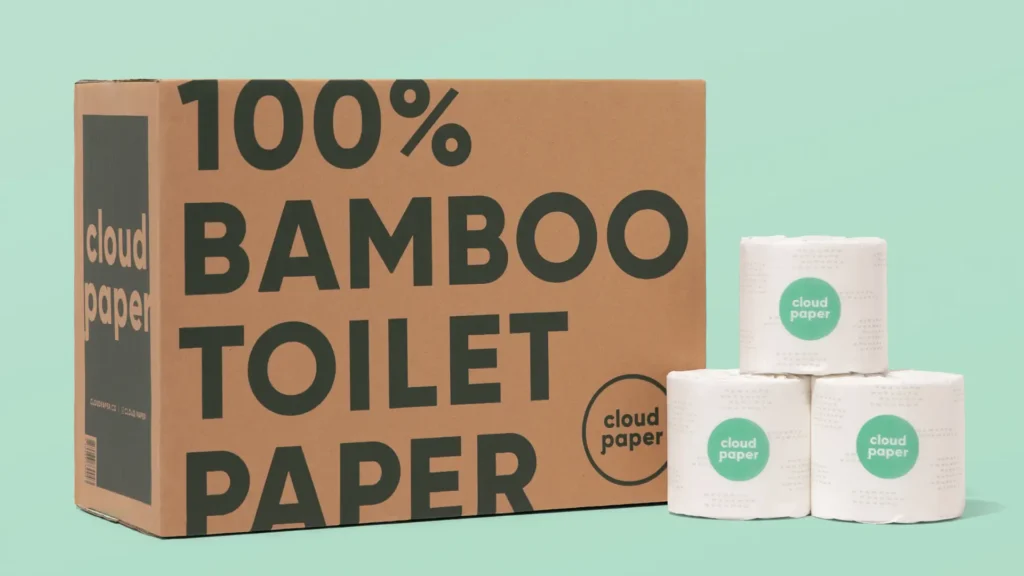
Antes de pasar a llamarse «Save Trees», la marca se llamaba «Cloud Paper».
Esto es importante porque Cloud Paper no era solo una iniciativa de sostenibilidad dirigida al consumidor. Los documentos públicos muestran que la marca ya contaba con vertientes tanto de venta directa al consumidor (DTC) como de negocio a empresa (B2B) en las primeras fases de su desarrollo.
Caso práctico de Cloud Paper de Flexport describe cómo Cloud Paper realizaba envíos de productos desde Asia a Seattle para clientes empresariales en 2019, entre los que se incluían compradores corporativos y comerciales. La entrevista de Modern Retail con el cofundador Ryan Fritsch También mencionó a WeWork como uno de sus primeros clientes.
Esto le da a la marca un punto de partida diferente al de una simple historia centrada exclusivamente en la venta directa al consumidor (DTC).
Cloud Paper se enfrentaba a un producto físico que debía recorrer una cadena de suministro real: artículos de papel voluminosos, planificación de envases de cartón, compradores comerciales, entrega al consumidor y uso repetido. No se trataba de una marca cuyo principal reto fuera únicamente el tráfico de la página web o el diseño del embalaje.
Para los compradores de marcas blancas, la primera lección es la planificación de canales.
Una marca de papel higiénico de bambú puede empezar por el comercio electrónico, pero también puede estar presente en espacios de coworking, hoteles, restaurantes, gimnasios, edificios de oficinas o programas de suministro para el sector hostelero. Estos espacios B2B no son solo canales de gran volumen; pueden convertirse en entornos para probar el producto.
Es posible que un cliente pruebe por primera vez el papel higiénico de bambú en el baño de una oficina, en una habitación de hotel, en un restaurante o en un gimnasio. Si el producto le resulta agradable y el mensaje de la marca es lo suficientemente visible, ese punto de contacto B2B puede favorecer una compra posterior en el hogar.
Eso cambia el debate sobre el abastecimiento.
El producto no solo tiene que tener buen aspecto en la página web de venta directa al consumidor (DTC). También puede que tenga que funcionar en baños públicos, trasteros, carros de limpieza, cajas de almacén, catálogos de distribuidores y pedidos de reposición recurrentes.
En el caso de un proyecto de marca propia, el comprador debería plantearse desde el principio dos formatos relacionados entre sí:
- Un envase destinado al consumidor para uso doméstico, comercio electrónico, suscripción o venta al por menor
- Un formato B2B o a granel para el suministro comercial, el sector hostelero, las oficinas o los canales de distribución
Es posible que el papel utilice el mismo material de bambú, pero el embalaje, el número de rollos, el tamaño de la caja y la lógica de reposición pueden ser diferentes.
La «carrera por el papel higiénico» de 2020 puso de manifiesto la importancia de la entrega a domicilio y la planificación de existencias
Cloud Paper no entró en el mercado en un momento de calma para el sector.
A principios de 2020, el papel higiénico se convirtió en uno de los productos domésticos más destacados en Estados Unidos. Las estanterías de las tiendas estaban vacías, los consumidores acaparaban existencias y muchas personas que rara vez pensaban en el papel higiénico se veían de repente preocupadas por el suministro, el almacenamiento, la entrega y las existencias de reserva.
Cloud Paper ya se posicionaba como un producto sin madera papel higiénico de bambú cuando se abrió esa ventana.
Según informó GeekWire que Cloud Paper vendió papel higiénico de tres capas en cajas de 24 rollos a través de su página web y vio cómo su base de suscriptores aumentaba en 600% en cuestión de días durante la primera oleada de compras compulsivas de papel higiénico al inicio de la pandemia. El mismo informe mencionaba a Ryan Fritsch, Austin Watkinsy Tori Kiss como equipo fundador y señaló que Cloud Paper se comprometió a aportar 10 000 rollos adicionales para Food Lifeline durante la escasez.

El caso práctico de Flexport aporta la perspectiva de la cadena de suministro de ese mismo momento. En él se describe cómo la demanda se ha desplazado de las oficinas y los espacios públicos hacia los hogares, y se señala que las ventas de Cloud Paper aumentaron un 600% en dos semanas, a medida que la empresa se adaptaba al nuevo patrón de demanda.
Esto no significa que todas las marcas de papel higiénico de bambú puedan reproducir ese resultado.
La escasez de 2020 fue inusual. Las fuentes públicas no nos facilitan la tasa de retención a largo plazo de Cloud Paper, el coste de captación de clientes ni el margen de ese periodo.
Pero la lección sobre las categorías sigue siendo útil.
La fiebre por el papel higiénico de 2020 no fue solo un repunte de la demanda. Fue una prueba para el suministro.
El papel higiénico ocupa mucho espacio. Agota rápidamente el espacio de almacenamiento. Es un producto sensible a la planificación de los envases, los plazos de transporte, la manipulación de los paquetes y la entrega en la última milla. Cuando la demanda se dispara, la marca no puede resolver el problema con un mejor texto publicitario o más anuncios. Necesita producto disponible, envases estables, capacidad de transporte, coordinación en el almacén y comunicación con el cliente.
Por eso es tan importante la trayectoria de Flexport en el ámbito de la logística.
Esto demuestra que la promesa de marca de Cloud Paper dependía de la ejecución práctica. El producto tenía que pasar de la planificación de la fabricación y la importación a adaptarse a un patrón de demanda cambiante. El cambio de los clientes empresariales y los espacios públicos hacia la entrega a domicilio no fue solo un cambio de estrategia de marketing. También supuso un cambio en cuanto a embalajes, transporte, inventario y gestión de pedidos.
Para los compradores de marcas blancas, esta es la parte que merece la pena analizar.
Una marca de papel higiénico de bambú puede lanzarse al mercado con una página de producto impecable y un mensaje contundente sobre la sostenibilidad, pero el crecimiento plantea rápidamente preguntas más difíciles:
- ¿Puede el proveedor gestionar pedidos recurrentes de mayor volumen?
- ¿Se puede mantener la calidad de los envases de cartón cuando varía el volumen?
- ¿Puede el comprador mantener unas existencias suficientes sin inmovilizar demasiado capital?
- ¿Puede el plazo de entrega satisfacer las expectativas de los suscriptores?
- ¿Se puede utilizar el mismo archivo de productos para los pedidos de comercio electrónico, B2B y mayoristas?
- ¿Puede la marca evitar que cambie la sensación al desenrollar el papel durante la reposición de emergencia?
El periodo de 2020 no demuestra que todas las marcas de suscripción de papel higiénico de bambú puedan crecer a gran escala.
Esto demuestra que la demanda de papel higiénico puede cambiar más rápido de lo que una marca joven podría esperar.
Para los equipos de aprovisionamiento, la planificación del suministro debe considerarse, desde el principio, parte de la promesa de la marca. Si la marca transmite a los clientes que ya no tienen que preocuparse por el papel higiénico, el comprador debe tener en cuenta la ficha del producto, el margen de seguridad de existencias, la estructura de las cajas y el momento de la reposición mucho antes de que al cliente se le acabe el producto.
Por qué el papel higiénico por suscripción es mejor que muchos productos vendidos directamente al consumidor
La suscripción es uno de los conceptos más manidos en el sector DTC.
Muchas marcas buscan ingresos recurrentes. Muchos clientes no quieren otra suscripción. Por eso merece la pena analizar detenidamente el modelo de suscripción de Cloud Paper.
En un Entrevista de «Modern Retail» a Ryan Fritsch, el cofundador de Cloud Paper hizo una distinción muy útil. Explicó que muchos productos no tienen por qué ser de suscripción, pero que el papel higiénico es un caso aparte, ya que se trata de un producto básico de uso diario. Los clientes lo utilizan con regularidad, se les acaba y, a menudo, prefieren no pensar en volver a comprarlo.
Eso es más concreto que decir que “la suscripción fomenta la compra repetida”.”
En el caso de Cloud Paper / Save Trees, la propia categoría de producto respalda este modelo. El papel higiénico tiene un ciclo de reposición natural. Una entrega programada puede eliminar las dificultades si la calidad del producto, el tamaño del paquete, el precio y el plazo de entrega son aceptables.
Para los compradores de marcas blancas, esto supone un filtro claro.
No añadas la opción de suscripción solo porque parezca moderna. Añádela únicamente cuando el producto tenga un ciclo de reposición real y cuando el cliente se beneficie de no tener que acordarse del próximo pedido.
En las categorías de papel de bambú, esa lógica varía según el producto:
- El papel higiénico tiene un ciclo de reposición doméstico bien definido
- Las toallas de papel pueden ser adecuadas para paquetes familiares o para uso comercial, pero el consumo varía más
- El consumo de pañuelos de papel puede depender del tamaño del hogar, la estación del año o el canal de distribución.
- Es posible que los compradores del sector hotelero y de oficinas prefieran el reabastecimiento B2B programado en lugar de las suscripciones al estilo de las dirigidas a los consumidores.
- Es posible que los clientes particulares prefieran los paquetes múltiples por su relación calidad-precio antes que las suscripciones.
Para las marcas que venden mediante suscripción, venta directa al consumidor (DTC) o paquetes online, Suministro de pañuelos de papel para el comercio minorista y el comercio electrónico Hay que planificarlo teniendo en cuenta el número de paquetes, el peso del envío y la periodicidad de las entregas.
Esto significa que la planificación de las suscripciones debe partir del comportamiento del producto, y no del diseño del proceso de pago.
Una suscripción de papel higiénico no solo ofrece comodidad. Ofrece la promesa de que el mismo producto doméstico llegará antes de que al cliente se le acabe. Una vez que el cliente acepta esa promesa, resulta mucho más difícil cambiar de producto.
Una marca no puede modificar sin más el diámetro del rollo, el número de hojas, el número de paquetes, el tacto del papel, el material de embalaje, el tamaño de la caja o los plazos de entrega sin generar problemas con los clientes. El suscriptor no solo está comprando papel higiénico de bambú. El suscriptor está externalizando una pequeña parte de la planificación de las existencias del hogar.
Por eso, la suscripción convierte la regularidad del producto en una obligación de suministro.
Para los compradores de papel higiénico de bambú de marca blanca, la cuestión de la suscripción no se limita a:
¿Podemos ofrecer entregas periódicas?
La mejor pregunta es:
¿Podemos mantener las mismas especificaciones de rollos, el mismo plan de embalaje, el mismo formato de envase y el mismo ritmo de entrega durante el tiempo suficiente para que los clientes dejen de pensar en ello?
Esto cambia la forma en que los compradores deben evaluar las muestras.
Una primera muestra puede parecer buena. Un primer envío puede parecer bueno. Pero en un modelo de suscripción es necesario que el décimo envío dé la misma sensación que el primero. Eso significa que el comprador necesita un historial de pedidos recurrentes, no solo una muestra aprobada.
El archivo de pedidos recurrentes debe definir:
- Anchura del rollo
- Diámetro del rollo
- Tamaño del núcleo
- Número de capas
- GSM
- Número de hojas
- Gofrado
- Envoltura individual en rollo
- Número de paquetes
- Tamaño de la caja
- Peso de la caja
- Plazo de entrega de un nuevo pedido
- Texto de la reclamación
- Asistencia para documentos
Una marca basada en suscripciones no se crea simplemente añadiendo un botón de “suscribirse” a la página de un producto.
Se consigue haciendo que el producto sea de una fiabilidad a toda prueba.
Esa es la parte complicada del caso «Cloud Paper / Save Trees». La historia que se ha dado a conocer públicamente muestra una marca que se benefició del carácter recurrente de la compra de papel higiénico. La lección que se extrae en materia de abastecimiento es que la compra recurrente solo funciona cuando el producto, el embalaje, la caja de cartón y el plan de entrega pueden mantenerse estables.
Los clientes B2B no eran una historia secundaria
Una de las razones por las que el caso de «Cloud Paper / Save Trees» resulta útil para los compradores de marcas blancas es que el ámbito B2B no estaba separado de la historia de la marca.
En la entrevista de Modern Retail se mencionaba a WeWork como uno de sus primeros clientes. El caso práctico de Flexport describía los envíos de Cloud Paper a clientes empresariales. GeekWire también mencionaba a clientes empresariales de Washington y Oregón.
Esto es importante porque muchos compradores de papel de bambú no son fundadores que operan exclusivamente en el modelo DTC.
Algunos son importadores. Otros venden al sector hostelero. Otros abastecen a oficinas, edificios comerciales, comercios minoristas, tiendas ecológicas, cajas por suscripción o distribuidores. Otros quieren que su marca esté presente tanto en Internet como en espacios físicos de uso.
La trayectoria inicial de Cloud Paper en el ámbito B2B pone de manifiesto una idea interesante: los espacios comerciales pueden convertirse en entornos de formación sobre los productos.
Una persona que utiliza papel higiénico de bambú en una oficina, un hotel o un restaurante no es solo un usuario. Es un cliente potencial para el futuro mercado doméstico. Si la experiencia con el producto es satisfactoria y el mensaje de la marca es visible, el punto de venta B2B puede contribuir a una mayor difusión de la marca.
Pero esto solo funciona si el formato B2B se planifica correctamente.
A los compradores profesionales les importan detalles en los que los particulares quizá no piensen en un primer momento:
- Cantidad por caja
- Eficiencia en el almacenamiento
- Servicios de limpieza
- Compatibilidad de rollos
- Frecuencia de reposición
- Proceso de facturación y reposición
- Resistencia del embalaje
- Fiabilidad en la entrega
Al mismo tiempo, la experiencia con el producto no debe parecer desconectada de la marca de consumo.
Una marca de papel higiénico de bambú que vende tanto directamente al consumidor (DTC) como a empresas (B2B) necesita mantener la coherencia en las características fundamentales del producto: suavidad, resistencia, tacto del rollo, mensaje del envase y respaldo de las afirmaciones. Sin embargo, es posible que necesite diferentes formatos de envase para los distintos canales.
Para los compradores comerciales, suministro de tejidos a granel No se trata simplemente de una caja de cartón más grande; también supone un cambio en el almacenamiento, la reposición y la planificación de los pedidos recurrentes.
Para los compradores de marcas blancas, la pregunta relevante es:
¿Puede el proveedor ofrecer tanto envases destinados al consumidor final como envases para el reabastecimiento B2B sin alterar la experiencia fundamental del producto?
De lo contrario, la marca podría tener dificultades para expandirse a otros canales.
La financiación convirtió la cadena de suministro y el desarrollo de productos en la verdadera clave del crecimiento
Cloud Paper recaudó $5 millones en 2022.
La cantidad importa menos que el fin al que se destinaba la financiación. Según informó Cheddar que la financiación se destinaría a la cadena de suministro, el desarrollo de productos y la contratación de personal. GeekWire también citó al cofundador Ryan Fritsch, quien describió el negocio como “un problema que tiene mucho que ver con las operaciones y la cadena de suministro”, ya que Cloud Paper se abastecía de fibras renovables, gestionaba un producto voluminoso, realizaba envíos directos a los hogares y creaba canales de distribución.
Esta cita es importante porque deja claro el tema de la cadena de suministro. Cloud Paper no solo intentaba vender una marca de papel higiénico más sostenible, sino que también pretendía que un producto de papel doméstico de gran tamaño y uso repetido funcionara tanto en el modelo DTC como en el B2B, en la entrega a domicilio y en futuros canales de distribución.
Es aquí donde este caso cobra especial relevancia para los compradores B2B.
Una marca de productos de papel puede parecer sencilla a simple vista. Vende rollos, toallas de papel, pañuelos de papel, cajas y suscripciones. Pero cuando la demanda aumenta, el negocio se pone en marcha muy rápidamente.
El producto es voluminoso. Ocupa espacio en el almacén. Presenta limitaciones en cuanto al embalaje de cartón. Puede enviarse a través de redes de paquetería, de logística mayorista o de ambas. Se prevé que haya pedidos recurrentes. Si la marca amplía su gama desde el papel higiénico hasta las toallas de papel, los pañuelos de papel y los paquetes, la complejidad de las referencias (SKU) aumenta.
Por eso, la cadena de suministro y el desarrollo de productos no son funciones secundarias.
Influyen en la capacidad de la marca para seguir vendiendo.
El desarrollo del producto determina si el papel tiene el tacto lo suficientemente suave, la resistencia lo suficientemente alta y la uniformidad lo suficientemente buena. La cadena de suministro determina si la marca puede mantener existencias disponibles, garantizar la calidad del embalaje, evitar cambios repentinos en las especificaciones y respaldar el crecimiento en los canales DTC, B2B, minorista o en pedidos al por mayor.
Para los compradores de marcas blancas, la conclusión es clara.
No destines tu presupuesto únicamente al diseño de la marca y a la publicidad.
Un plan de producto de papel higiénico de bambú también debería incluir:
- Rondas de prueba
- Confirmación del número de capas, el gramaje, el número de hojas y el diámetro del rollo
- Análisis del relieve y el tacto
- Revisión de la estructura y el diseño gráfico del embalaje
- Planificación del tamaño de las cajas y del peso de envío
- Revisión de documentos para reclamaciones
- Archivos de especificaciones de pedidos recurrentes
- Planificación de la futura ampliación del catálogo de referencias
Si no se abordan estos aspectos desde el principio, la marca puede parecer lista en la página web, pero resultar difícil de ampliar tras su lanzamiento.
De «Cloud Paper» a «Salvar árboles»: una promesa más clara para el consumidor
En 2024, Cloud Paper cambió su nombre por el de Salvemos los árboles.
En su anuncio oficial del cambio de imagen, Cloud Paper afirmó que el nombre «Save Trees» reflejaba mejor su misión de proteger los bosques y reducir la deforestación. Además, relacionó el nuevo nombre con un compromiso más amplio con las opciones sostenibles y la ampliación de la gama de productos.
El nuevo nombre es más claro.
“Cloud Paper” suena suave, limpio y moderno, pero no transmite de inmediato su compromiso con el medio ambiente. “Save Trees” sí lo hace. Convierte la idea de la marca en una frase que incita a la acción directa.
Eso es importante en una categoría en la que la atención es escasa.
La mayoría de los consumidores no quieren informarse sobre la pulpa de bambú, la fabricación de papel higiénico, la silvicultura o las cadenas de suministro antes de comprar papel higiénico. Un nombre como «Save Trees» alivia la carga de tener que dar explicaciones. El cliente puede entender el mensaje básico antes incluso de leer la ficha del producto: se trata de un papel que se posiciona en contra del consumo de papel fabricado a partir de árboles.
Para los compradores de marcas blancas, eso resulta útil.
El nombre del producto, el eslogan del panel frontal, el título en la plataforma de venta y el titular de la página de inicio no deben obligar a los clientes a descifrar el producto. Si se trata de papel higiénico de bambú, el cliente debe comprender rápidamente en qué se diferencia, por qué es importante y a qué producto se le pide que cambie.
Pero un nombre más claro no sustituye a las pruebas.
Una marca más sólida puede ayudar a que los clientes se fijen en el producto. Sin embargo, no puede demostrar la composición de la fibra, la certificación FSC, que el embalaje no contenga plástico, las afirmaciones relacionadas con los PFAS ni el rendimiento del producto. El cambio de imagen de la marca puede hacer que la promesa resulte más fácil de entender, pero el comprador seguirá necesitando documentación y muestras que respalden dicha promesa.
Esa es la lección práctica que se desprende del cambio de «Cloud Paper» a «Save Trees».
Una marca puede simplificar la historia. No puede abarcar todo el proceso de suministro.
Para un proyecto de papel higiénico de bambú de marca blanca, los compradores deben separar estas dos tareas:
El nombre de la marca debe hacer que el producto resulte fácil de entender.
El expediente del producto debe garantizar que la afirmación pueda repetirse con total seguridad.
Esto significa que los documentos sobre los materiales, los documentos de embalaje, la redacción de las afirmaciones, las especificaciones de las cajas y la aprobación de las muestras siguen siendo importantes tras el cambio de marca. Una promesa más clara simplemente eleva el nivel de exigencia en cuanto a las pruebas.
Las páginas de productos y el embalaje reducen las barreras a la comparación
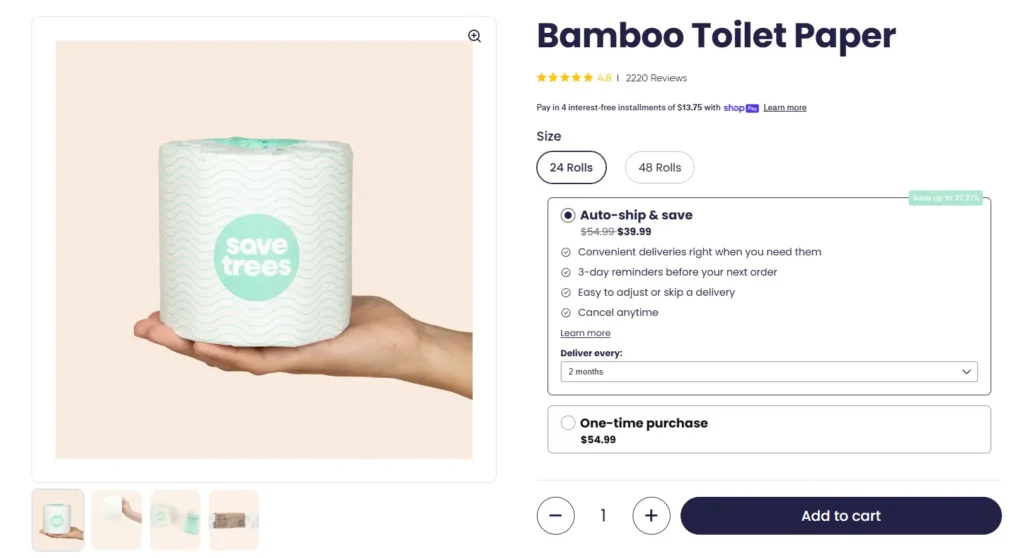
’Salvemos los árboles» Página del producto: papel higiénico de bambú muestra detalles prácticos para la compra: cajas de 24 rollos, estructura de tres capas, 300 hojas por rollo, embalaje sin plástico y opciones de suscripción.
La misma lógica de comparación también aparece en Amazon. El Ficha del producto «Save Trees» en Amazon presenta papel higiénico de bambú con indicación del número de paquetes, estructura de tres capas, 300 hojas por rollo, texto de certificación FSC, posicionamiento «sin plástico» y opciones de compra «Suscríbete y ahorra».
Para los compradores de marcas blancas, esto es importante porque los usuarios de las plataformas de venta en línea comparan los productos incluso más rápido que los visitantes de una página web. El título del producto, la imagen principal, los puntos clave, el número de paquetes, el número de hojas, la información sobre certificaciones y la percepción del precio por hoja deben combinarse de forma eficaz antes de que el cliente lea la historia completa de la marca.
Esos detalles son importantes porque ayudan a los clientes a comparar.
Puede que a un consumidor le guste la idea del papel higiénico de bambú, pero aún así tiene que resolver algunas cuestiones prácticas:
¿Es lo suficientemente suave?
¿Cuántas hojas hay en cada rollo?
¿Cuántos rollos hay en la caja?
¿Se parece esto a lo que ya utilizo?
¿El envase se ajusta a lo que se afirma en materia de sostenibilidad?
¿Puedo volver a hacer un pedido sin que ello suponga un trabajo adicional?
Aquí es donde muchos productos sostenibles tienen dificultades. Dedican demasiado tiempo a explicar el material y no lo suficiente a reducir el riesgo de compra.
Una página de producto no es solo un espacio para contar historias. Es una herramienta de comparación.
Para los compradores de marcas blancas, este es uno de los argumentos más convincentes del caso «Save Trees».
El número de capas, el número de hojas, el número de rollos, el número de paquetes, el diámetro del rollo y el formato de embalaje no son solo detalles técnicos para el proveedor. Influyen en el valor percibido, el peso del envío, la planificación de las cajas de cartón, las fotos de los productos en el comercio electrónico y en la posibilidad de que el comprador pueda comparar el rollo de bambú con un paquete de papel higiénico convencional.
Si esos detalles no quedan claros o son imprecisos, el producto da la sensación de ser arriesgado, sobre todo si cuesta más que el papel higiénico convencional.
El embalaje desempeña un papel similar.
Estuche de diseño «Save Trees» de AGD describe el sistema de embalaje de Save Trees como sencillo, llamativo, minimalista y adecuado para exponerlo en espacios del hogar como el cuarto de baño y la cocina. Esto es importante porque el embalaje de papel de bambú tiene que cumplir varias funciones a la vez:
- Transmitir el compromiso medioambiental
- Muestra claramente la categoría del producto
- Luce impecable en las fotos de tu tienda online
- Adaptarse al entorno doméstico
- Presentación para el sector minorista, de paquetes o B2B
- Evita que un producto sostenible parezca demasiado recargado.
Para los compradores B2B, la cuestión del embalaje debe plantearse desde el principio.
Un comprador no debe aprobar primero las especificaciones del rollo y pensar en el embalaje más tarde. El diámetro del rollo, el número de unidades por paquete, el tipo de envoltorio, la estructura de la caja, la zona del código de barras, el texto de las indicaciones y las fotografías del producto se influyen mutuamente.
Por eso envases de papel tisú personalizados debería revisarse junto con el tamaño del rollo, el número de paquetes, la estructura de la caja, la zona del código de barras y la redacción de la indicación.
Un producto que tiene buen aspecto en la web pero cuyo envío deja mucho que desear acabará causando problemas.
Un producto que se envía sin problemas pero cuya información no se transmite con claridad puede hacer que se pierdan ventas.
Un producto cuyas propiedades se anuncien de forma exagerada en el envase sin que haya documentación que lo respalde puede suponer un riesgo de incumplimiento normativo.
Un buen embalaje no es una mera decoración. Forma parte del sistema del producto.
La expansión de la gama de productos siguió la lógica del papel de uso doméstico
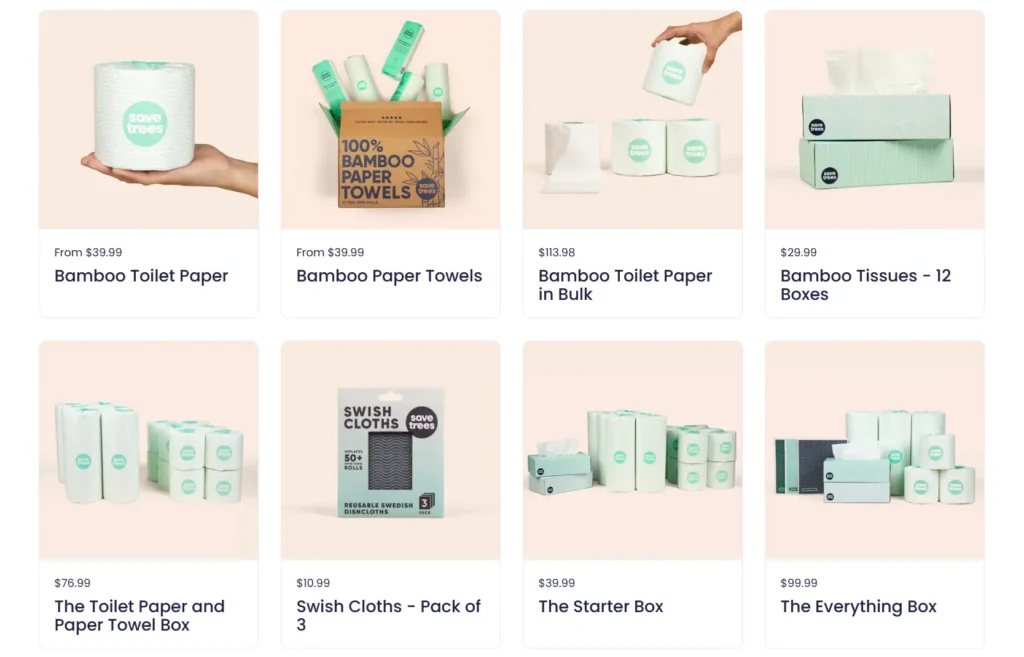
«Save Trees» no se limitó a ser solo un producto de papel higiénico.
El material informativo de AGD describe que la marca comenzó con una única línea de productos y se fue ampliando a toallas de papel, pañuelos de papel y paños suecos reutilizables “swish”. Save Trees’ Página «Ver todo» También incluye papel higiénico, toallas de papel, pañuelos de papel, paquetes y formatos a granel.
Esto es importante porque la expansión sigue una lógica propia del sector del papel para el hogar.
El papel higiénico es el producto estrella. Es un artículo conocido, imprescindible y de uso recurrente. Una vez que los clientes confían en el material, el embalaje y la experiencia de entrega, la marca tiene un motivo para lanzar productos relacionados.
Las toallas de papel son ideales para la cocina y la limpieza. Los pañuelos de papel son perfectos para el uso diario en el cuidado de la piel. Los paquetes permiten a los clientes probar más de un producto a la vez. Los formatos a granel son ideales para hogares con un uso intensivo o para compradores comerciales.
Eso es distinto a añadir productos simplemente porque una fábrica pueda fabricarlos.
Es posible que una fábrica pueda ofrecer papel higiénico de bambú, papel de cocina, pañuelos de papel, servilletas, rollos gigantes, toallas de mano y toallas con extracción central. Sin embargo, una marca de consumo no debería lanzar todas las referencias de producto a la vez solo porque exista la posibilidad de abastecerse de ellas.
La pregunta más acertada es si el cliente tiene algún motivo para comprar el próximo producto de la misma marca.
En el caso de los compradores de marcas blancas, la estrategia de expansión debe planificarse por etapas.
En primer lugar, elige un SKU estrella que pueda transmitir la promesa de la marca.
En segundo lugar, asegúrate de que la calidad del producto y el embalaje permitan realizar pedidos repetidos.
En tercer lugar, decide qué producto de papel relacionado se adapta al mismo cliente y canal.
En cuarto lugar, amplía la producción solo cuando el embalaje, la cantidad mínima de pedido, el stock y el servicio de reclamaciones estén listos.
Aquí es donde un proveedor puede marcar la diferencia.
Es posible que un comprador quiera empezar con papel higiénico de bambú, pero que más adelante añada toallas de papel de bambú o pañuelos faciales de bambú. El proveedor debería ayudar al comprador a comprender qué especificaciones, formatos de envase y diseños de cajas de cartón deberán modificarse en cada uno de esos tipos de productos.
Aunque un rollo de papel higiénico y un rollo de papel de cocina puedan tener en común el bambú como materia prima, no comparten los mismos requisitos de rendimiento.
Las afirmaciones sobre el bambú deben estar respaldadas por pruebas antes de que se incluyan en el texto publicitario del embalaje
Las marcas de papel higiénico de bambú también operan en un sector en el que las declaraciones sobre sostenibilidad están cobrando cada vez más importancia.
Esta sección no trata específicamente sobre «Save Trees». Se refiere a la categoría.
La revista «Which?» ha evaluado cinco marcas de papel higiénico de bambú en el Reino Unido e informó de que tres muestras que, según se afirmaba, estaban fabricadas exclusivamente con bambú, contenían cantidades muy pequeñas de fibra de bambú o de hierba. Posteriormente, el FSC publicó una respuesta en cómo gestionó los problemas relacionados con las reclamaciones sobre el papel higiénico de bambú.
Para los compradores de marcas blancas, esto supone una seria advertencia.
Las afirmaciones sobre el bambú no son solo eslóganes publicitarios. Deben estar respaldadas por pruebas.
Si en un envase figura la indicación “100% bambú”, “sin madera”, “sin plástico”, “compostable”, “biodegradable”, “sin PFAS” o utiliza declaraciones relacionadas con el FSC, el comprador debe saber qué documentos, informes de ensayo, registros de los proveedores o confirmaciones sobre los materiales respaldan esa formulación.
Esto debería hacerse antes de aprobar el material gráfico.
Una vez impresos los envases, los cambios en las declaraciones resultan costosos. Si un minorista, un importador, una plataforma de venta online o una asociación de consumidores solicita asistencia tras el lanzamiento, el comprador puede enfrentarse a retrasos, a tener que volver a etiquetar los productos, a problemas de confianza por parte de los clientes o incluso a la retirada del producto.
Los compradores de marcas blancas deben confirmar lo siguiente:
- Tanto si el papel es de pulpa de bambú 100% como si es una mezcla
- ¿Qué documentos sobre el origen y la cadena de custodia hay disponibles?
- Si el material de embalaje cumple con la afirmación de que no contiene plástico o de que es reciclable
- Si en el mercado de destino está permitido el uso de términos como «compostable» o «biodegradable»
- Es necesario determinar si las indicaciones «sin PFAS», «sin BPA» o «sin sustancias químicas» requieren un respaldo en materia de ensayos.
- Si las declaraciones relacionadas con el FSC se están utilizando correctamente
Una afirmación sólida sobre la sostenibilidad debe ser fácil de entender para los consumidores y lo suficientemente convincente como para que el comprador pueda defenderla.
Esa es la diferencia entre la imagen de marca y el riesgo.
Lo que las fuentes públicas aún no nos dicen
Las fuentes públicas nos ofrecen una visión útil de la ruta «Cloud Paper / Save Trees».
Muestran el posicionamiento original de Cloud Paper, el repunte de la demanda en 2020, la lógica de las suscripciones, el contexto de suministro B2B y DTC, la trayectoria logística de Flexport, la estrategia de expansión de la gama de productos y el cambio de imagen de 2024.
No revelan toda la estructura operativa que hay detrás de la marca.
A partir únicamente de fuentes públicas, no podemos confirmar:
- La tasa de retención de abonados a largo plazo tras el repunte de 2020
- La tasa de abandono de los clientes con suscripción
- El reparto real de los ingresos entre DTC, B2B, Amazon y otros canales
- La diferencia de margen entre los pedidos de suscripción, del mercado minorista y B2B
- La procedencia exacta de la pulpa de bambú
- La estructura de la fábrica de transformación o del proveedor
- La tasa real de reclamaciones por daños en las cajas de cartón o en el embalaje
- El coste de la gestión de pedidos que conlleva la entrega a domicilio de grandes cantidades
- El stock de seguridad utilizado durante los picos de demanda
- El impacto real del cambio de imagen en la tasa de conversión o en el volumen de búsquedas de la marca
- La documentación completa que respalda cada afirmación relacionada con los materiales, los envases y los productos químicos
Esto no es un punto débil del estudio de caso.
Precisamente por eso los compradores no deberían considerar las historias públicas de las marcas como manuales de instrucciones.
Un caso público puede ayudar al comprador a formular preguntas más precisas. No puede sustituir a la evaluación de proveedores, las pruebas de muestras, las pruebas de embalaje, la documentación de las especificaciones, la planificación de las cantidades mínimas de pedido, las pruebas de cajas de cartón, la elaboración de modelos de costes ni la planificación de la reposición.
Para los compradores de papel higiénico de bambú de marca blanca, las preguntas sin respuesta suelen ser la parte más útil del artículo.
Muestran dónde empieza realmente el trabajo de abastecimiento.
Antes de copiar el modelo de suscripción, el nombre del producto, el estilo de envase o el compromiso con la sostenibilidad, el comprador debería elaborar un documento de trabajo en torno a preguntas como:
- ¿Qué especificaciones pueden repetirse en distintos pedidos?
- ¿Qué tipo de embalaje puede resistir el trayecto de envío?
- ¿Qué afirmación se puede documentar antes de la aprobación del material gráfico?
- ¿Qué plan de envíos por caja permite la entrega a granel?
- ¿Qué cantidad mínima de pedido (MOQ) permite tanto los pedidos de lanzamiento como los pedidos posteriores?
- ¿Cuál es el plazo de reposición que garantiza el suministro a los suscriptores o a los compradores B2B?
- ¿Qué cambios en el producto no son aceptables una vez que los clientes empiezan a realizar nuevos pedidos?
La historia pública puede explicar por qué la marca resulta interesante.
El informe de abastecimiento privado determina si un plan de producto similar puede funcionar realmente.
Qué pueden aprender realmente de este caso los compradores de marcas blancas
Este artículo no puede facilitarte la tasa de retención de Save Trees, su margen de beneficio, la estructura de sus proveedores privados ni el proceso interno exacto de toma de decisiones. Esos datos no son públicos.
Lo que puede mostrar es una trayectoria clara de la marca y la lógica de la categoría que subyace a dicha trayectoria.
Para los compradores de marcas blancas, destacan seis criterios útiles.
La suscripción debería basarse en el comportamiento del producto, no en la moda DTC
El modelo de suscripción de Cloud Paper tenía sentido porque el papel higiénico es un producto básico de uso diario. Los clientes lo utilizan con regularidad, se les acaba y es posible que prefieran no tener que preocuparse por volver a pedirlo.
Si tu producto no tiene un ciclo de reposición natural, es posible que el modelo de suscripción no sea adecuado. Si sí lo tiene, el formato del producto y el plan de suministro deben permitir la entrega periódica.
Los espacios B2B pueden convertirse en entornos de prueba
Los primeros clientes B2B de Cloud Paper demuestran que las oficinas, los restaurantes, los gimnasios y otros espacios comerciales pueden ofrecer un producto de papel a usuarios reales.
Para los compradores de marcas blancas, esto significa que el B2B no es solo un canal de gran volumen. También puede ser un canal de exposición de marca, especialmente en el caso de los productos de papel tisú que la gente utiliza directamente.
La cadena de suministro y el desarrollo de productos pueden convertirse en obstáculos para el crecimiento
La financiación destinada a Cloud Paper hizo que la cadena de suministro y el desarrollo de productos formaran parte de la historia de crecimiento.
Esto debería indicar algo importante a los compradores de marcas blancas: cuanto más éxito tiene un producto, más importancia adquieren las especificaciones, el embalaje, las cajas, la logística y el control de los pedidos recurrentes.
La promesa de la marca debe entenderse rápidamente
El cambio de imagen de «The Cloud Paper to Save Trees» pone de manifiesto el poder de un lenguaje directo.
Los compradores de marcas blancas deben asegurarse de que el nombre de la marca, el titular del envase y el nombre del producto ayuden al cliente a comprender el cambio. El lenguaje técnico por sí solo no es suficiente.
Las páginas de productos deberían reducir el riesgo de comparación
La página de productos de ’Save Trees» ofrece a los clientes información sobre el número de rollos, el número de capas, el número de hojas, el embalaje y los detalles de la suscripción.
Una página de producto de marca propia debería hacer lo mismo. Los clientes necesitan comparar el papel higiénico de bambú con los productos que ya conocen.
La justificación de las declaraciones debe presentarse antes de que se apruebe el envase
La categoría del papel higiénico de bambú ya ha sido objeto de un minucioso escrutinio por parte de los consumidores.
Los compradores de marcas blancas no deben esperar a que se haya finalizado el diseño gráfico para solicitar los registros de origen, los informes de pruebas, la documentación relacionada con el FSC, la documentación sobre el embalaje o la documentación que respalde las declaraciones sobre los componentes químicos.
Este es el principal valor del caso.
No ofrece una fórmula que se pueda copiar. Lo que ofrece son condiciones que hay que comprobar.
Para los compradores de marcas blancas, comprender esas condiciones resulta más útil que copiar el estilo de envase, el botón de suscripción o el nombre del producto de una marca concreta.
Preguntas frecuentes: «Save Trees», «Cloud Paper» y papel higiénico de bambú de marca propia
¿Cuáles eran los primeros canales de venta de Cloud Paper antes de que pasara a llamarse Save Trees?
Cloud Paper no era solo una marca de papel higiénico de bambú dirigida directamente al consumidor. Según fuentes del sector de la logística y el comercio minorista, la marca contaba ya en sus inicios con una dimensión tanto de venta directa al consumidor (DTC) como de negocio a empresa (B2B), incluyendo clientes empresariales y espacios de coworking.
Para los compradores de marcas blancas, lo interesante es que los espacios B2B pueden ser algo más que canales de venta al por mayor. También pueden convertirse en entornos de prueba de productos, donde los usuarios finales prueban el papel por primera vez antes de plantearse su uso doméstico.
¿Qué cambió para Cloud Paper durante la escasez de papel higiénico de 2020?
Durante la fiebre por el papel higiénico que se produjo al inicio de la pandemia, Cloud Paper vendió papel higiénico de bambú de tres capas en cajas de 24 rollos a través de su página web, y según la información pública, su base de suscriptores aumentó en 600% en cuestión de días. El material del caso sobre logística también describía cómo la demanda se desplazaba de las oficinas y los espacios públicos hacia la entrega a domicilio.
Para los compradores, esto no significa que se pueda repetir el mismo crecimiento. Demuestra que el papel higiénico puede convertirse rápidamente en un producto que los hogares incluyen en su planificación de existencias cuando el suministro, el almacenamiento y la distribución se vuelven más visibles para los consumidores.
¿Por qué tenía sentido el modelo de suscripción para Cloud Paper / Save Trees?
La suscripción tenía sentido porque el papel higiénico es un producto básico de uso diario. Los clientes lo utilizan con regularidad, se les acaba y, a menudo, prefieren no tener que pensar en volver a comprarlo.
En el caso de los compradores de marcas blancas, no se debe incorporar el modelo de suscripción simplemente porque esté de moda en el sector DTC. Solo debe utilizarse cuando el producto tenga un ciclo de reposición real y el proveedor pueda mantener la uniformidad en el tamaño del rollo, el número de hojas, el número de paquetes, el embalaje, el tamaño de la caja y los archivos de pedidos recurrentes.
¿Por qué Cloud Paper cambió su nombre por el de Save Trees?
Cloud Paper anunció en 2024 que cambiaba su nombre por el de Save Trees. El nuevo nombre refleja de forma más directa la misión de la marca en torno a la protección de los bosques y la reducción de la deforestación.
Para los compradores de marcas blancas, la lección no es copiar el nombre. La lección es que una marca de papel higiénico de bambú necesita una promesa clara que los clientes finales puedan entender rápidamente. El lenguaje técnico sobre los materiales no basta por sí solo.
¿Qué indicaba la ronda de financiación de Cloud Paper sobre la empresa?
Cloud Paper recaudó $5 millones en 2022; según la información pública, las prioridades de crecimiento se centran en la cadena de suministro, el desarrollo de productos y la contratación de personal.
Para los compradores B2B, esto es importante porque el crecimiento del mercado del papel higiénico de bambú no es solo una cuestión de imagen de marca o publicidad. Una vez que la marca da el salto a los servicios de suscripción, el suministro B2B, los formatos a granel o la ampliación de la línea de productos, las especificaciones, el embalaje, la planificación de las cajas de cartón, la logística y el control de los pedidos recurrentes pasan a formar parte del reto que supone el crecimiento.
¿Save Trees vende únicamente papel higiénico de bambú?
No. La información pública sobre el diseño y los productos muestra que la marca se expandió más allá del papel higiénico para abarcar otros productos de papel para el hogar relacionados, como toallas de papel, pañuelos de papel, paquetes, formatos a granel y paños de limpieza reutilizables.
Para los compradores de marcas blancas, la lección sobre la ampliación de la gama de productos es sencilla: hay que empezar con una referencia estrella y, a continuación, ampliar la gama a productos adyacentes solo cuando el mismo cliente, la promesa de marca, el mensaje del envase y el plan de suministro puedan respaldar la siguiente categoría.
¿Ha sido objeto de escrutinio en el mercado el papel higiénico de bambú?
Sí, a nivel de categoría. Los informes públicos sobre pruebas realizadas por los consumidores y relacionados con la certificación han suscitado dudas sobre algunas afirmaciones relativas al papel higiénico de bambú que se encuentran en el mercado. Estos informes no se referían específicamente a Save Trees.
Para los compradores de marcas blancas, la lección práctica es verificar que las afirmaciones estén respaldadas antes de aprobar el envase. Términos como «bambú 100%», «sin madera», «sin plástico», «reciclable», «compostable», «biodegradable», «sin PFAS» o cualquier expresión relacionada con el FSC deben estar respaldados por los registros de materiales adecuados, ensayos, documentación de los proveedores y análisis de mercado.
Cómo puede Newland Bamboo contribuir a este tipo de plan de producto
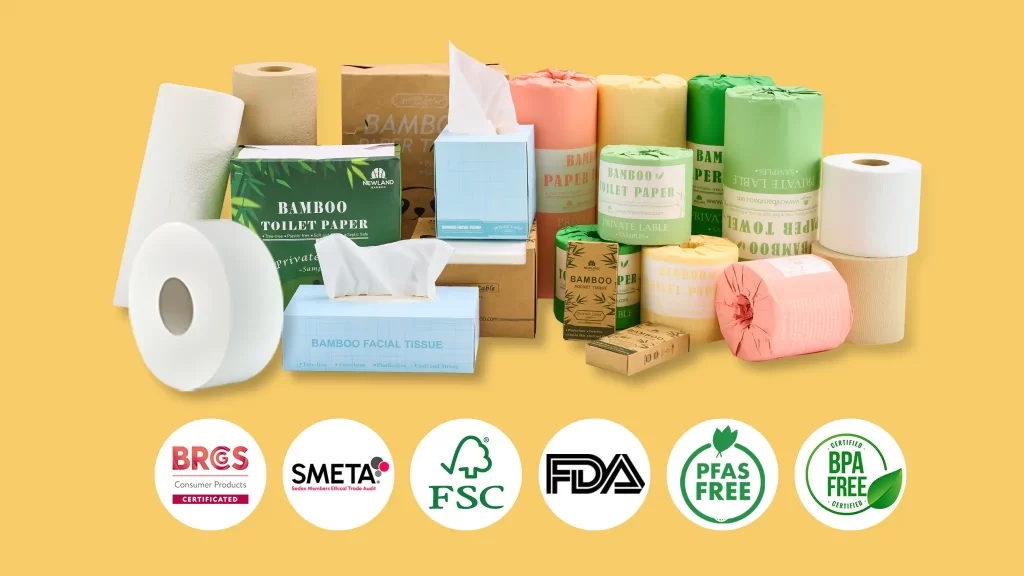
Una marca de papel higiénico de bambú al estilo «Save Trees» puede parecer sencilla a simple vista, pero el plan de producto que hay detrás tiene muchos aspectos que tener en cuenta.
El comprador debe confirmar la promesa de marca, las especificaciones del papel, el formato de envase, la redacción de las declaraciones de producto, el diseño de la caja, las necesidades de cada canal y la coherencia de los pedidos recurrentes antes de iniciar la producción en serie.
Una marca inspirada en «Save Trees» no debería empezar por copiar el nombre, la oferta de suscripción o el argumento sobre el bambú.
Debería partir de la garantía de suministro que respalda el producto.
¿Se puede repetir la misma especificación de bobina?
¿Permite el plan de envases de cartón la entrega a domicilio de productos a granel o el reabastecimiento B2B?
¿Puede el embalaje proteger el papel y, al mismo tiempo, cumplir con el compromiso de sostenibilidad?
¿Se puede documentar la afirmación sobre el bambú antes de que se apruebe el diseño gráfico?
¿Puede el comprador gestionar el suministro mediante suscripción, a través de Amazon, al por mayor o por canales mixtos sin modificar el fichero del producto?
Newland Bamboo Apoya a los compradores en el desarrollo de papel higiénico de bambú y productos de papel de uso doméstico relacionados para marcas blancas, venta al por mayor, comercio electrónico, venta al por menor, hostelería y suministro en envases mixtos.
En el caso de un plan de producto al estilo «Save Trees», el análisis práctico debería abarcar el origen del bambú, el número de capas, el gramaje (GSM), el número de láminas, el diámetro del rollo, el formato de embalaje, el embalaje en cajas de cartón, la cantidad mínima de pedido (MOQ), la carga mixta, la justificación de las especificaciones, la aprobación de muestras y la consistencia en los pedidos posteriores.
La cuestión no es imitar la imagen pública de otra marca.
Lo importante es elaborar un plan de producto y suministro lo suficientemente sólido como para respaldar la promesa que haces a tus clientes.
Envíenos información sobre su mercado objetivo, el posicionamiento del producto, las especificaciones del rollo, el formato del envase, la cantidad estimada, las instrucciones de embalaje, los requisitos de documentación y el calendario previsto para el pedido. Newland Bamboo puede ayudarle a preparar una muestra práctica y a analizar el presupuesto antes de que comience la producción en serie.