Introduction: This Is a Matching Decision, Not a Value Debate
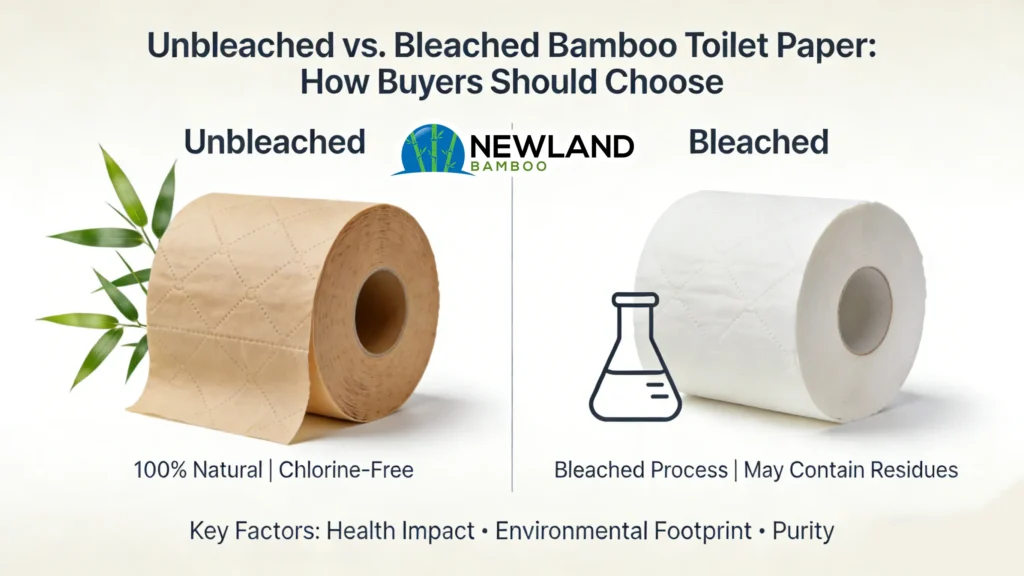
Discussions around bamboo toilet paper are often framed as a simple debate: unbleached versus bleached, natural versus standard.
In real-world B2B sourcing, this framing is misleading.
For wholesalers, private-label brands, and project buyers, the decision is rarely about ideology. It is about market positioning, usage scenarios, and how easily a product fits into an existing business system.
Both unbleached and bleached bamboo toilet paper exist for a reason. Each serves a different commercial role, and understanding that role is the key to making a confident, low-risk decision.
Quick Definitions: Aligning on Terms First
Unbleached Bamboo Toilet Paper
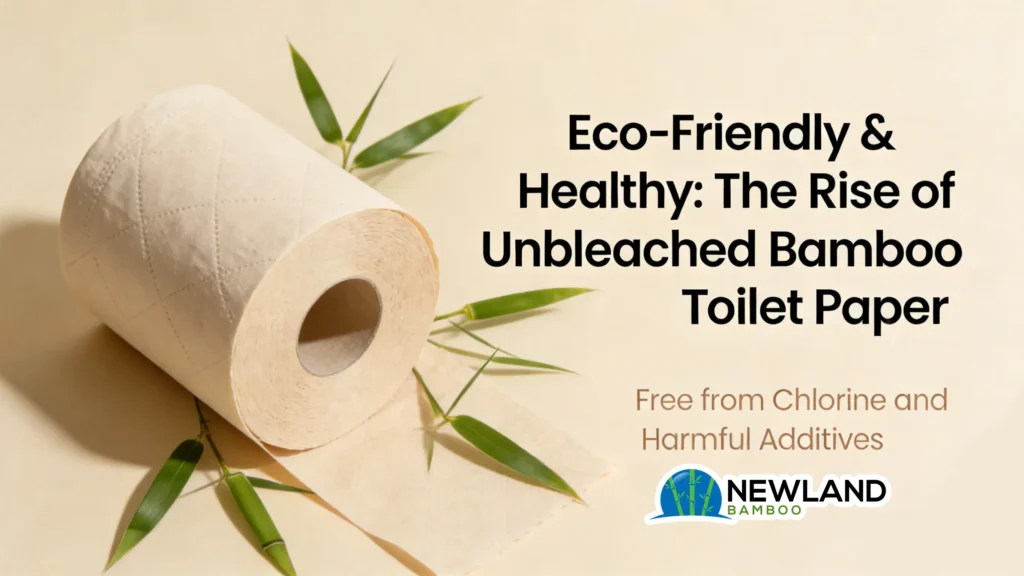
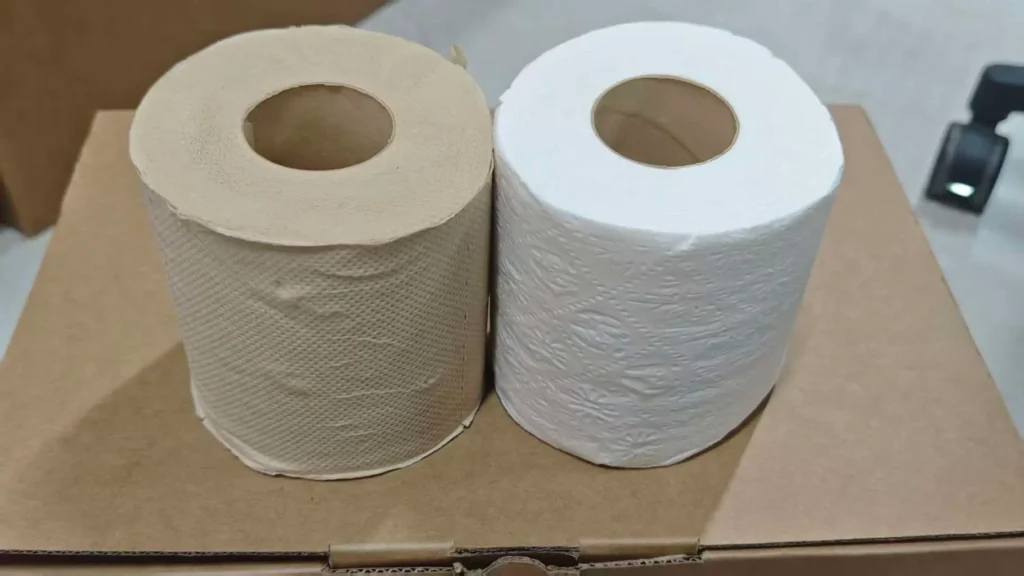
Retains the natural color of bamboo pulp, typically light beige or brown. Often used in products positioned around natural appearance, gentle use, or brand storytelling.
Bleached Bamboo Toilet Paper
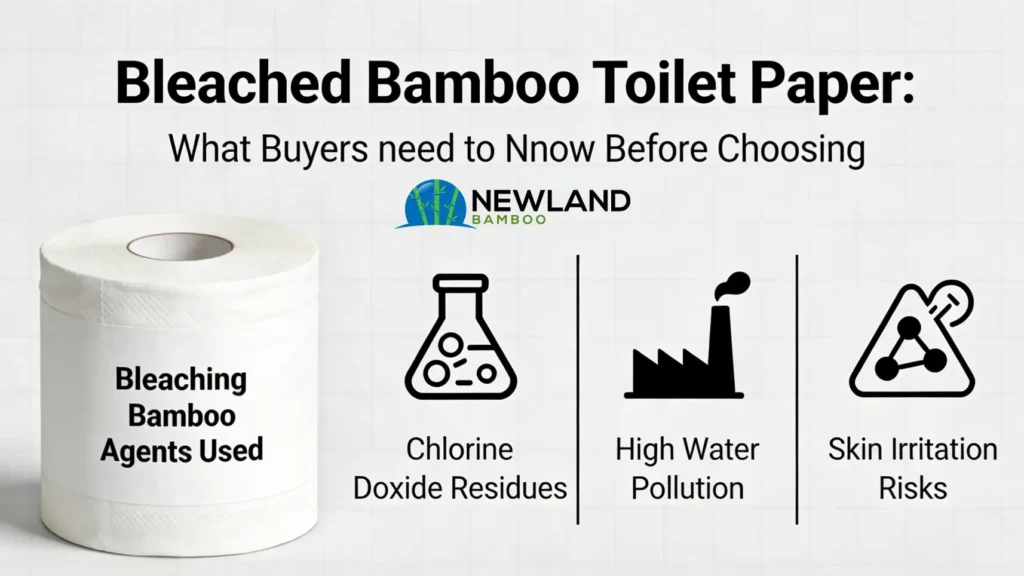
Processed to achieve a uniform white appearance. Commonly used in hotels, retail programs, OEM projects, and large-scale supply chains where standardization matters.
These are not quality rankings. They are market roles.
Core Comparison: Key Differences at a Glance
Bleached vs. Unbleached Bamboo Toilet Paper
This table is designed to help buyers quickly understand how each option fits different commercial contexts.
| Comparison Aspect | Bleached Bamboo Toilet Paper | Unbleached Bamboo Toilet Paper |
|---|---|---|
| Appearance | Uniform white, visually familiar | Natural beige or light brown tone |
| Market Positioning | Mainstream, commercial-friendly | Differentiated, value-driven |
| Typical Use Cases | Hotels, retail programs, OEM projects | Natural brands, baby & sensitive-skin lines |
| Consumer Perception | Clean, standard, widely accepted | Natural, minimal, eco-oriented |
| Branding Effort | Low (little explanation needed) | Medium to high (storytelling required) |
| Supply Consistency | Easier to standardize at scale | More dependent on raw material batches |
| Production Scalability | Highly scalable for large volumes | Better suited for controlled or premium runs |
| Price Positioning | Cost-efficient for volume orders | Often positioned at a premium |
| Buyer Profile | Wholesalers, distributors, long-term projects | Brand builders, niche retailers |
| Typical Bleaching Process | Mainly produced using Elemental Chlorine-Free (ECF) processes, with premium lines offering Totally Chlorine-Free (TCF) options. | No chemical bleaching for whitening; retains the natural color of pulp through physical processing. |
How to read this table:This comparison shows fit, not superiority.
Understanding the Technology:The choice of bleaching process (like ECF or TCF) directly impacts the environmental profile and consistency of bleached paper. For a detailed technical comparison of all mainstream and eco-friendly bleaching methods, read our comprehensive guide:A Complete Guide to Bamboo Pulp Bleaching Methods
Market Roles Explained: Why Both Options Exist
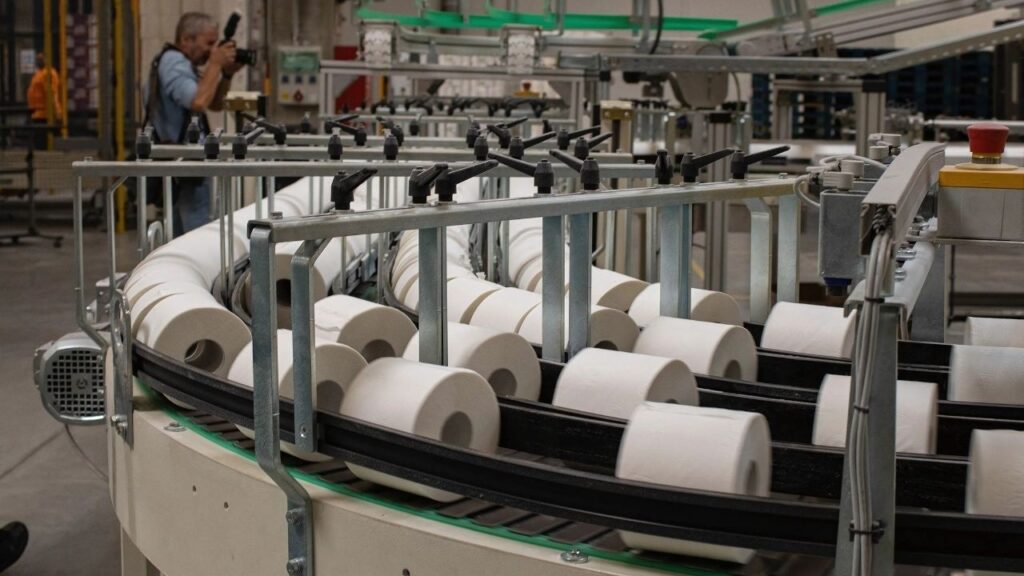
Bleached bamboo toilet paper remains the default choice in most markets because it feels familiar and safe. Guests recognize it, retail customers rarely question it, and operations teams prefer its consistency.
Unbleached bamboo toilet paper plays a different role. It is most effective where visual difference supports a message—for example, natural living brands, premium lines, or products where “less processing” is part of the value proposition.
In many mature businesses, the smartest strategy is not choosing one over the other, but using each where it performs best.
Buyer Scenarios: Which Option Fits Your Project?
- Hotels, offices, public facilities Bleached bamboo toilet paper is usually the most stable and trouble-free option, as it aligns with guest expectations and existing operational standards.
- Private-label and OEM retail programs Bleached products integrate more easily into standardized packaging, pricing structures, and long-term supply planning.
- Natural lifestyle or sustainability-focused brands If your brand focuses on natural positioning or sensitive-skin use cases, you can explore our unbleached bamboo toilet paper guide for a deeper look at how natural-color tissue is commonly positioned in premium and eco-focused product lines.
- Baby care or sensitive-skin positioning Unbleached options are often easier to explain as gentle and minimal, especially when product appearance supports a “less processed” message.
For buyers sourcing at scale or serving mainstream markets, our **bleached bamboo toilet paper guide** provides additional context on why white bamboo tissue remains the standard choice in commercial and retail programs.
Buyer-Oriented Decision Table: A Practical View
Which Option Fits Your Project Best?
Use this table to align product choice with your actual business priorities.
| Buyer Priority | Recommended Option | Reason |
|---|---|---|
| Large-volume, stable supply | Bleached | Easier batch consistency and predictable lead times |
| Minimal consumer education | Bleached | White appearance matches existing expectations |
| Sustainability storytelling | Unbleached | Natural color supports brand narrative |
| Baby or sensitive-skin branding | Unbleached | Easier to communicate “gentle & minimal” |
| Mixed retail channels | Bleached | Broader acceptance across markets |
| Premium niche positioning | Unbleached | Supports differentiation and higher margins |
Compliance and Safety: What Really Matters
In practice, both bleached and unbleached bamboo toilet paper can meet the requirements of major export markets when produced by reliable suppliers.
For buyers, the real focus should be:
- Supply stability
- Clear product positioning
- Consistent quality history
Industry bodies such as the Confederation of European Paper Industries (CEPI) emphasize that sustainability and compliance depend on sourcing and process control—not on color alone. Academic research, including studies shared by North Carolina State University, also highlights that environmental outcomes are influenced by the entire production system.
Common Buyer Mistakes When Comparing the Two
- Equating color with safety
- Using personal preference instead of market expectation
- Assuming one option must replace the other
For B2B buyers, the right choice is rarely about unit price alone, but about how well the product supports market positioning and long-term sales performance.
A Practical Toolkit for Procurement Managers
Ready-to-use talking points, risk prevention tips, and quick checks
At this point, most buyers understand which option fits their project.
The real challenge is often how to explain that choice internally and externally, and how to avoid unnecessary problems later.
1. Ready-to-Use Talking Points
If you recommend bleached bamboo toilet paper:
“This is the industry-standard choice. It ensures a consistent, clean appearance across all locations, aligns with guest expectations, and integrates smoothly into our existing supply and quality control systems.”
If you recommend unbleached bamboo toilet paper:
“We selected unbleached bamboo toilet paper because the natural color itself communicates minimal processing. It supports our premium or eco-focused positioning and helps us tell a clearer brand story.”
These statements can be used directly in internal reports, client proposals, or supplier discussions.
2. Risk Prevention: Avoiding Complaints Before They Happen
A common concern with unbleached products is:
“Will people think something is wrong because the paper isn’t white?”
The solution is simple and effective:
educate first, not after.
On packaging, product pages, and internal training materials, clearly state:
“Natural bamboo pulp color, unbleached.”
This shifts the conversation from
“Why is this paper not white?”
to
“Oh, this is a deliberate, natural choice.”
3. Three Simple Arrival Checks Anyone Can Do
No lab tests, no technical equipment—just practical checks used by many experienced buyers:
- Pinch Test Squeeze the paper and release it. Good-quality pulp recovers quickly and feels resilient, not flat.
- Light Test Hold the sheet up to light. Even fiber distribution usually indicates stable production quality.
- Water Test Place a sheet in water and gently stir. Paper that disperses evenly tends to contain fewer heavy additives and is more plumbing-friendly—something facility teams appreciate.
Choosing the Right Bamboo Toilet Paper with Newland Bamboo
At Newland Bamboo, we support both bleached and unbleached bamboo toilet paper programs, helping buyers match products to real market needs rather than forcing a single solution.
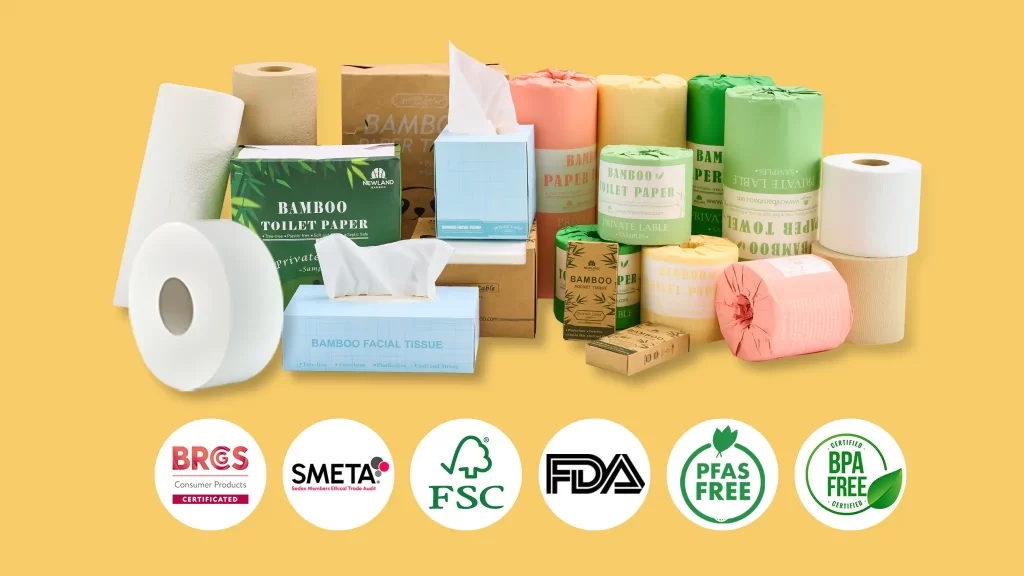
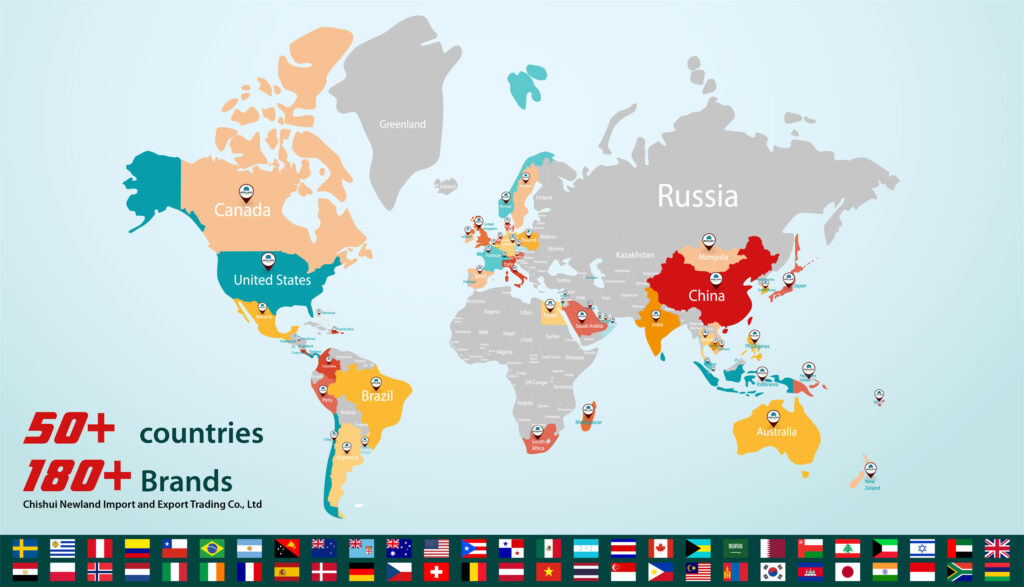
We work with wholesalers, private-label brands, and OEM partners across North America, Europe, Australia, and Asia-Pacific, supplying bamboo tissue products designed for consistent quality and scalable production.
Whether you are building a mainstream line, a premium niche product, or a balanced portfolio, our role is to help you make the choice that works in practice.
👉 Send an inquiry to discuss wholesale options, positioning needs, and samples.
Conclusion: Matching Beats Choosing Sides
Bleached and unbleached bamboo toilet paper are not competing answers to the same question. They are tools designed for different commercial situations.
The strongest sourcing decisions are made by understanding:
- Who the end user is
- Where the product will be sold
- What expectations already exist
When buyers focus on matching products to real-world needs, both options can play a valuable role—individually or together—in a successful bamboo tissue program.
Frequently Asked Questions About Unbleached vs. Bleached Bamboo Toilet Paper
-
Is unbleached bamboo toilet paper less hygienic than white paper?
No. Hygiene is determined by production standards and high-temperature drying, not by color. Unbleached bamboo toilet paper simply keeps the natural color of the pulp and can meet the same hygiene and safety requirements as bleached products when produced by reliable manufacturers.
-
Will customers complain if the toilet paper is not white?
They usually won’t—as long as expectations are set clearly. Most complaints happen when users are not informed. Clear wording such as “Natural bamboo pulp color, unbleached” on packaging or product pages helps turn a potential question into a feature.
-
Which option is safer for baby or sensitive-skin positioning?
Both options can be safe when properly produced, but unbleached bamboo toilet paper is often easier to communicate for sensitive-skin or baby-focused products because its natural appearance aligns with a “gentle and minimal” message.
-
Why is unbleached bamboo toilet paper sometimes more expensive?
The price difference is usually related to positioning, not basic quality. Unbleached products are often used in premium or niche lines where visual differentiation and storytelling support higher retail pricing.
-
Is bleached bamboo toilet paper still considered eco-friendly?
Yes. Many bleached bamboo toilet paper products are produced using modern, controlled processes and sustainable bamboo sources. Environmental impact depends more on sourcing, production management, and scale than on color alone.
-
Can both options be used in the same product portfolio?
Absolutely. Many mature brands and distributors use bleached bamboo toilet paper for mainstream or commercial channels, while offering unbleached versions for premium, eco-focused, or specialty lines.
-
Is there a simple way to check quality after goods arrive?
Yes. Buyers often use three basic checks:
1.Pinch test for resilience
2.Light test for even fiber distribution
3.Water test to see how the paper dispersesThese checks don’t replace lab testing, but they are useful for quick on-site evaluation.