
Why this matters now
Private label in the U.S. is no longer just a lower-cost alternative. It has become a more strategic retail tool—one that can strengthen shopper trust, give retailers more control over category direction, and help build long-term brand value through everyday essentials. In 2025, U.S. store-brand sales reached $282.8 billion, up 3.3% year over year, while national brands grew 1.2%. That gap suggests retailer-owned brands are moving beyond price-led substitution and taking on stronger roles in category differentiation, assortment control, and long-term value creation.
That shift matters in tissue. Toilet paper and paper towels are high-frequency household essentials, which makes them unusually important in private-label development. Once a retailer has a working core tissue line, the next strategic question is no longer whether private label can work, but whether the portfolio needs another layer—such as recycled fiber or bamboo—to improve shopper signaling, strengthen sustainability positioning, and create a more future-facing role inside the category.
Public retail signals suggest that bamboo is usually not the starting point of private-label tissue strategy. Retailers typically build a mainstream tissue line first, then add a more visible sustainability layer once the core program is already working. Amazon illustrates this clearly through the sequence of its mainstream tissue structure and Amazon Aware; Target shows a similar pattern through up&up and Everspring; and Member’s Mark shows that the timing of this shift can vary by market. Amazon officially introduced Amazon Aware in 2021, Target officially introduced [Everspring] in April 2019, and Walmart’s Sam’s Club history timeline identifies Member’s Mark as debuting in 1998.
These brands already work for four reasons
Retailer-owned tissue brands do not succeed simply because they are cheaper or because they sit on a large retailer’s shelf. They usually work across four levels at the same time:
- They fit sourcing and responsibility logic
- They make sense to shoppers quickly
- They play a clear role in category strategy
- They create value for the retailer itself
That four-part structure is what makes mature private-label tissue programs difficult to displace. It is also what makes them strong foundations for future extensions.
What the current retail landscape shows
Before discussing bamboo in strategic terms, it helps to compare the public signals from several visible retailer-owned or platform-owned tissue paths.
Table 1. Public signals from retailer-owned tissue programs across markets
| Retailer / Platform | Market | Public mainstream tissue path | Public sustainability layer | Public material disclosure signal | Strategic implication |
|---|---|---|---|---|---|
| Amazon | U.S. | Presto!, Solimo, and Amazon Basics already form an established mainstream private-label tissue structure | Amazon Aware adds a bamboo-led line | Amazon Basics and Presto! disclose FSC-certified fiber sourcing, but not exact pulp furnish; Amazon Aware explicitly states bamboo | Bamboo appears as a second-layer extension, not the starting point of Amazon’s tissue strategy |
| Target | U.S. | up&up functions as a mature mainstream owned-brand tissue line | Everspring adds a 100% recycled tier | up&up does not publicly specify exact pulp furnish; Everspring explicitly states 100% recycled | Sustainability enters through layering, not full replacement of the core line |
| [Member’s Mark] | U.S. | Publicly visible tissue lines remain mainstream performance-value toilet paper | No clearly visible bamboo flagship line in current U.S. public pages | Exact pulp furnish is not publicly specified on current product pages | The core line remains conventional in the U.S. market |
| Member’s Mark | China | Publicly visible conventional toilet tissue remains in the assortment | A bamboo-fiber unbleached toilet paper line is also publicly visible | The bamboo line is explicitly labeled as bamboo-fiber / unbleached | Sam’s China suggests that bamboo can enter private label as a localized strategic layer |
| Kirkland Signature | U.S. / U.K. / Asia | Mainstream club-retail tissue remains the core path | No clear bamboo flagship line found in current public pages | Public material disclosure varies by market: FSC Mix in the U.S., “virgin cellulose pulp + recycled pulp” in the U.K., and different wording in Asia | Mature retailer-owned tissue programs do not follow one single material route across all markets |
Source note: public positioning is based on official brand pages, product pages, or official retail pages currently visible online. Amazon launched Amazon Aware in 2021, while its bamboo toilet paper SKU pages show a first-available date of May 11, 2023. Target launched Everspring in April 2019. Public U.S. Sam’s Club pages show mainstream Member’s Mark tissue lines, while public China-facing retail pages show both conventional Member’s Mark toilet paper and a bamboo-fiber unbleached line. Kirkland’s public material wording also varies by market, including “virgin cellulose pulp + recycled pulp” in the U.K. and FSC Mix in the U.S. public listings.
The comparison above suggests that retailer-owned tissue programs are not moving in one uniform material direction. In most cases, retailers first build a stable mainstream tissue line and only later add a differentiated sustainability layer such as recycled fiber or bamboo. Amazon illustrates this clearly: its mainstream private-label tissue structure came first, while Amazon Aware’s bamboo toilet paper appeared later as a more explicit sustainability-led tier. Target shows a similar logic through up&up and Everspring. Member’s Mark adds an important market-level nuance: the public U.S. and Mexico lines remain mainstream, while public China-facing retail pages already show a bamboo-fiber unbleached variant. In other words, bamboo is currently more visible as a strategic extension than as the default foundation of retailer-owned tissue.
A broader global pattern is already visible
Table 2. Global public signals from retailer-owned tissue programs outside the U.S.
| Retailer / Platform | Region / Market | Public mainstream tissue signal | Public sustainability-tier signal | What this suggests |
|---|---|---|---|---|
| [Ocado] | U.K. | Own-label toilet tissue remains part of a broader mainstream grocery tissue assortment | Ocado publicly sells 100% Recycled Paper Toilet Tissue | Sustainability layering is visible through recycled fiber in online grocery private label |
| [Tesco] | U.K. | Tesco continues to sell mainstream own-label toilet tissue formats | Tesco also publicly sells 100% recycled toilet tissue under its own retail label | Mainstream tissue and recycled tiers can coexist within the same retailer-owned structure |
| dm / Sanft & Sicher | Germany | dm maintains a mainstream private-label tissue program under Sanft & Sicher | Public recycled toilet paper positioning is clearly visible, including wording around 100% hygienic recycled fibers | Recycled fiber can function as a mainstream responsibility signal, not only as a niche sustainability SKU |
| [LOHACO / ASKUL] | Japan | Platform-led original tissue lines include conventional paper options | Publicly visible original lines include both conventional pulp-based and recycled-paper options | Platform-owned tissue programs can support multiple material tiers within the same ecosystem |
| [Coupang] | South Korea | Platform tissue offers still emphasize natural-pulp positioning in public retail environments | No clearly visible bamboo-led mainstream shift in current public signals | Private-label expansion does not automatically mean immediate bamboo adoption |
| Woolworths | Australia | Essentials tissue lines remain part of a mainstream grocery tissue offer | Woolworths publicly lists recycled FSC toilet paper under Essentials | Mainstream grocery tissue and sustainability-led variants can coexist in a mature retail market |
| Coles | Australia | Coles continues to show mainstream toilet tissue lines with softness-and-strength positioning | Public retail pages also show recycled toilet tissue options | Retailer-owned tissue can layer recycled formats without replacing the core mainstream line |
Source note: this table is based on current public product and category pages from Ocado, Tesco, dm, ASKUL, Woolworths, and Coles, plus current public retail visibility from Coupang’s platform environment.
The same layering logic is increasingly visible outside the U.S. In Europe, sustainability-led tissue tiers are already appearing through recycled fiber under retailer-owned or retailer-facing lines. In the U.K., Ocado publicly sells an own-label 100% Recycled Paper Toilet Tissue, while Tesco also publicly sells 100% recycled toilet tissue under its own retail label. In Germany, dm’s Sanft & Sicher recycled toilet paper is explicitly described as being made from 100% hygienic recycled fibers, showing that recycled content can function as a mainstream responsibility signal rather than a niche experiment.
Across Asia, the pattern is similarly layered rather than uniform. In Japan, ASKUL publicly sells original toilet paper lines that include pulp-based PEFC-certified paper, while broader marketplace visibility also shows recycled-paper options in the same ecosystem. In South Korea, public tissue offers in Coupang’s retail environment still emphasize natural-pulp positioning rather than a clearly bamboo-led mainstream shift.
Australia supports the same conclusion. Woolworths publicly lists Essentials toilet tissue described as recycled FSC toilet paper, while Coles publicly shows both mainstream own-label toilet tissue and recycled toilet tissue options. That suggests mainstream private-label tissue and sustainability-led extensions can coexist in mature grocery markets without forcing bamboo to become the default base line. Taken together, these signals broaden the argument beyond the U.S.: retailer-owned tissue programs are becoming more layered globally, with conventional lines still carrying volume while recycled—and in some markets bamboo—begins to take on a more strategic secondary role.
Search visibility suggests bamboo tissue is no longer a niche concept
As shown in the Google Trends chart above, “Bamboo Toilet Paper” stayed at a relatively low level of visibility for many years, then began to rise more clearly after 2019, spiked around 2020, and—most importantly—did not return to its earlier baseline. Instead, the category remained on a higher level of search visibility and appears to be climbing again into 2024 and 2025. Google Trends does not report absolute search volume, but it is still useful for showing how interest changes over time by location and popularity. That makes it a strong directional signal that bamboo tissue is becoming easier to discover, easier to understand, and more commercially legible as a product category.
Table 3. Google Trends signal for “Bamboo Toilet Paper”
| Search term | Scope | Time range | Visible trend pattern | What this suggests |
|---|---|---|---|---|
| Bamboo Toilet Paper | Global | 2004–present | Search interest stayed very low for many years, rose more clearly after 2019, spiked around 2020, then remained on a higher base before climbing again into 2024–2025 | Bamboo toilet paper is no longer a marginal search concept; it has become a more visible and increasingly discoverable product category |

Note: Google Trends is a normalized index rather than an absolute search-volume report. It is most useful here as a directional visibility signal, not as a standalone measure of market size.
Bamboo tissue is growing as a real market, not just a sustainability idea
Search visibility matters, but category interest becomes more credible when it is matched by market growth. Public market research suggests that bamboo tissue is no longer just a symbolic sustainability product. QYResearch estimates the global bamboo toilet paper market at US$125 million in 2024 and projects it to reach US$192 million by 2031, implying a 6.7% CAGR. More broadly, Mordor Intelligence reports that bamboo plus other alternative fibers in toilet paper are forecast to grow at a 4.98% CAGR to 2031. Together, these signals suggest that alternative-fiber tissue is becoming a lasting part of category development rather than a short-lived niche.
Table 4. Public market signals supporting bamboo tissue growth
| Signal type | Public evidence | What it supports |
|---|---|---|
| Bamboo toilet paper market growth | Global market estimated at US$125 million in 2024 and projected to reach US$192 million by 2031 | Bamboo tissue is growing as a measurable commercial category |
| Alternative-fiber momentum | Bamboo plus other alternative fibers are forecast to grow at 4.98% CAGR to 2031 | Alternative-fiber tissue is becoming a lasting part of category development |
Source note: market-size and growth signals are based on QYResearch and Mordor Intelligence.
Bamboo tissue is now supported by a broader visible brand field
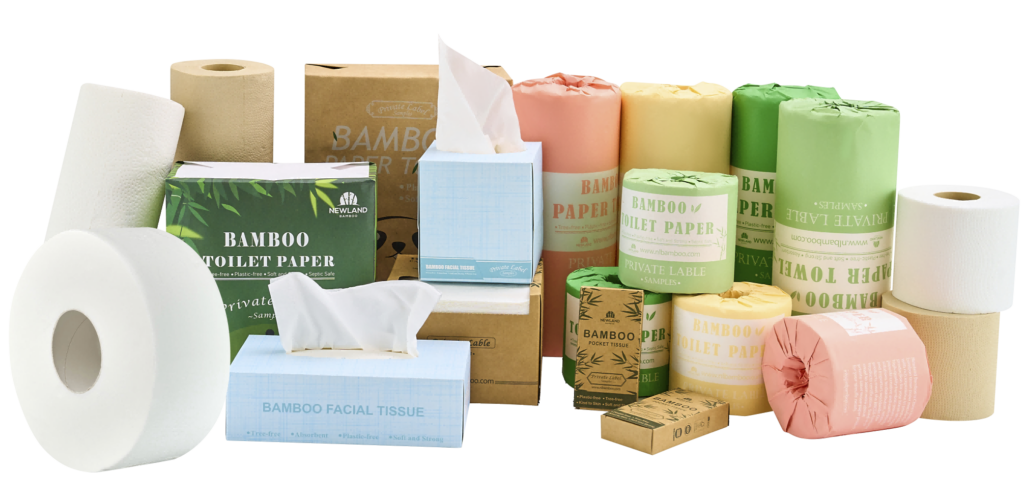
Bamboo tissue becomes more commercially credible when category growth is supported by visible brand development. In the U.K., Who Gives A Crap reported £45.5 million in FY24 revenue, up 17% year over year, according to publicly cited 2025 reporting. The Cheeky Panda shows a similar direction of travel. In 2025, NIQ described the brand as having reached eight-figure turnover within nine years of its founding. These signals matter because they suggest that bamboo tissue is no longer supported only by sustainability messaging. It is already capable of producing brands with meaningful scale, repeat-purchase potential, and broader retail relevance.
At the same time, bamboo tissue is no longer represented by only one or two isolated names. Public online retail environments show multiple bamboo-focused brands active in the same category space, including Who Gives A Crap, The Cheeky Panda, Caboo, Betterway, and Reel. That does not provide audited category-wide sales totals, but it does show that bamboo tissue now exists as a broader branded field rather than as a single-brand niche. For category analysis, that distinction is important: a product becomes more strategically relevant when it is visible not only in market reports, but also through multiple active brands competing within the same commercial space.
Table 5. Selected public brand signals in bamboo tissue
| Brand | Public signal | What it suggests |
|---|---|---|
| Who Gives A Crap | FY24 U.K. revenue reached £45.5 million, up 17% year over year | Bamboo tissue can scale beyond niche positioning |
| The Cheeky Panda | NIQ described the brand in 2025 as having reached eight-figure turnover within nine years | Bamboo tissue can support meaningful branded scale |
| Who Gives A Crap / The Cheeky Panda / Caboo / Betterway / Reel | Multiple bamboo toilet paper brands are publicly visible in the same online retail category environment | Bamboo tissue is no longer represented by only one or two isolated brands |
Note: brand-growth signals are based on public company coverage and NIQ reporting. Multi-brand shelf visibility is treated here as category-presence evidence rather than audited brand-wide sales totals.
Part One: Why these retailer-owned tissue brands already succeed
1. They work at the sourcing and policy level
A strong private-label tissue line is not only a product offer; it also fits into a retailer’s broader sourcing and responsibility framework. Amazon Aware uses visible product-level cues such as bamboo, FSC certification, and plastic-free packaging. Target’s Everspring line turns recycled content into a clear public message. Kirkland’s public product wording varies by market, but it still shows that tissue can sit within larger retailer conversations around sourcing, certification, and product responsibility.
That matters because these tissue paths can be explained internally and externally in ways that go beyond price. They can live inside procurement logic, responsibility logic, and broader corporate storytelling. In other words, they are easier for a retailer to justify, describe, and develop within a modern sourcing environment.
2. They work at the shopper level
Successful retailer-owned tissue brands also make sense quickly to shoppers. Kirkland’s logic is highly legible: reliable quality, strong value, and bulk convenience. Member’s Mark combines value with familiar performance language such as softness, strength, absorbency, and sheet count. Amazon Aware uses a visible material story and sustainability cues that make the reason for the product easy to understand.
This is critical. A tissue brand does not succeed because shoppers love theory. It succeeds because shoppers can quickly understand why the product belongs in their cart. That may come from value, performance, familiarity, pack economics, or visible material differentiation—but the purchase reason has to be clear.
3. They work at the category-strategy level
A successful private-label tissue brand does not simply exist. It plays a defined role inside the assortment.
- Kirkland Signature functions as a core value line and repeat-purchase backbone in a club-retail environment.
- Member’s Mark functions as a member-centered performance-value line with room for market-by-market extension.
- Amazon Aware functions as a differentiated, material-led, sustainability-forward line rather than a mainstream value line.
- Everspring functions as a recycled-material layer that sits beside, rather than replaces, the mainstream line.
This is why these brands matter strategically. They are not random products. They help define how the retailer plays the tissue category.
4. They work at the retailer-value level
Ultimately, mature private-label tissue brands succeed because they create value for the retailer itself. That value may include stronger category control, more direct control over product and packaging decisions, stronger shopper loyalty, and a clearer role for the retailer’s own brand in everyday essentials.
For a retailer, that is the real test. A tissue line becomes strategically important when it is no longer just “a cheaper option,” but an asset the company uses to build trust, structure the category, and create value beyond the individual transaction.
Part Two: Why membership-based retailers are especially well positioned

This advantage is not distributed evenly across all retail models. It becomes stronger in membership-based retail.
First, membership retailers already operate with a more stable repeat-purchase base. Tissue is a replenishment category, not a one-time novelty purchase. That makes loyal-member ecosystems especially well suited to retailer-owned tissue programs, because the business case depends not just on trial, but on repeat purchase.
Second, membership retail aligns naturally with bulk-pack economics. Large pack sizes, predictable household consumption, and stock-up behavior all fit the commercial logic of toilet paper and paper towels. That matters because mainstream tissue success often depends on scale, trust, and replenishment discipline before it depends on any single material story.
Third, membership-based retailers tend to have stronger control over brand architecture. They are often better positioned to define what belongs in the core line, what belongs in a premium-value layer, and what belongs in a more differentiated or sustainability-forward extension.
[Member’s Mark] is especially revealing in this respect. Public U.S. and Mexico-facing lines remain mainstream, while China-facing retail pages already show a bamboo-fiber unbleached option. That suggests membership retail can introduce a second-layer material strategy market by market, rather than forcing one global tissue model all at once. Sam’s Club’s own history also reflects this international market structure, with Mexico and China developing within the broader Member’s Mark system but not necessarily at the same category speed.
This is why bamboo matters more in membership retail than it might in a fragmented promotional environment. The retailer already has the customer relationship, the pack-size logic, and the private-label infrastructure. Bamboo does not have to create the system from zero. It only has to add something useful to a system that already works.
Part Three: What bamboo could add to that success model
Once the existing success model is clear, the bamboo question becomes much more useful. Bamboo is not most valuable when it is treated as a total reset. It becomes more valuable when it is treated as an addition to an already working model.
The key question is not: Can bamboo replace mainstream tissue?
The better question is: What can bamboo add to a tissue program that already succeeds across sourcing logic, shopper logic, category role, and retailer value?
Why bamboo is usually added after the core line, not before it
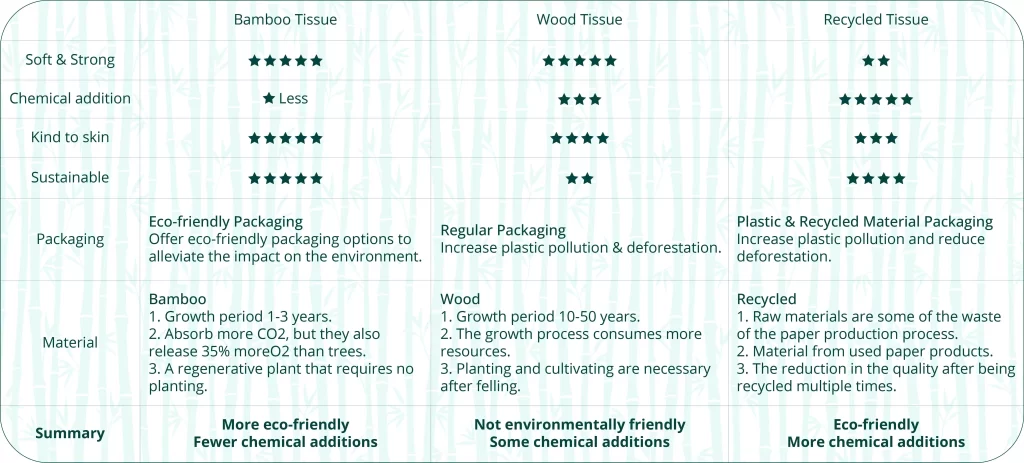
Public retail signals suggest that bamboo usually enters private-label tissue programs after the mainstream line is already working. Retailers and platforms first build volume through familiar value and performance structures—pack size, softness, strength, absorbency, and repeat purchase. Only then do they add a more visible sustainability layer. Amazon’s tissue structure shows this sequence clearly, while Target’s recycled tier supports the same logic from a different material route. Member’s Mark shows that this process can also vary by market: the public U.S. line remains mainstream, while public China-facing retail pages already show a bamboo-fiber unbleached option. This matters strategically because it reframes bamboo: not as a category reset, but as a way to deepen assortment architecture, strengthen sustainability signaling, and create a new role inside an existing tissue program.
1. At the sourcing and policy level, bamboo can make the story more visible
Mature private-label retailers already have sourcing logic. Bamboo does not create that logic from zero. What it can do is make that logic more visible and easier to communicate. Labels such as bamboo, FSC, and plastic-free packaging can make a retailer’s sustainability or responsible-sourcing language more concrete at the product level. Amazon Aware is a visible example of this kind of product-level signaling.
That does not mean bamboo automatically creates a better strategy. It means bamboo may help a retailer express an existing strategy more clearly.
2. At the shopper level, bamboo can create a clearer reason to notice the product
Many shoppers will never read a sourcing framework, but they can quickly understand cues such as bamboo, FSC certification, and plastic-free packaging. That makes bamboo useful as a shopper-facing signal. It may attract more attention at first trial than a conventional line whose value is communicated mainly through pack size, softness, and price-value logic.
But bamboo does not remove the normal rules of tissue retail. It may help create initial interest, but repeat purchase still depends on performance, price-value balance, and daily-use credibility.
3. At the category-strategy level, bamboo is most useful as a second layer
This is where bamboo becomes most strategically interesting.
A mature tissue program already has a successful core role. Bamboo matters when it adds a new role, not when it simply changes the material inside the same role. For example, bamboo may help a retailer build:
- a premium-value tier
- a sustainability-led extension
- a member-facing differentiated line
- a controlled innovation layer
- a future-facing private-label signal
That is why bamboo should not be framed first as replacement. Its strongest strategic use is often layering. It gives the retailer another way to structure the category without forcing the core value line to stop doing its job.
4. At the retailer-value level, bamboo can extend—not replace—the business case
For the retailer itself, bamboo may add a more future-facing brand language, stronger private-label layering, a clearer innovation path, and better tools for serving a more selective shopper segment.
This matters because retailer-owned brands stay strong by continuing to feel relevant. Bamboo can help a retailer evolve an already successful tissue business into something more layered, more intentional, and more strategically controllable. Its value comes not from novelty alone, but from giving the retailer another useful lever inside the category.
Why this matters even for retailers that have not launched bamboo yet
This is the final step in the logic. If bamboo can add meaning to an already successful private-label model, then retailers that have not yet launched bamboo may still have good reasons to evaluate it now.
Not because they should abandon a successful core line, but because they may now be in a position to ask a more advanced question:
Does our tissue portfolio need another strategic layer?
For retailers with a mature, successful core line, that is a very different question from “Should we change everything?” It opens the door to more realistic evaluations:
- Could bamboo work as a limited extension?
- Could it function as a premium-value subline?
- Could it serve a shopper segment not fully addressed by the core line?
- Could it help the private label feel more modern or more intentional?
That is why the bamboo conversation matters even for retailers that have not launched it yet. It is not a demand to reset the category. It is an invitation to examine whether the next stage of private-label growth may require a more layered model than the current one.
Final thought
The most useful way to understand bamboo tissue is not as a standalone trend and not as an automatic replacement for mainstream private-label tissue. It is more useful to understand it in relation to what already works.
Successful retailer-owned tissue brands already succeed because they align four things at once: sourcing logic, shopper understanding, category role, and retailer value. Bamboo matters when it strengthens those same four dimensions—by making sustainability signals more visible, shopper cues easier to read, assortment roles more layered, and private-label evolution more strategically useful.
So the real opportunity is not to ask whether bamboo can create success from zero. The real opportunity is to ask whether bamboo can help a mature private-label tissue business become more layered, more future-facing, and more valuable to the retailer that owns it.
Build your bamboo tissue program with Newland Bamboo
Launching a bamboo tissue line is not only about choosing a sustainable material. It is about building the right product program for your retail strategy.
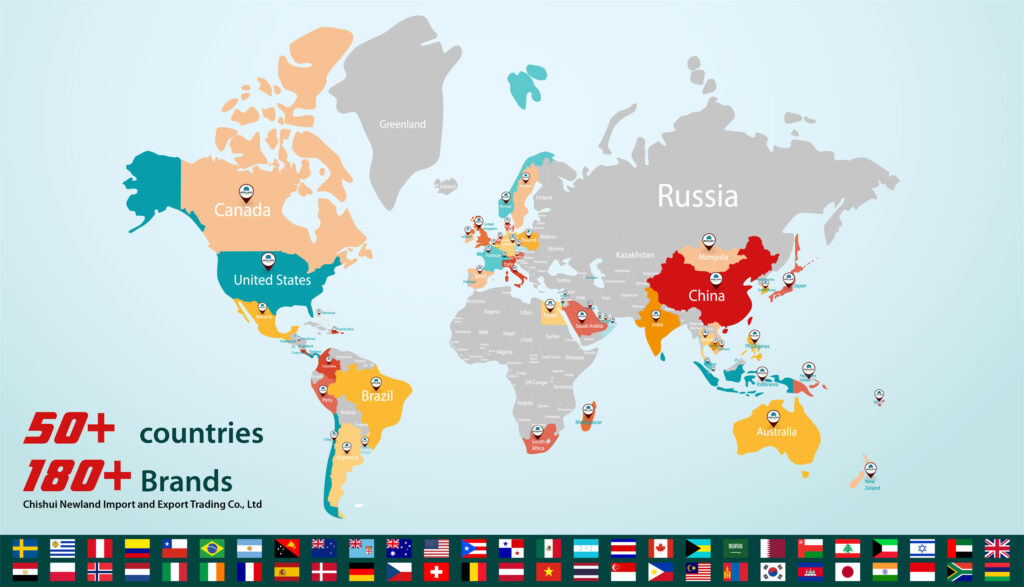
At Newland Bamboo, we combine 20+ years of manufacturing experience, a 30,000+ m² factory base, and production capacity of 400+ containers per month to support buyers developing bamboo tissue for store private label and national brand projects. As a TÜV-verified supplier, we have supported 215+ global brand programs and exported to 50+ countries, with strong experience serving eco-conscious import markets in North America, Europe, Japan, Korea, and Australia. If your team is assessing bamboo toilet paper as a new private-label opportunity, we can help you evaluate the practical path from concept to launch — including SKU planning, pack structure, sample review, quality alignment, and supply execution.
Contact Newland Bamboo to discuss your bamboo tissue project.
FAQ
-
Is bamboo tissue mainly a sustainability decision or a business decision for retailers?
For retailers, bamboo tissue should not be evaluated only as a sustainability decision. Its real value depends on whether it improves private-label architecture, shopper relevance, category differentiation, and long-term repeat-purchase potential. Sustainability may support the case, but business value determines whether it deserves a lasting role.
-
Does bamboo tissue need to replace an existing conventional private-label line to be meaningful?
No. In many cases, the more realistic opportunity is not full replacement but strategic extension. Bamboo may work better as a second tier, a sustainability-led subline, or a differentiated extension that complements the core value line.
-
Why would a retailer with a successful conventional tissue program still evaluate bamboo?
Because a strong existing program often creates room for a more layered private-label strategy. Once a core line already delivers volume, value, and repeat purchase, bamboo may become relevant as a way to add differentiation, brand evolution, or shopper segmentation without disrupting the whole assortment.
-
What makes bamboo tissue commercially viable for a store brand?
Bamboo tissue becomes commercially viable when it fits the retailer’s existing category logic. That includes the right pack structure, a credible price-value ratio, strong product performance, a clear shopper role, and supply consistency that supports repeat purchase.
-
Is bamboo tissue only relevant for premium or sustainability-focused retailers?
Not necessarily. It may be especially relevant for retailers with stronger sustainability positioning, but it can also work for membership retailers, regional chains, and mature store-brand programs if it is positioned as the right strategic layer rather than as a forced replacement of the core line.
-
What is the biggest mistake retailers make when evaluating bamboo tissue?
One common mistake is treating bamboo only as a material trend. The more important question is what role the product should play inside the store-brand architecture. Without a clear role, bamboo risks becoming a niche SKU instead of a meaningful retail asset.
-
How should retailers think about shopper demand for bamboo tissue?
Retailers should think about bamboo not only in terms of sustainability interest, but also in terms of shopper fit. A bamboo line may attract attention more easily because the material story is clear, but repeat purchase still depends on quality, price-value balance, and everyday usability.
-
What is the best starting point for evaluating bamboo tissue under a private label?
The best starting point is usually not a generic product list. It is a clearer SKU strategy: where bamboo fits within the assortment, what shopper segment it is meant to serve, what pack format makes sense, and whether it should function as a test line, a premium-value tier, or a broader extension.
Appendix: Public SKU Signals by Market
The following reference list summarizes publicly visible retailer-owned or platform-owned tissue SKUs, material disclosure signals, and timing cues across key markets. It is intended to support category analysis and sourcing discussion, rather than to suggest that all markets follow one uniform tissue strategy.
Amazon U.S.
| Brand / Line | Publicly visible representative SKU | Public material signal | Public timing signal |
|---|---|---|---|
| Presto! | 2-Ply Ultra-Soft Toilet Paper, 24 Family Mega Rolls, 308 sheets/roll | FSC-certified fiber sourcing disclosed; exact pulp furnish not publicly specified | Public product record visible from 2017 |
| Solimo | 2-Ply Toilet Paper, 350 sheets/roll, 30 Count | Basic paper product; exact pulp type not publicly specified | Publicly visible by at least 2018 |
| Amazon Basics | 2-Ply Soft Toilet Paper, 6 Rolls, 350 sheets/roll | Material listed as paper; FSC-certified fiber sourcing disclosed; exact pulp furnish not publicly specified | Public product page dated 2023-11-23 |
| Amazon Basics | Soft and Strong 2-Ply Toilet Paper, 30 Ultra Rolls, 340 sheets/roll | Same as above | Public product page dated 2024-02-04 |
| Amazon Aware | 3-ply Bamboo Toilet Paper, 12 Rolls, 350 sheets/roll | Explicitly labeled bamboo | Public product page dated 2023-05-11 |
| Amazon Aware | 3-ply Bamboo Toilet Paper, 24 Rolls, 350 sheets/roll | Explicitly labeled bamboo; bamboo tissue, bamboo core | Public product page dated 2023-05-11 |
Source note: based on current public Amazon product pages and Amazon’s 2021 Amazon Aware launch announcement.
Target U.S.
| Brand / Line | Publicly visible representative SKU / line | Public material signal | Public timing signal |
|---|---|---|---|
| up&up | Soft & Strong Toilet Paper | Exact pulp furnish not publicly specified | Brand introduced in 2009; relaunched in 2024 |
| up&up | 1000ct Septic Safe 1-Ply Toilet Paper | Exact pulp furnish not publicly specified | Same brand timing |
| up&up | Premium Ultra Soft Toilet Paper | Exact pulp furnish not publicly specified | Same brand timing |
| up&up | Premium Ultra Strong Toilet Paper | Exact pulp furnish not publicly specified | Same brand timing |
| Everspring | 100% Recycled Toilet Paper Rolls | Explicitly labeled 100% recycled | Brand launched in April 2019 |
| dealworthy | Toilet Paper – 4 Rolls | Exact pulp furnish not publicly specified | Brand launched in February 2024 |
Source note: based on Target’s owned-brands pages and Everspring launch announcement.
Walmart U.S.
| Brand / Line | Publicly visible representative SKU / line | Public material signal | Public timing signal |
|---|---|---|---|
| Great Value | Soft & Strong Premium Toilet Paper, 12 Mega Rolls, 380 sheets/roll | Exact pulp furnish not publicly specified | Brand introduced in 1993 |
| Great Value | 1000 Sheets per Roll Toilet Paper, 12 Rolls | Exact pulp furnish not publicly specified | Same brand timing |
| Great Value | Ultra Strong 2-Ply Toilet Paper, 12 Mega Rolls | Exact pulp furnish not publicly specified | Same brand timing |
| Great Value | Ultra Soft Toilet Paper, 18 Mega Rolls | Exact pulp furnish not publicly specified | Same brand timing |
Source note: based on Walmart’s Great Value history and current public category pages.
Member’s Mark U.S. / China / Mexico
| Market | Publicly visible representative SKU / line | Public material signal | Public timing signal |
|---|---|---|---|
| U.S. | Ultra Premium 2-Ply Toilet Paper; Ultra Premium Soft and Strong 2-Ply Toilet Paper | Exact pulp furnish not publicly specified | Member’s Mark introduced in 1998 |
| China | Classic toilet paper, 200g × 30 rolls, 4-ply | Exact pulp furnish not clearly specified on the public page | Publicly visible in official retail listing |
| China | Bamboo-fiber unbleached toilet paper, 155g × 30 rolls, 4-ply | Explicitly labeled bamboo-fiber / unbleached | Publicly visible in official retail listing |
| Mexico | Ultra Soft, 32 rollos, 400 hojas dobles; Ultra Strong, 40 rollos, 220 hojas dobles | Exact pulp furnish not publicly specified | Publicly visible in official listing |
Source note: based on Walmart’s Sam’s Club history timeline and current public retail listings in the U.S., China-facing retail pages, and Mexico-facing pages.
Kirkland Signature U.S. / U.K. / Taiwan / Korea
| Market | Publicly visible representative SKU / line | Public material signal | Public timing signal |
|---|---|---|---|
| U.S. | Bath Tissue, 2-Ply, 380 Sheets, 30 Rolls | FSC Mix; exact pulp furnish not publicly specified | Long-standing brand system |
| U.K. | Triple Satin 3-Ply Toilet Tissue, 40 Rolls | Virgin cellulose pulp + recycled pulp | Publicly visible current listing |
| Taiwan | Bath Tissue, 425 sheets × 30 rolls | Main ingredient listed as pulp; virgin/recycled not further specified | Publicly visible current listing |
| Korea | Premium 3-ply toilet tissue, 40m × 30 rolls | Explicitly labeled 100% natural pulp | Publicly visible current listing |
Source note: based on current public Costco product pages in the U.S., U.K., and Asia. (Costco UK)
Ocado U.K.
| Brand / Line | Publicly visible representative SKU / line | Public material signal | Public timing signal |
|---|---|---|---|
| Ocado | Super Soft White Toilet Tissue; Luxury Quilted Toilet Tissue | Mainstream own-label toilet tissue; exact furnish not publicly specified | Current public listings visible |
| Ocado | 100% Recycled Paper Toilet Tissue | Explicitly labeled 100% recycled paper toilet tissue | Current public product page visible |
Source note: based on current public Ocado category and product pages.
Tesco U.K.
| Brand / Line | Publicly visible representative SKU / line | Public material signal | Public timing signal |
|---|---|---|---|
| Tesco | Luxury Soft White / Quilted / Ultimate Toilet Tissue lines | Mainstream Tesco own-label toilet tissue positioning | Current public search and product listings visible |
| Tesco | Luxury Soft 100% Recycled Toilet Tissue | Explicitly labeled 100% recycled paper toilet tissue | Current public product pages visible |
Source note: based on current public Tesco search and product pages.